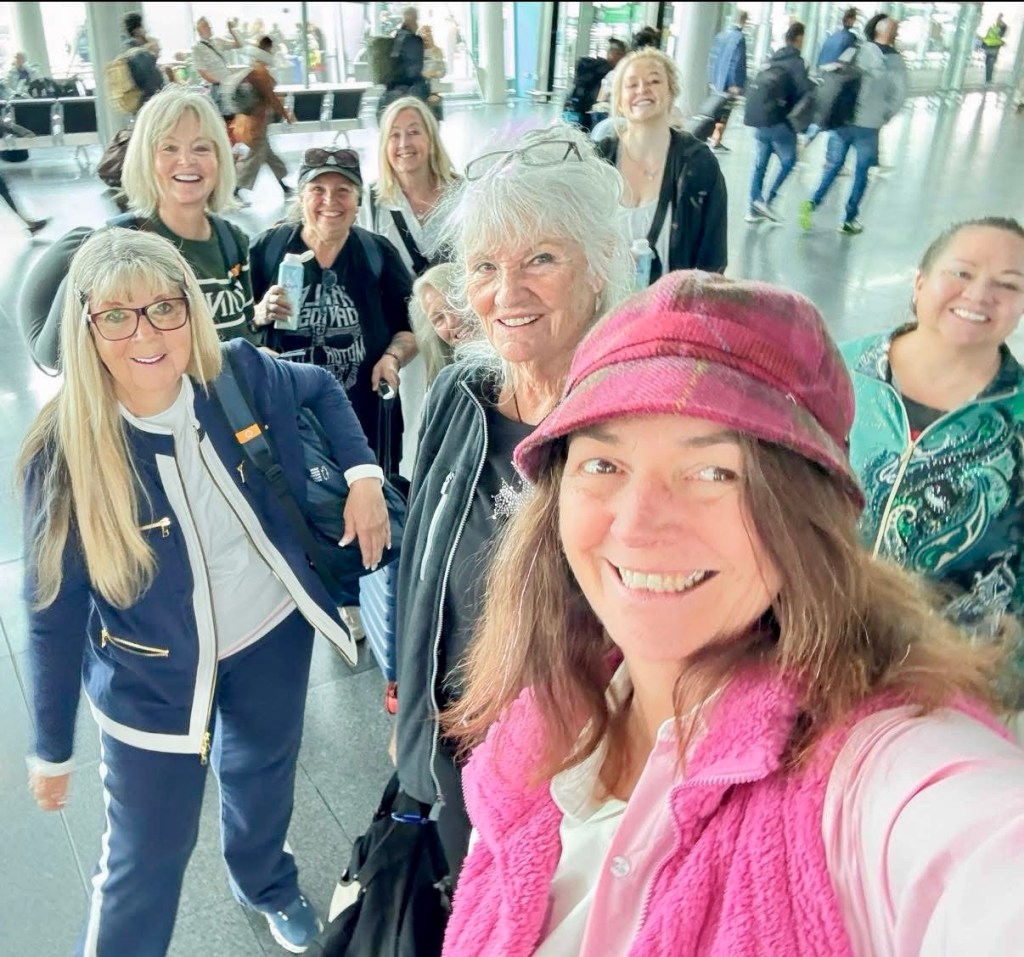
Girlfriends Getaway to Ireland
I often have clients who hesitate at the idea of joining a group tour when planning international travel. I get it — the thought of traveling on a set schedule with people you don’t know can feel a little intimidating.
But after spending a week in Ireland with ten amazing ladies on our Girlfriends Getaway May 2025 with CIE Tours, I can tell you firsthand — traveling with a tour operator makes everything so much easier and more enjoyable.
They take care of the driving (which is no small thing on those winding Irish roads!), handle the meals, plan the sightseeing stops, and add in colorful local stories along the way — the kind of personal insights you’d never get traveling independently.
And honestly, one of the best parts was the people. We met wonderful travelers from all over on our shared tour and enjoyed so many laughs and moments together that made the trip even more special.
So read on to get an idea of what you experience each day on a group tour — and if Ireland is calling your name, let us help you plan your own magical Irish adventure. ☘️
Saturday ~ Exploring Dublin
Most CIE Tours begin in Dublin, which makes perfect sense — it’s a convenient starting point, and the Dublin International Airport is easy to navigate. As long as your flight arrives before 11:15 a.m., CIE will arrange to pick you up right at the airport and take you directly to your hotel.
After a long overnight flight, it’s tempting to crash for a nap, but I always recommend hitting the ground running. Getting out and exploring helps you adjust to the time difference faster and keeps that travel excitement going. One of the things I love about CIE Tours is the balance they strike between guided experiences and free time to explore on your own.
My favorite way to kick off any new city visit is with the Hop-On Hop-Off bus tour. It’s the perfect introduction — you get a sense of the whole city layout and can note spots to come back to later. On nice weather days, the open-air seating is such a treat, offering an unobstructed view of the sights.
The full loop takes about two and a half hours and winds through Dublin’s city center, passing landmarks like Trinity College (founded in 1592), Christ Church Cathedral, St. Patrick’s Cathedral, and of course, the famous Guinness Storehouse.
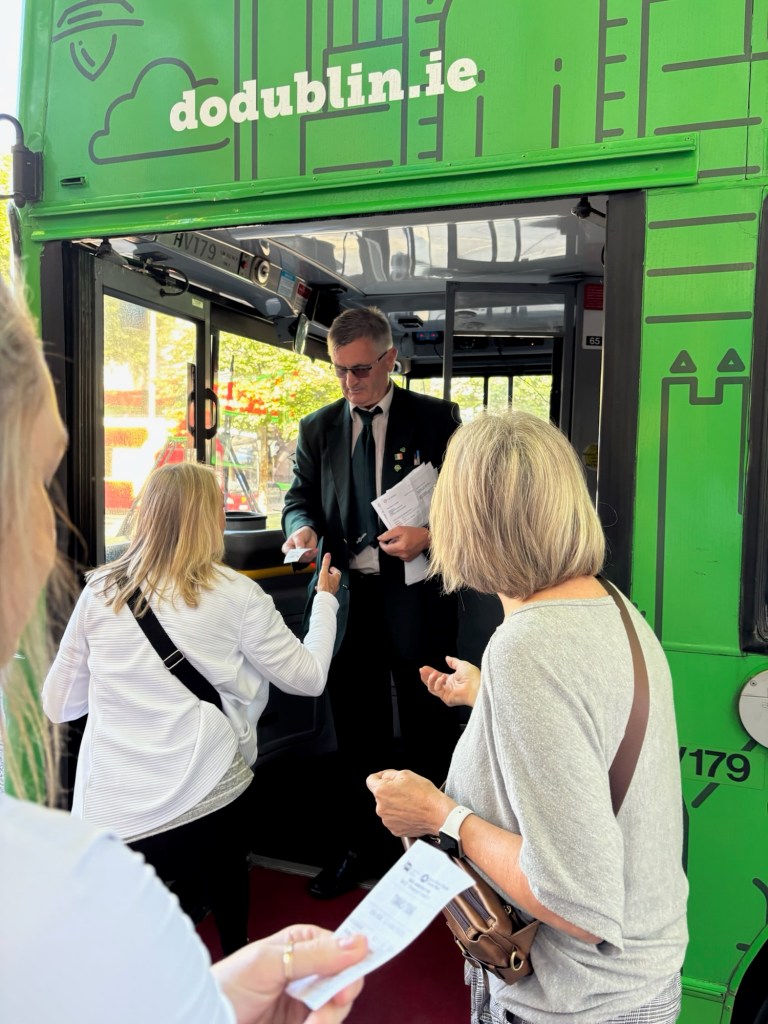


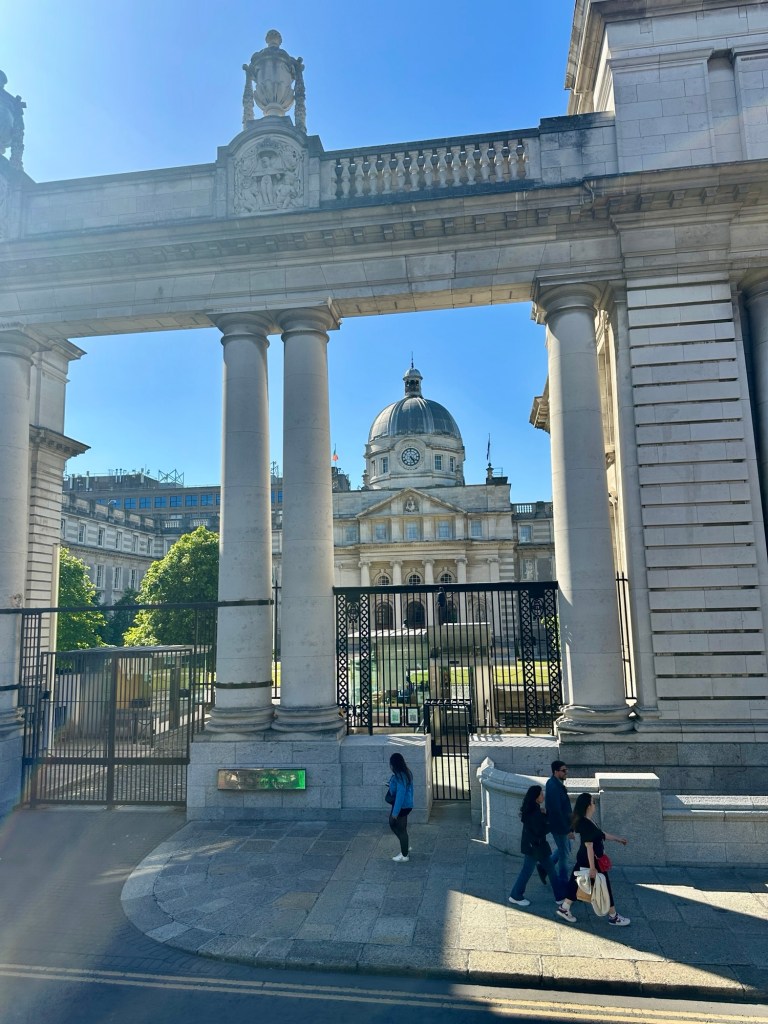
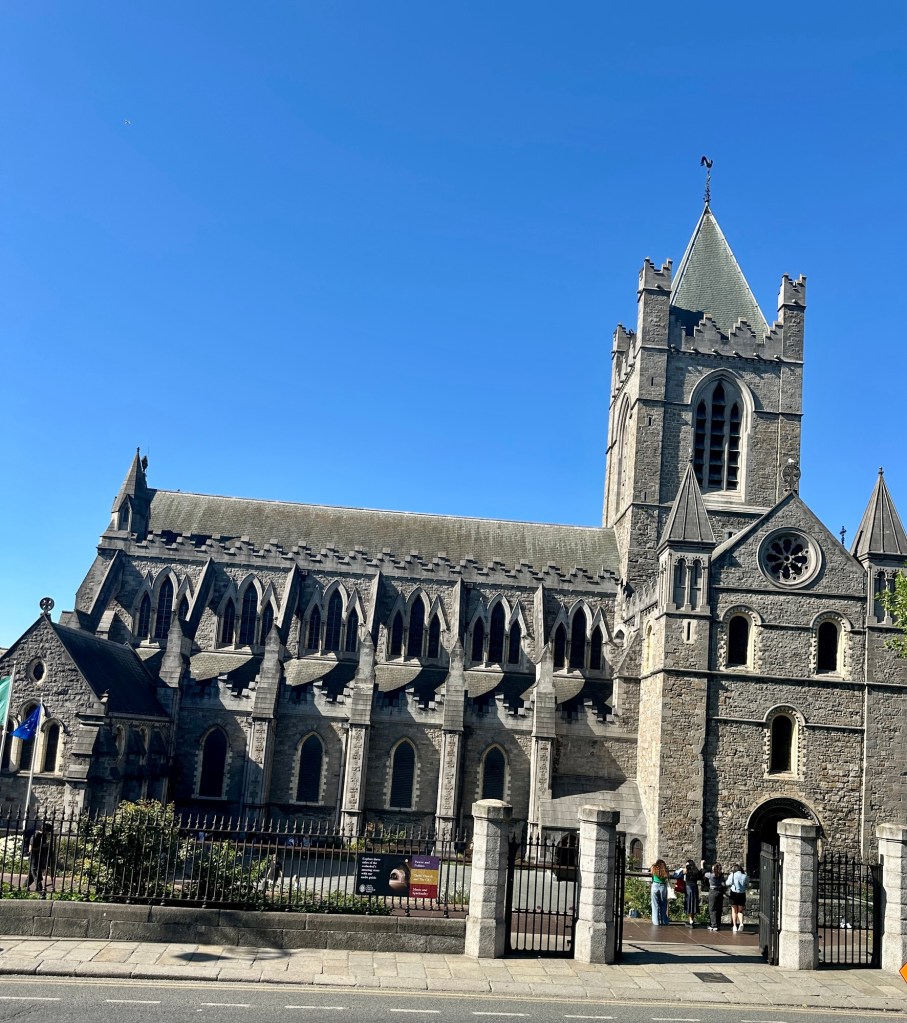

CIE Tours provides a voucher for the Guinness Storehouse, but it’s still best to make a reservation in advance. The lines can get quite long, and the experience often sells out — especially in the late afternoon when everyone wants that golden-hour view from the rooftop bar.
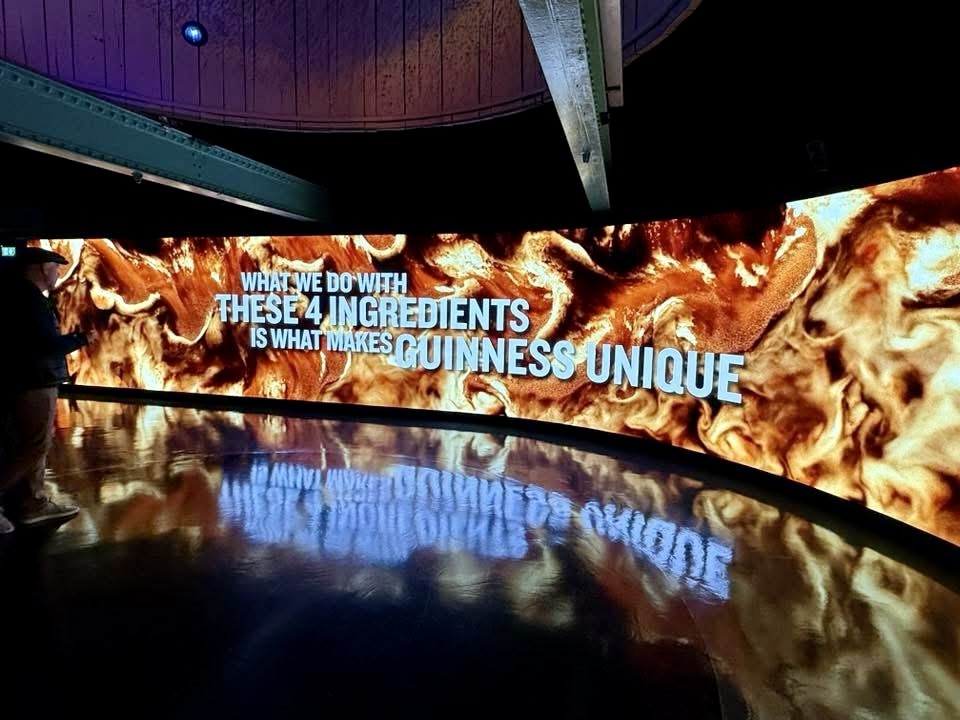
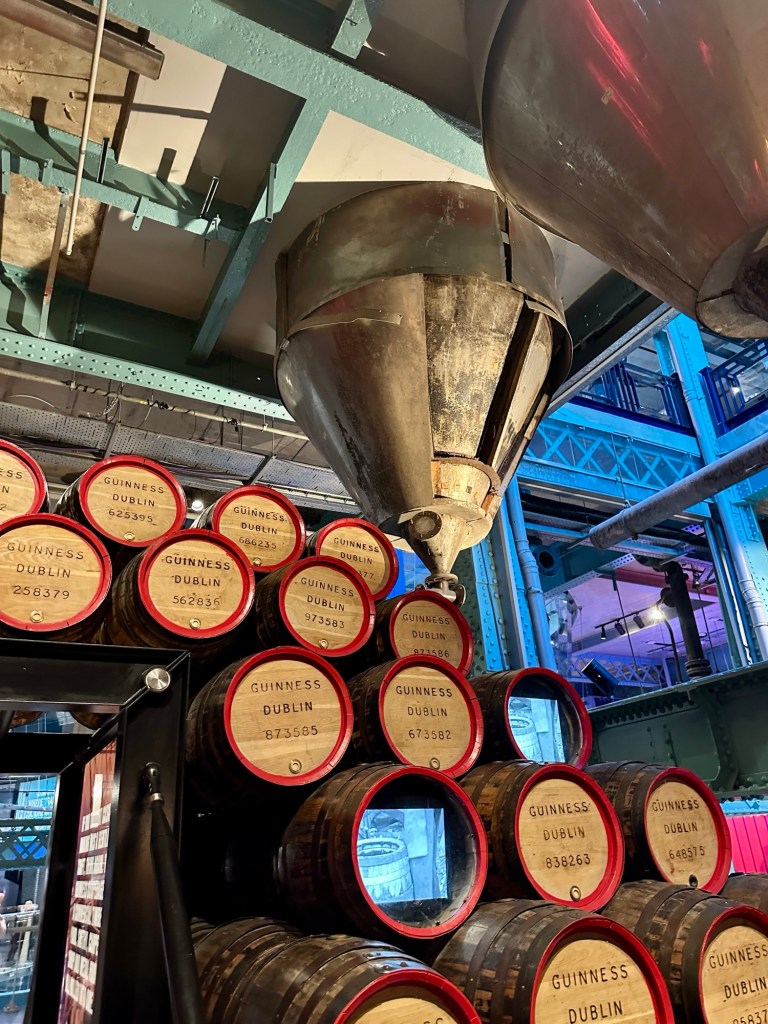
After spending the day getting our bearings in Dublin, we headed to the Storehouse for our 5 p.m. reservation. The Guinness Storehouse is Ireland’s most-visited tourist attraction, housed inside a converted fermentation plant that dates back to 1904. The building itself is shaped like a giant pint glass and could hold roughly 14.3 million pints of Guinness if it were full!
The self-guided tour winds upward through seven stories, following a circular ramp that takes you through the history and craft of Ireland’s most famous beer — from the roasted barley and hops to the precise art of pouring the perfect pint. About halfway up, there’s a formal tasting experience where you can sample Guinness in its freshest form.
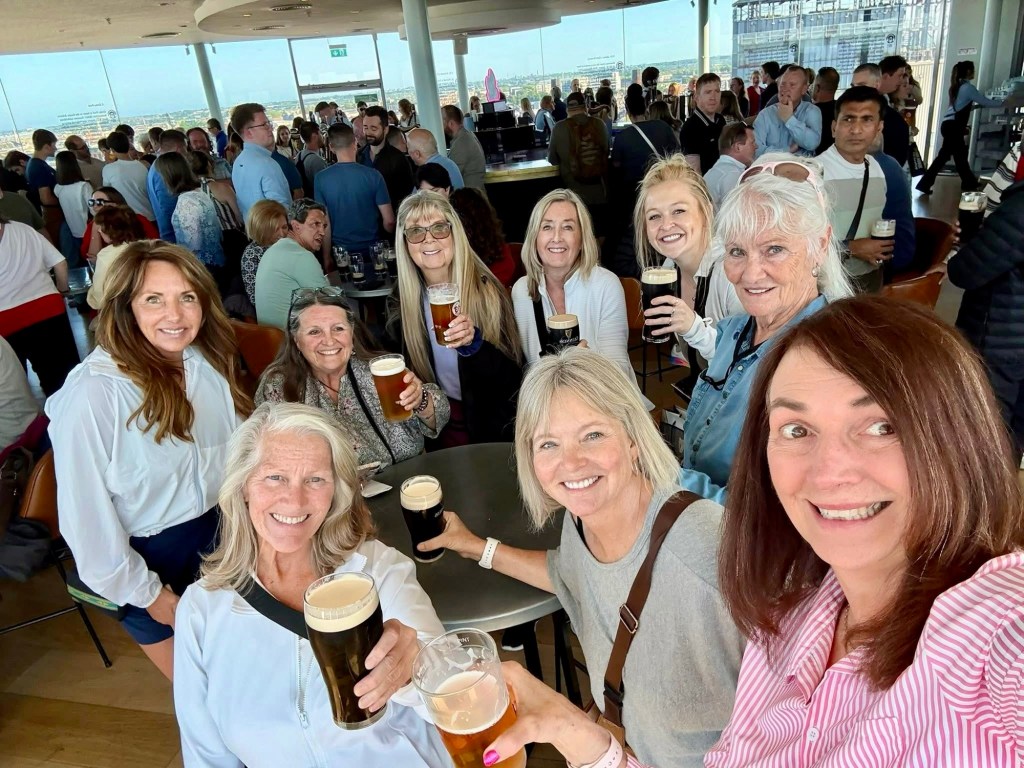
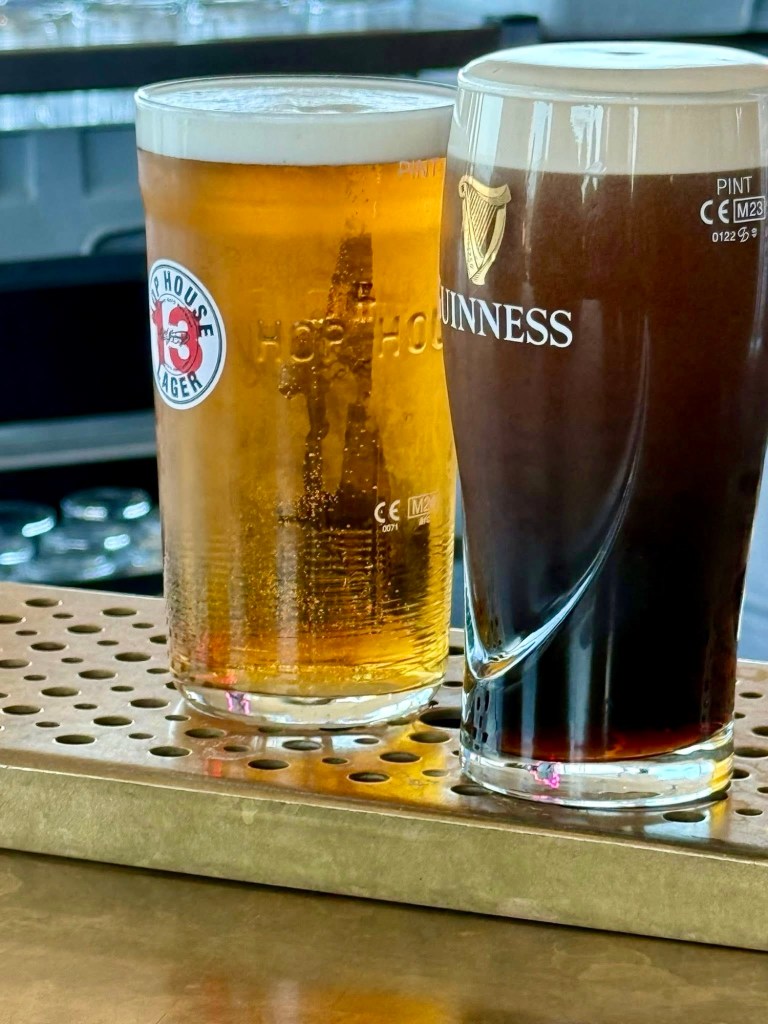
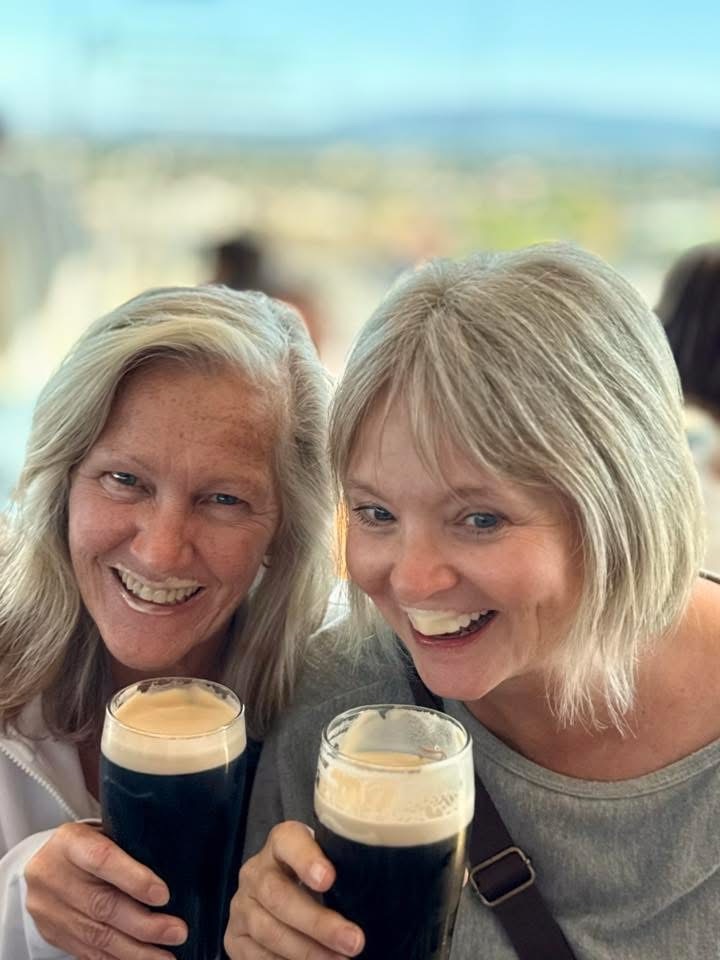
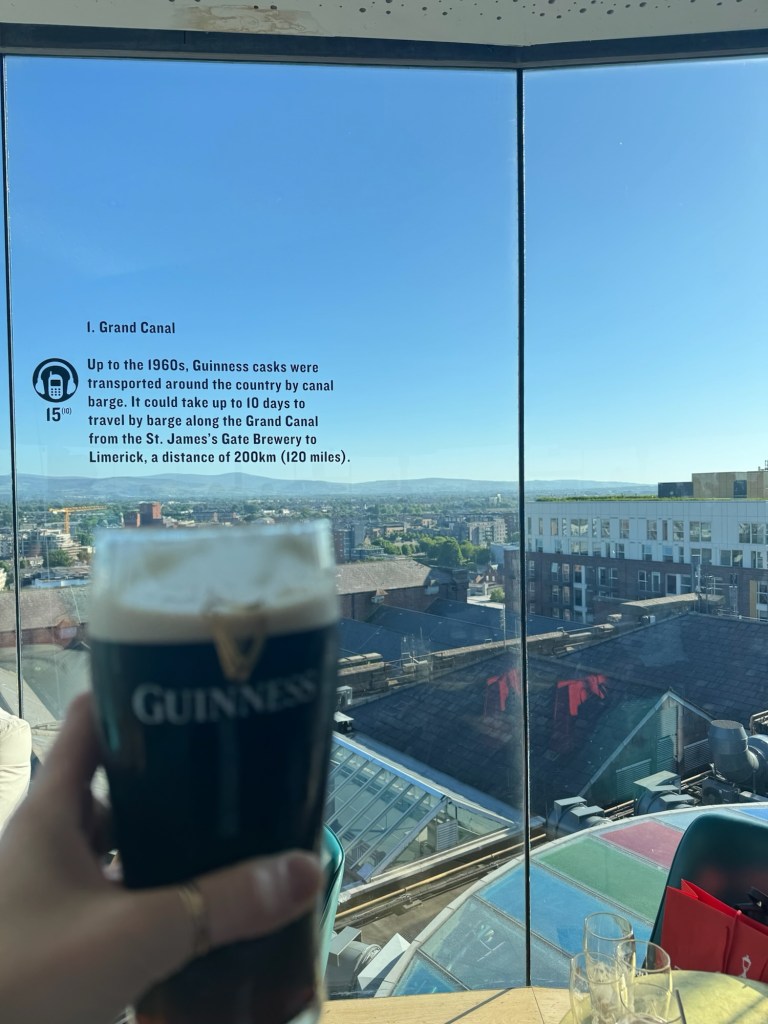
The tour ends at the Gravity Bar, perched on the top floor, where everyone enjoys a perfectly poured Guinness while soaking in sweeping 360-degree views of Dublin. It’s the perfect way to toast the start of an Irish adventure.

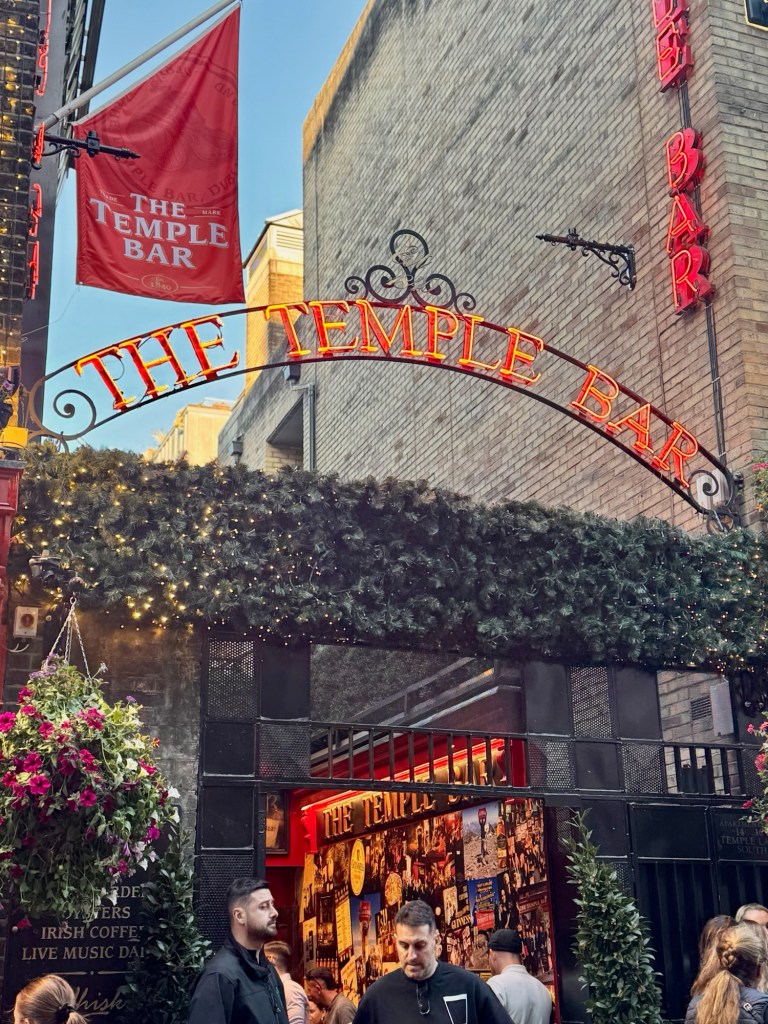
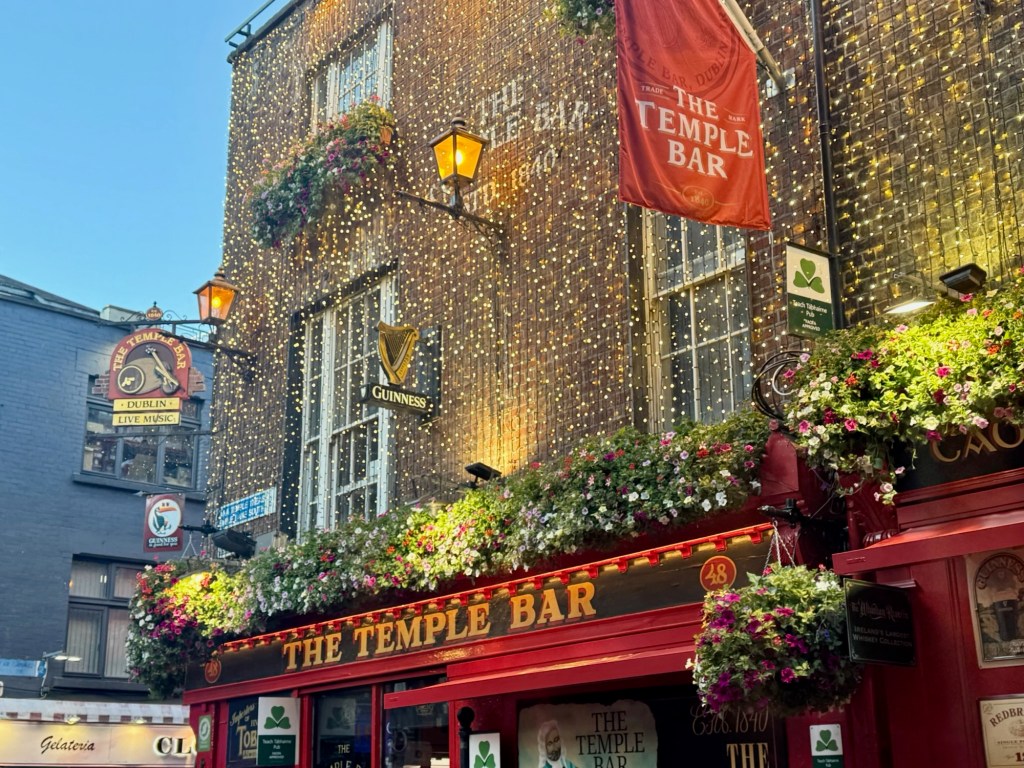
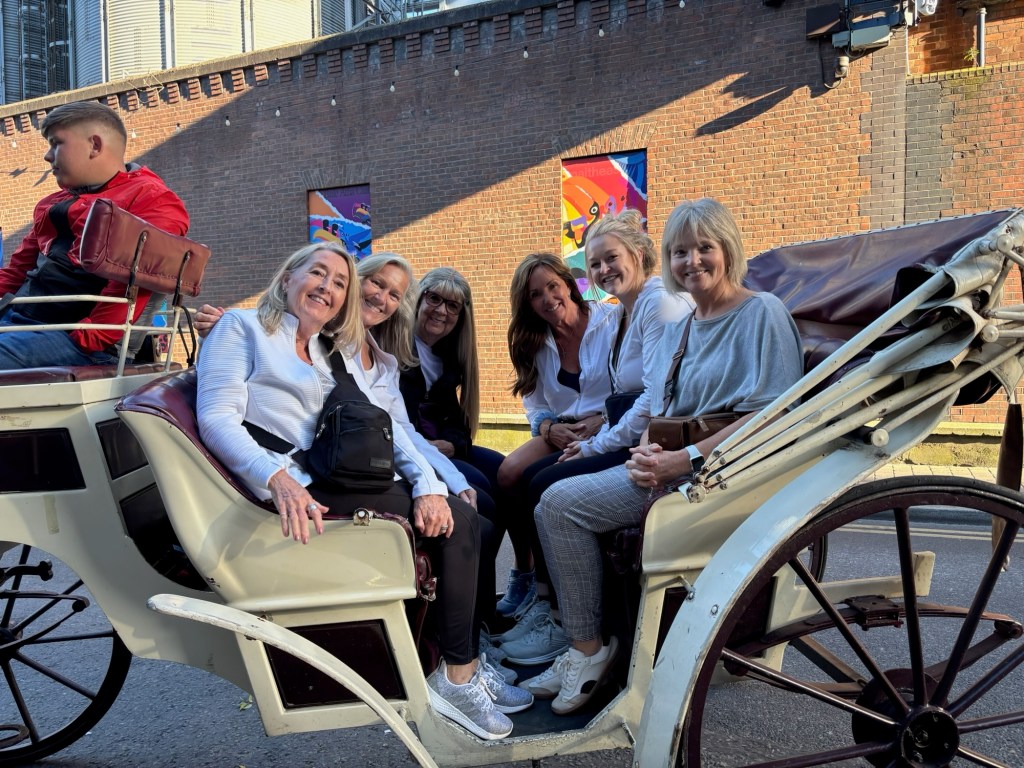
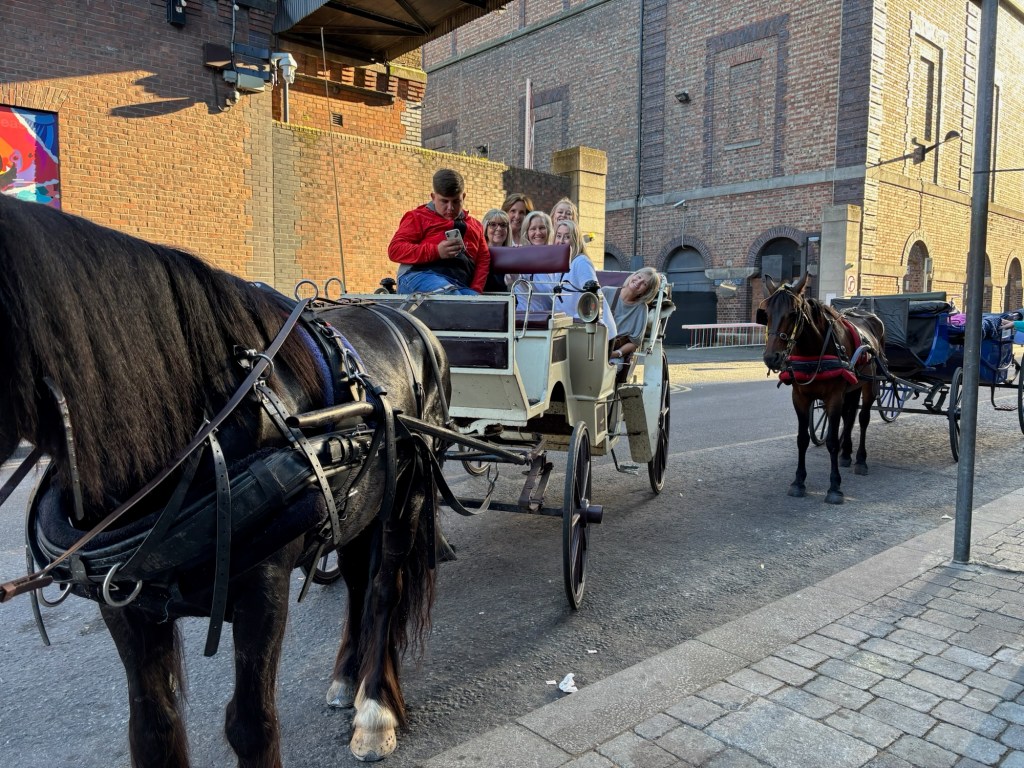
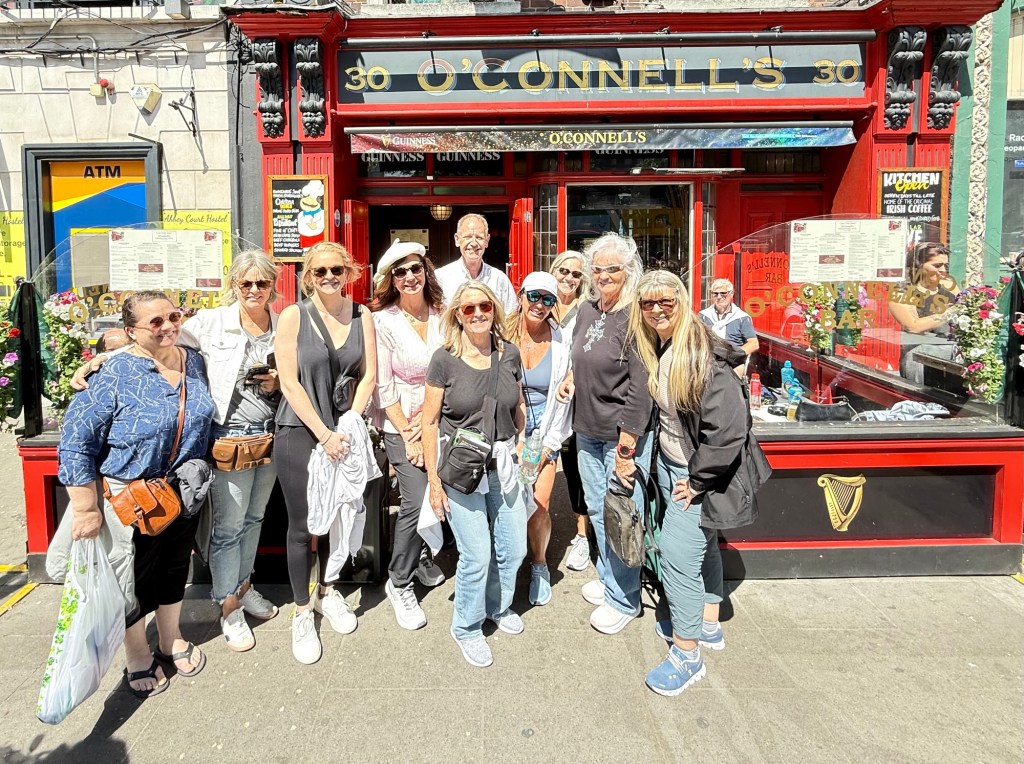
Our last stop for the evening was Temple Bar, Dublin’s most famous nightlife district. It’s about a 25-minute walk (or a short 10-minute cab ride) from the Guinness Storehouse — technically walkable, but after a long day of sightseeing, a few of us decided to enjoy the charm of a horse-drawn carriage through the cobblestone streets instead.
Don’t let the name fool you — Temple Bar isn’t just one bar. It’s actually an entire cultural quarter, filled with lively pubs, restaurants, art galleries, and street performers. The area dates back to the 17th century, named after Sir William Temple, whose family once owned land here. Today, it’s known for its colorful facades, live traditional Irish music pouring from every doorway, and that unmistakable sense of energy that makes Dublin come alive at night.
It was the perfect way to end our first evening — sipping a pint, listening to fiddles, and feeling completely immersed in the heart of Ireland’s capital.

Sunday ~ Visiting a Castle, Distillery & Irish Cabaret
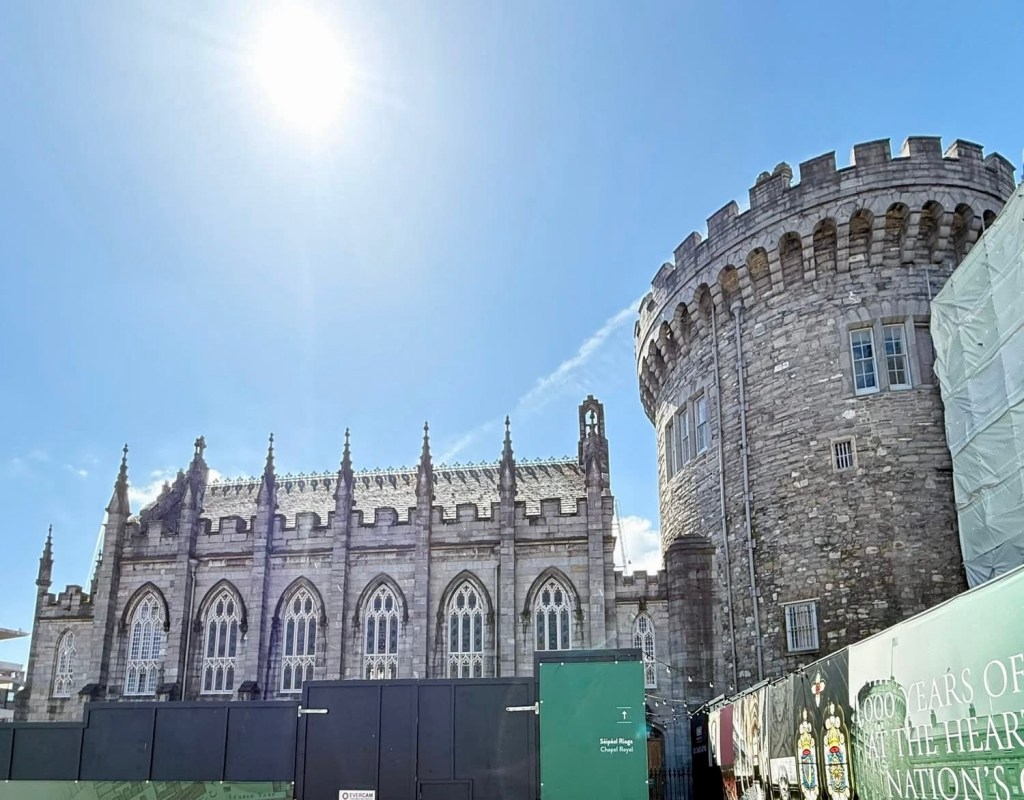
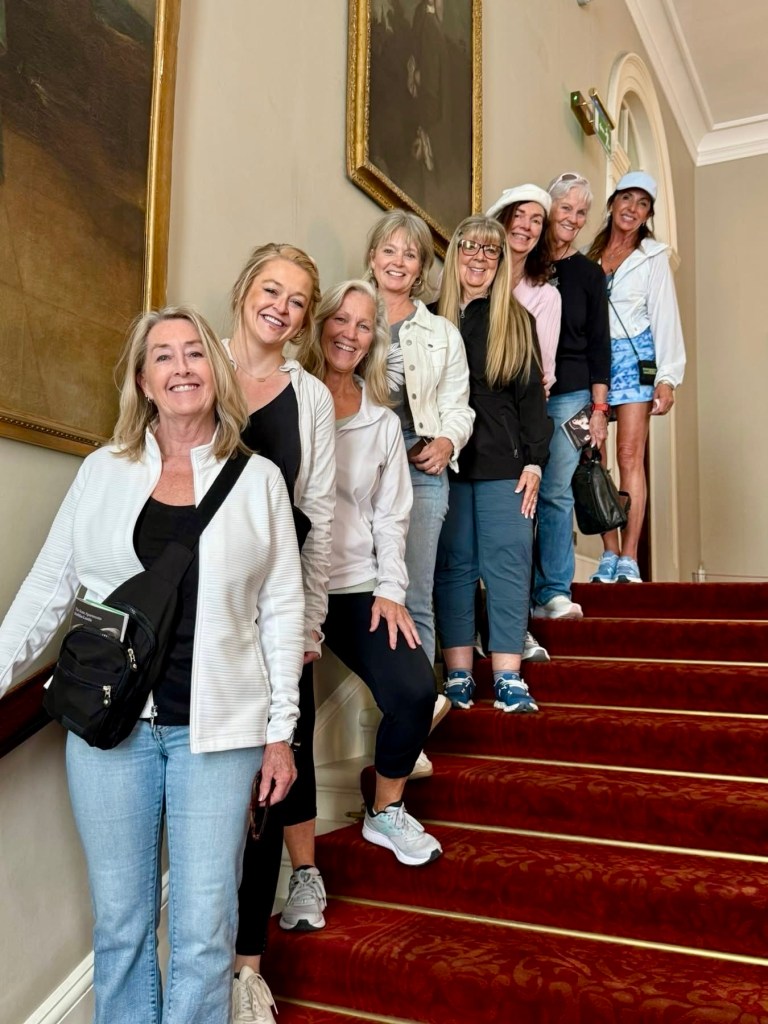
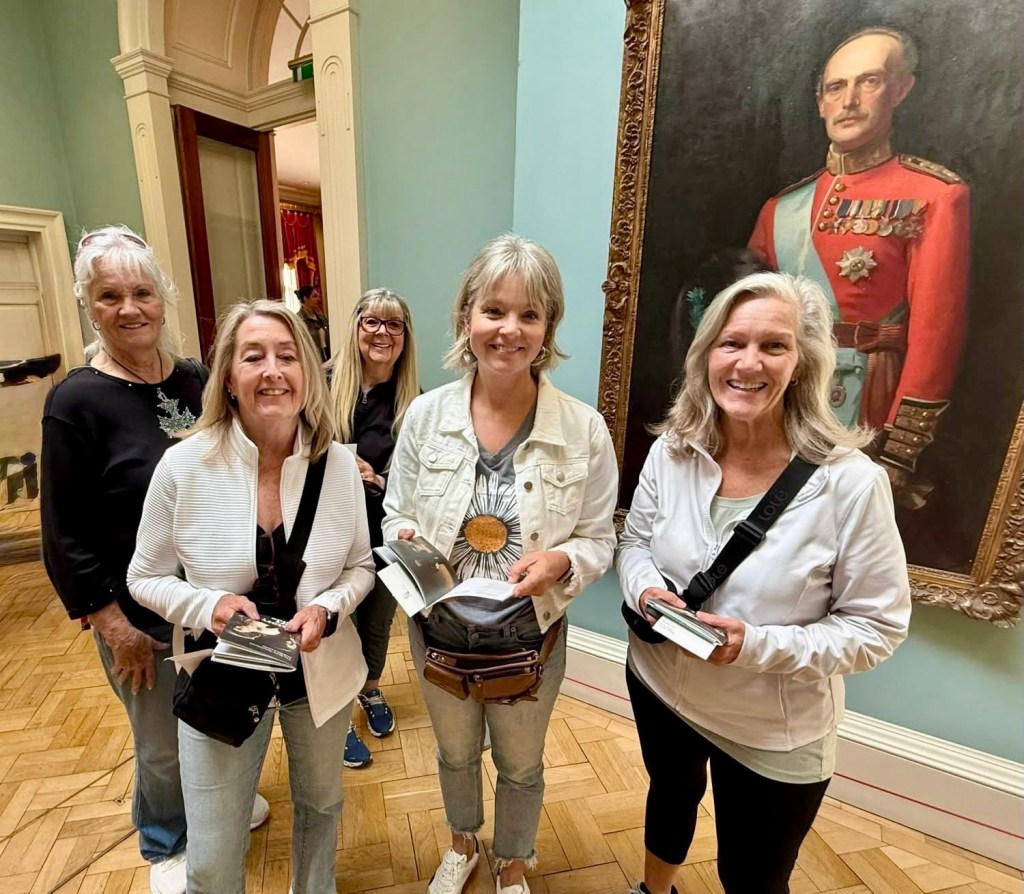
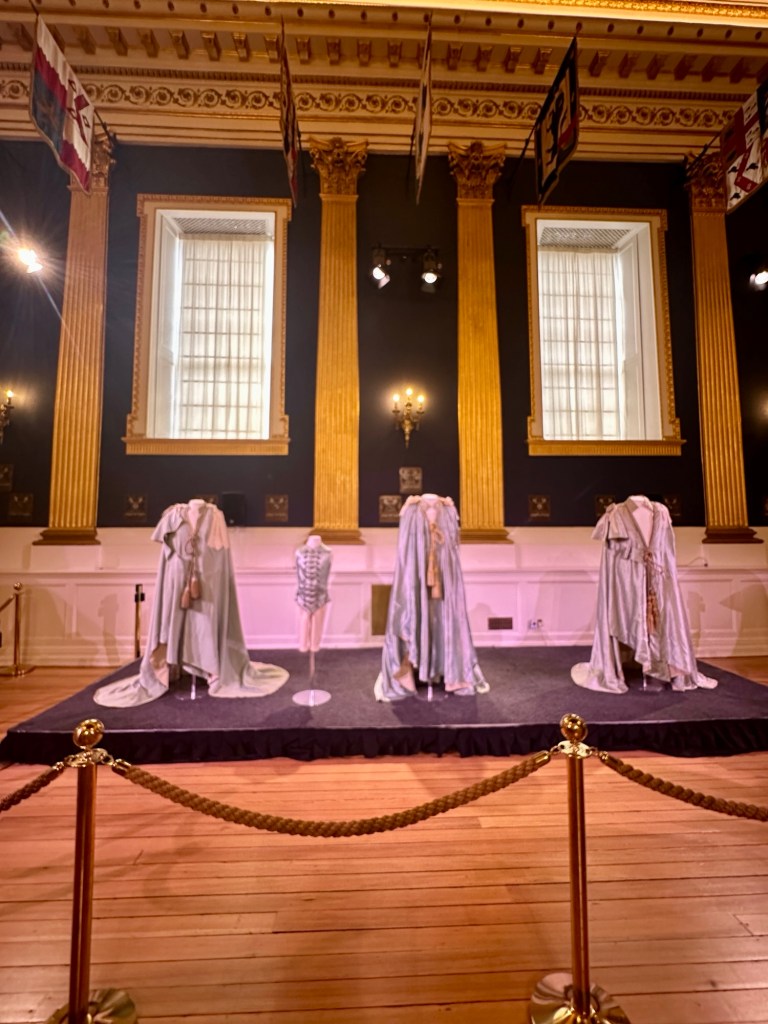
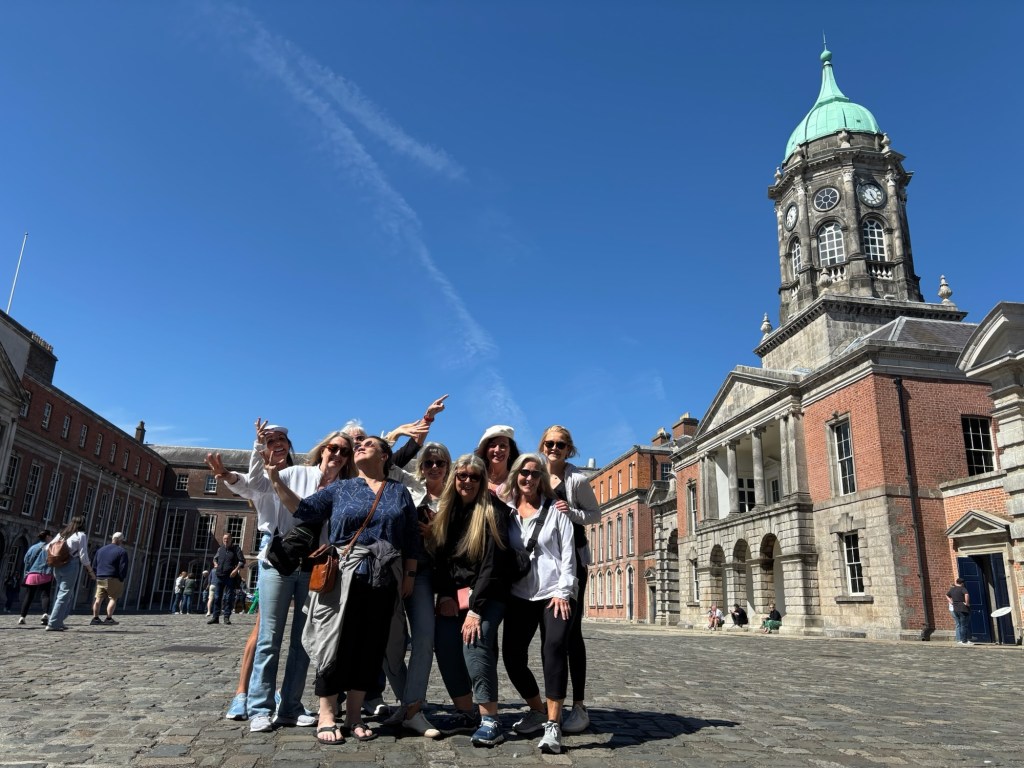
With a free morning to ourselves, our Girlfriends Getaway group decided to explore Dublin Castle. Just a quick 10-minute Uber ride from our hotel, it’s an easy stop for anyone staying near the city center. Admission for a self-guided tour is about €8 (around $8–9 USD) — well worth it for the history and art inside.
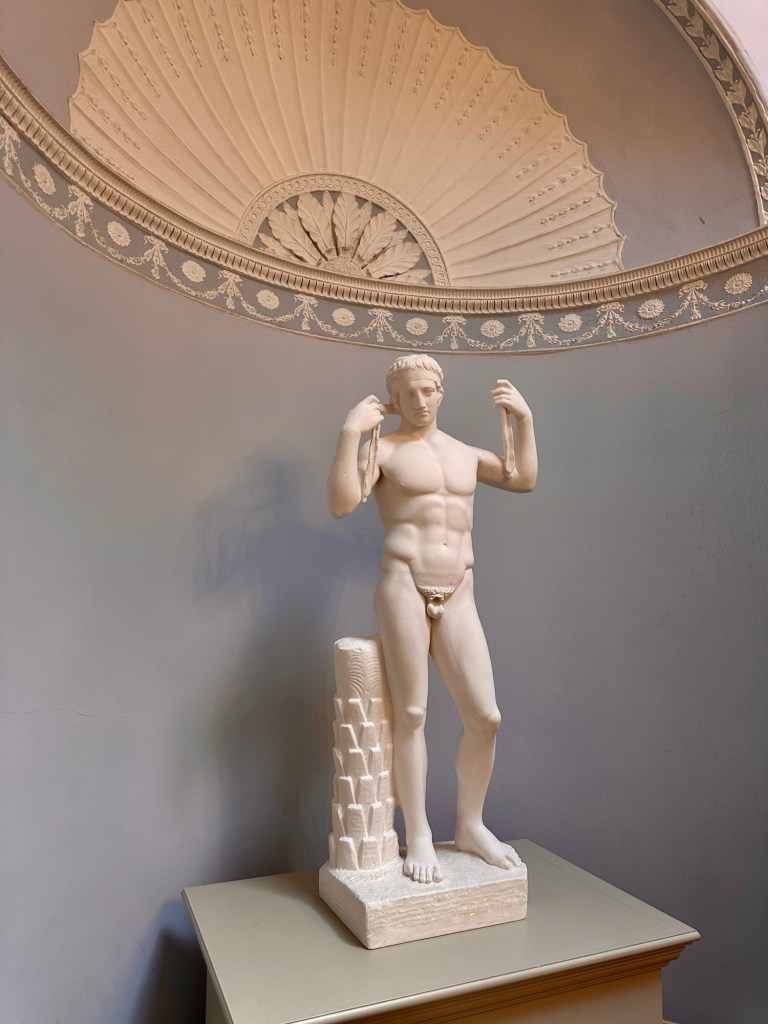
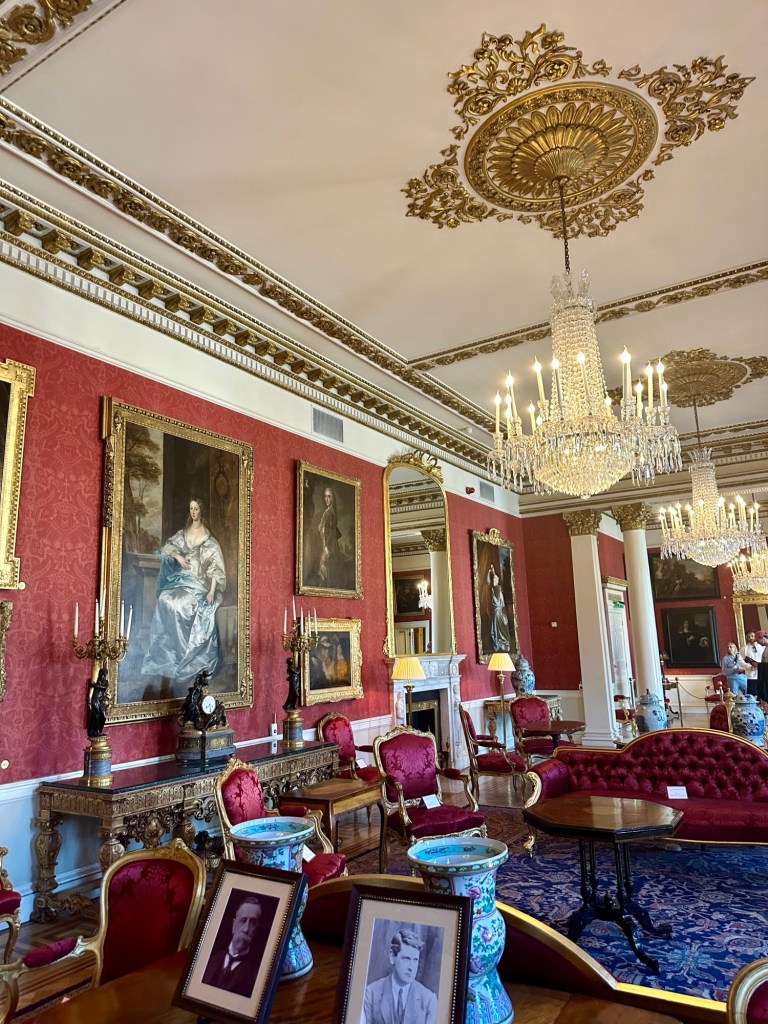
Dublin Castle has stood at the heart of the city for over 800 years, originally built as a medieval fortress before becoming the seat of British rule in Ireland until 1922. Walking through the State Apartments, you can almost feel the weight of history — from lavish chandeliers and ornate tapestries to the grand St. Patrick’s Hall, where state banquets and presidential inaugurations are still held today. The hall’s ballroom is especially memorable, lined with portraits of Irish leaders and scenes of myth and legend, while suits of armor and knightly regalia remind visitors of centuries past.
It’s also sobering to think that during the Great Famine (1845–1852), while the Irish people suffered from starvation, much of the country’s food was exported under British control — a painful chapter that lingers in Ireland’s collective memory. Standing in such a place of power, it’s impossible not to reflect on how far Ireland has come since those days.

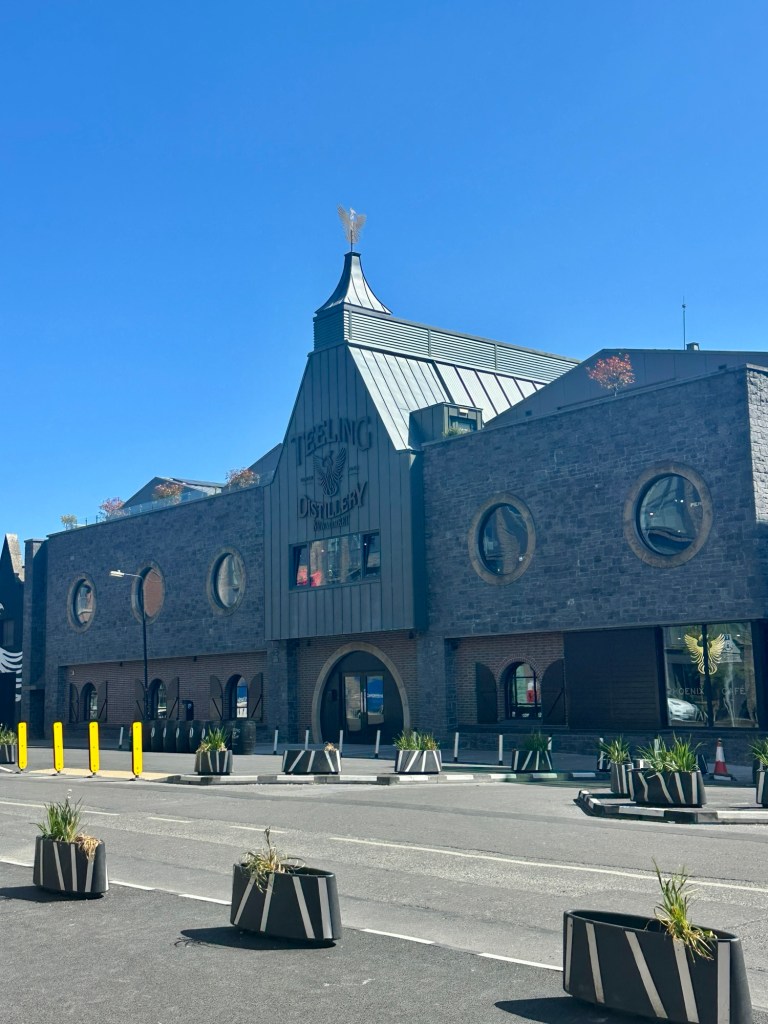
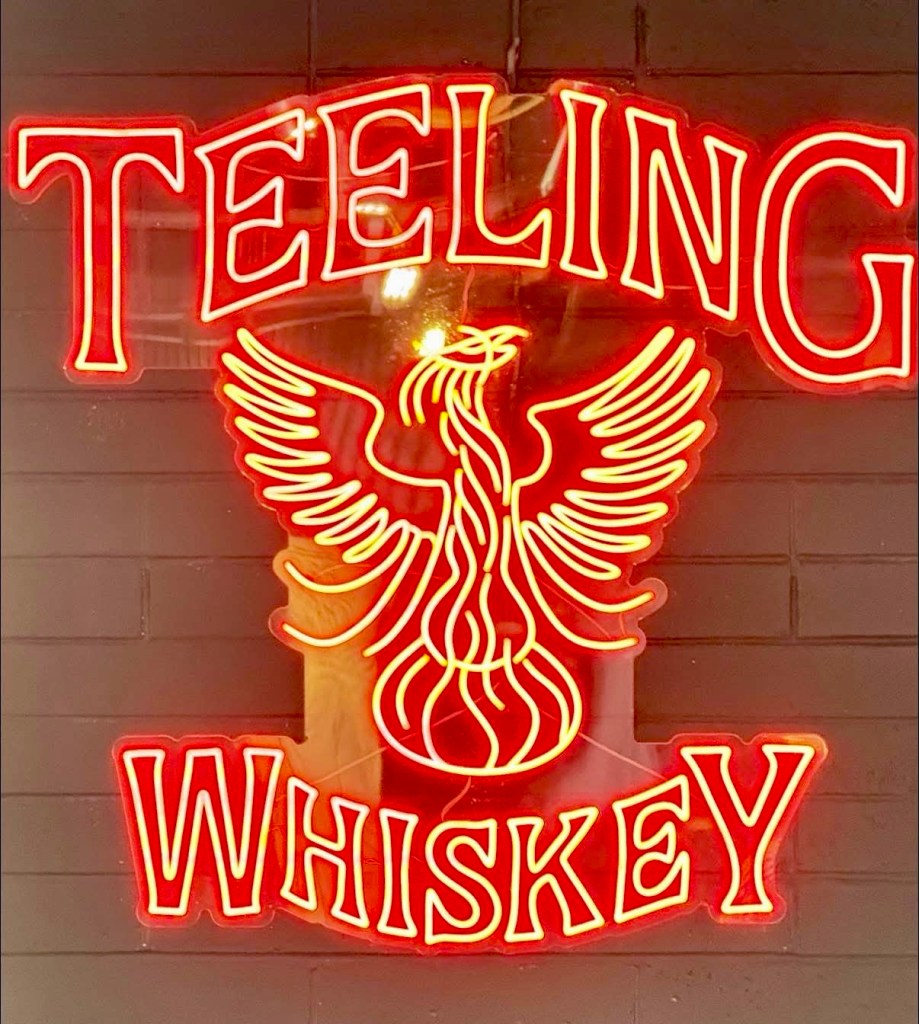
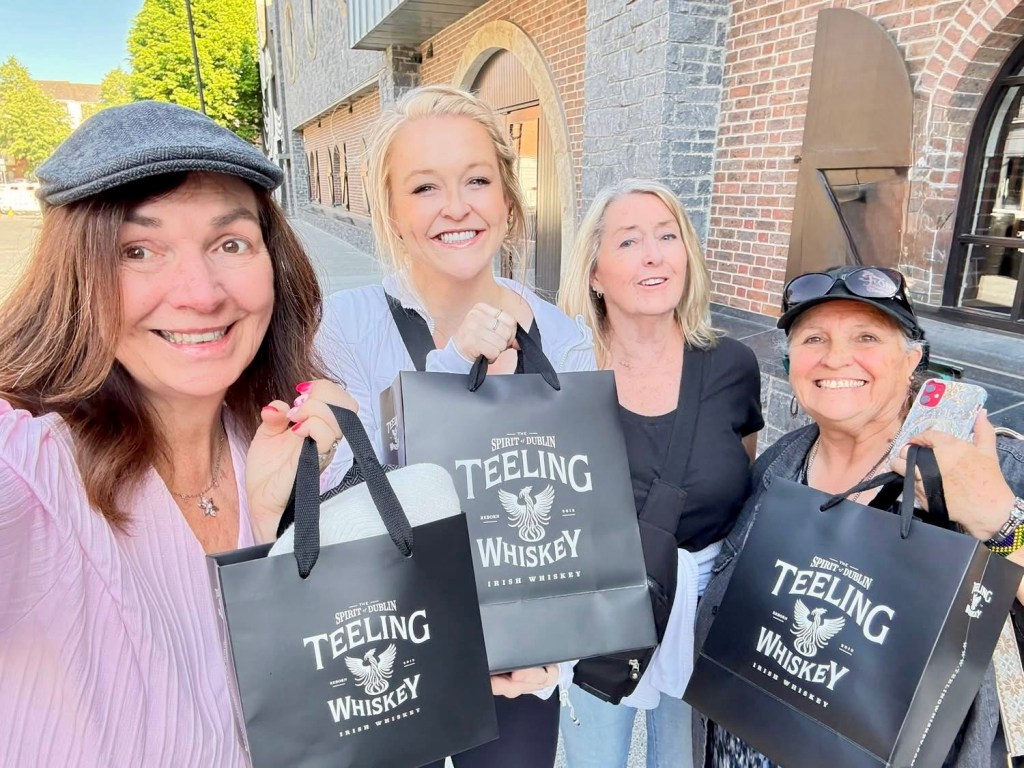
Our first official CIE Tours event began that afternoon when we joined the larger group for a visit to the Teeling Distillery. Located in the heart of Dublin’s historic Liberties district, Teeling is a family-run operation and proudly holds the title of being the first new whiskey distillery to open in Dublin in over 125 years when it launched in 2015. The Teeling family, however, has been involved in Irish whiskey making since 1782, keeping the craft alive through generations.
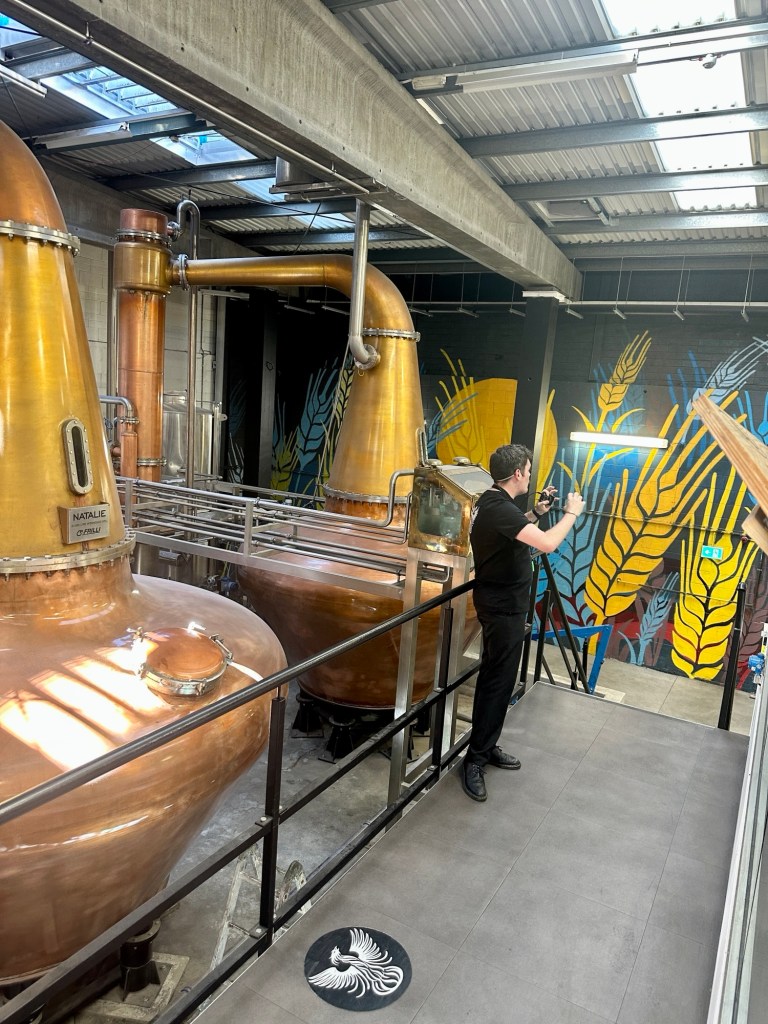
The guided tour lasts about one hour and takes visitors through the working distillery, where copper pot stills gleam under warm light and the scent of malted barley fills the air. Along the way, guests learn about the aging process and can see the distinct color variations that develop as whiskey matures in different casks.
The experience ends with a tasting — first a sip of Teeling’s signature small-batch whiskey, followed by a refreshing whiskey-based cocktail. It’s a fun and flavorful introduction to Dublin’s modern craft spirits scene, blending deep heritage with a contemporary twist.
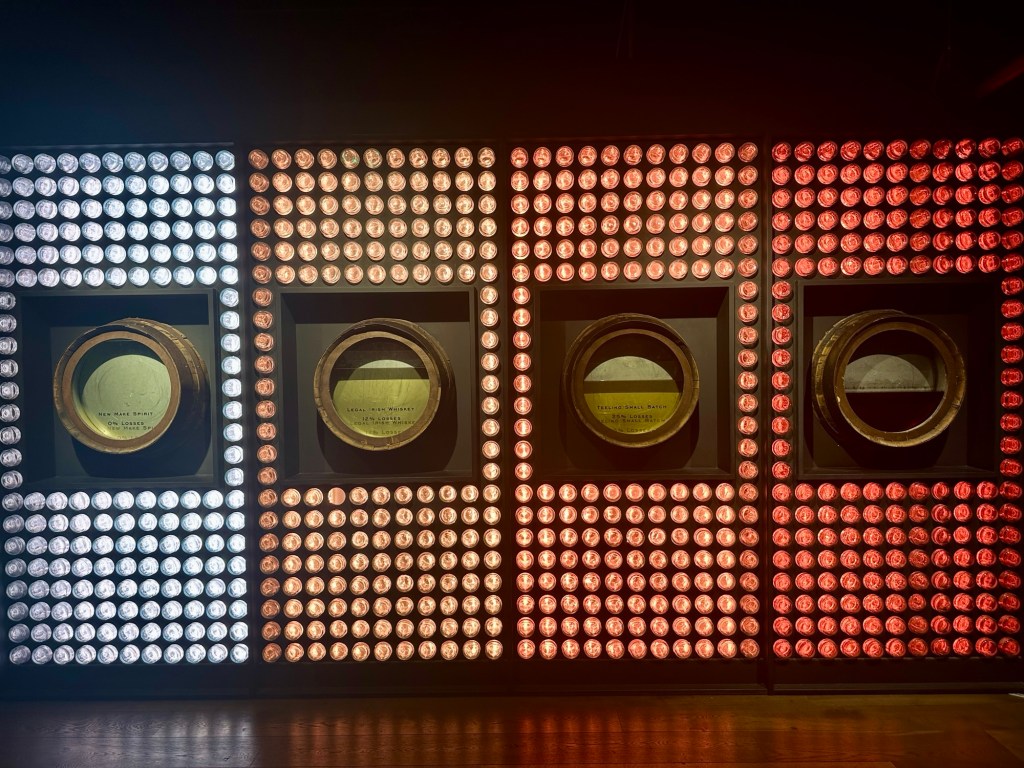
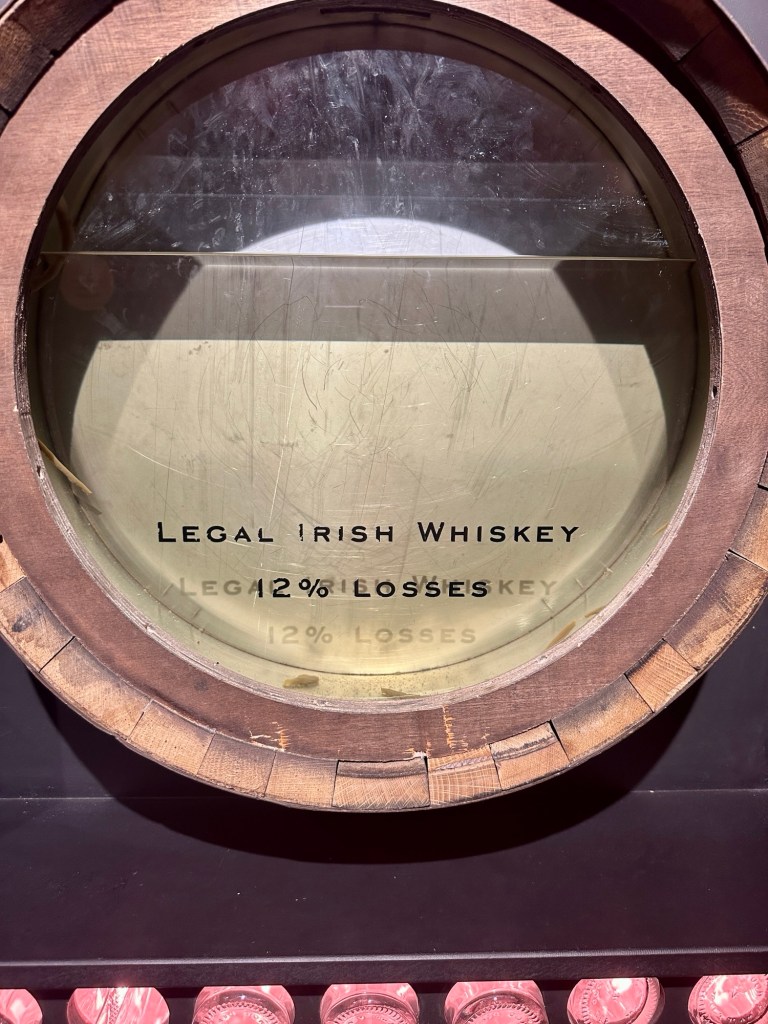
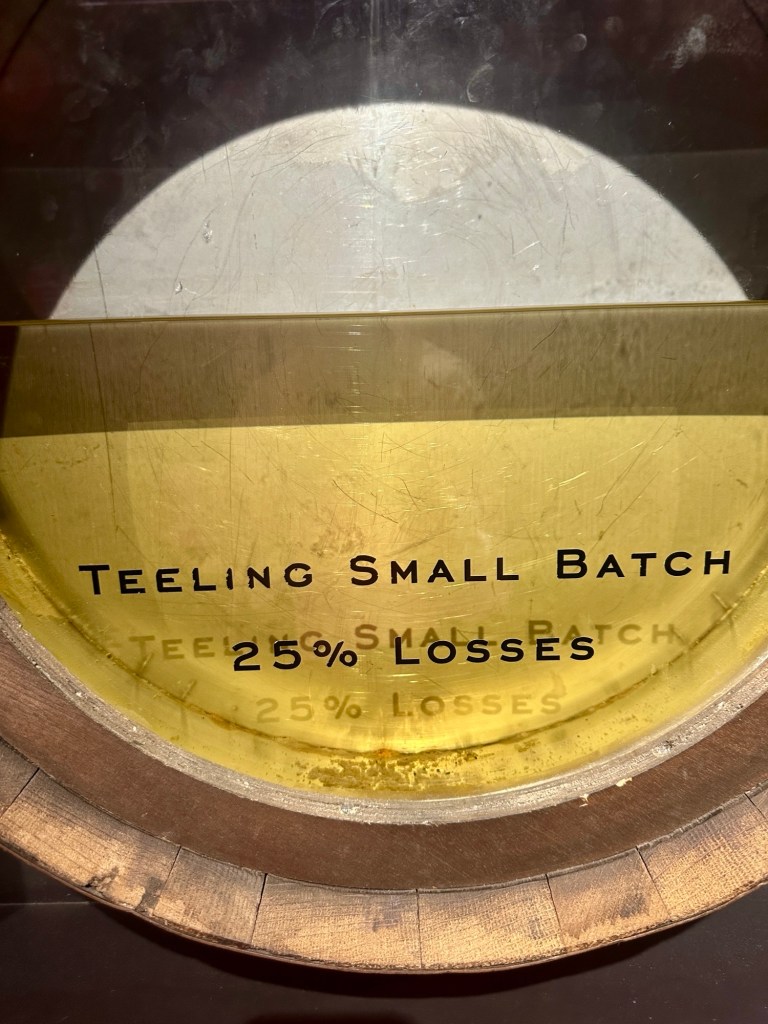
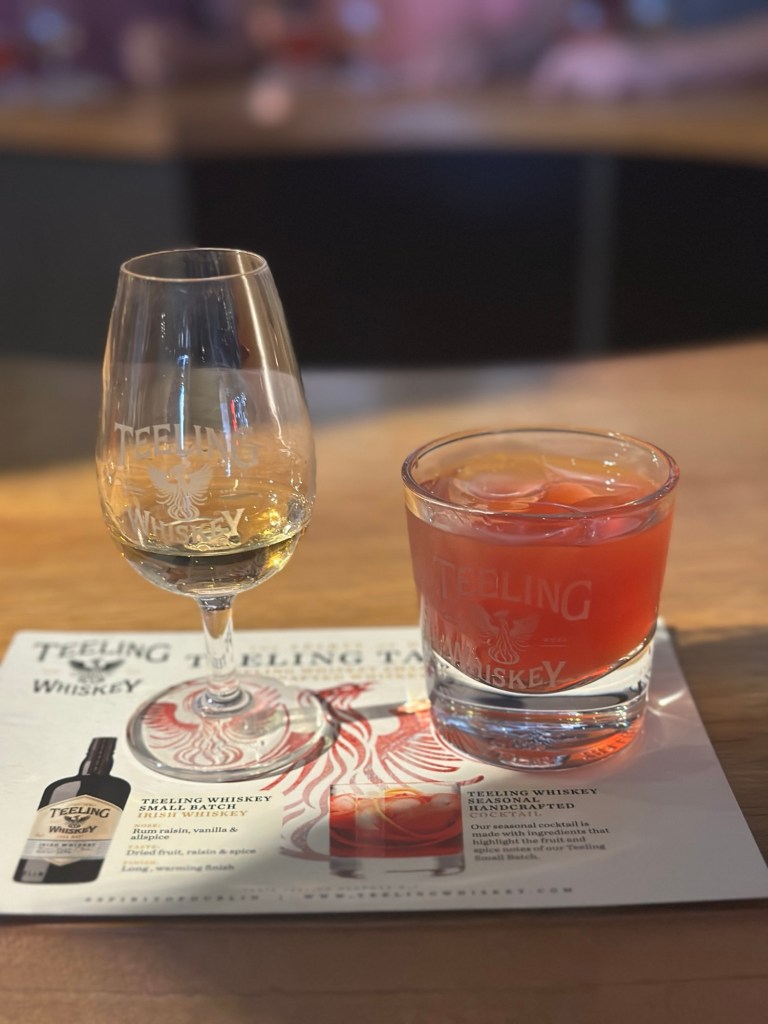
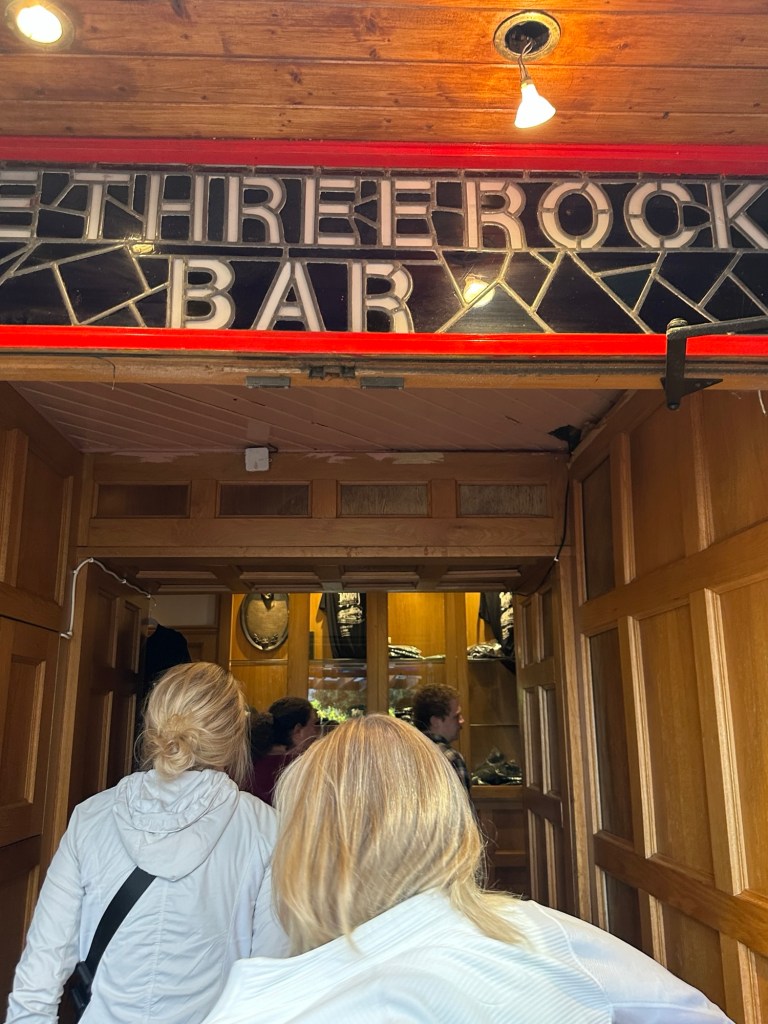
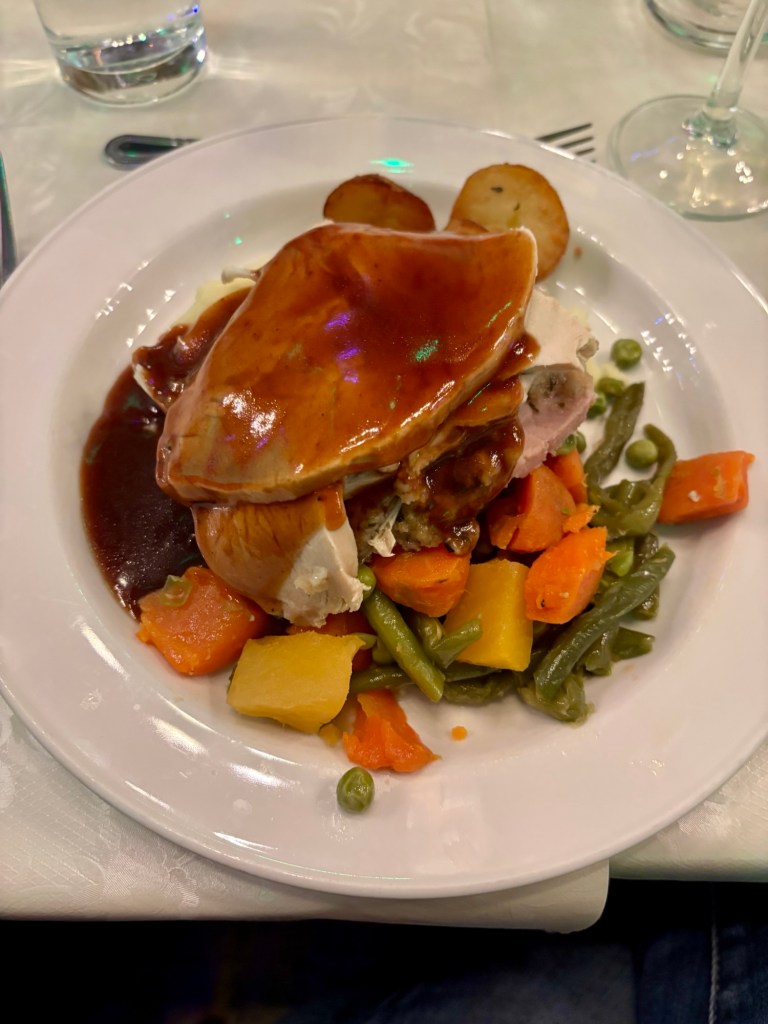
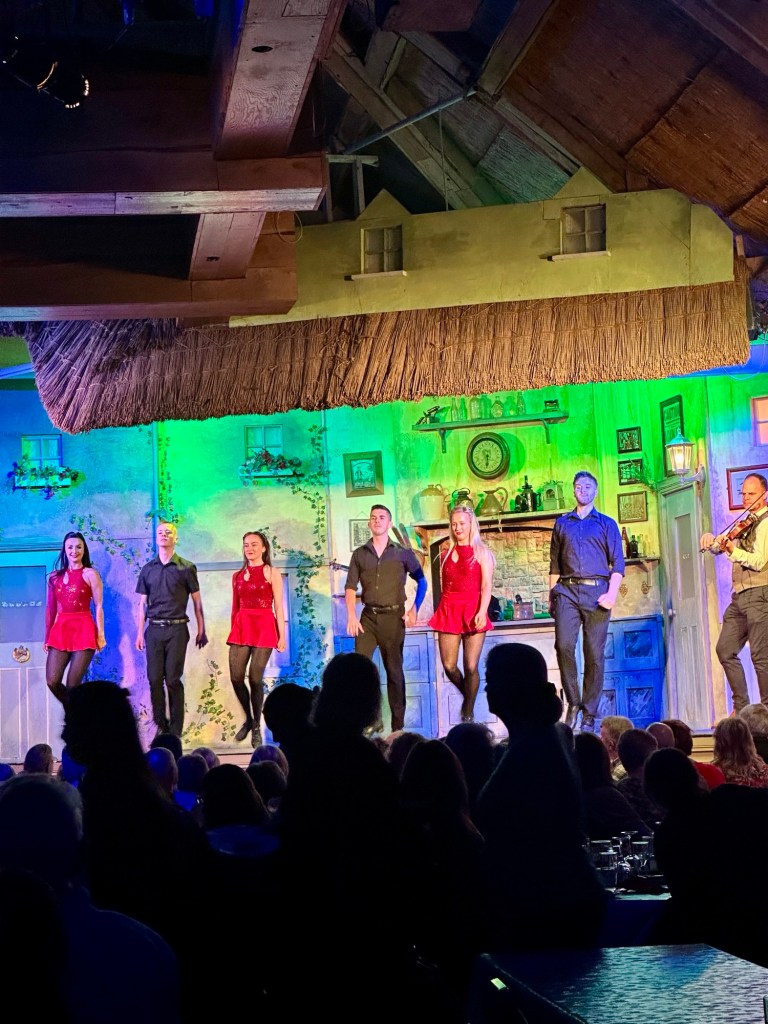
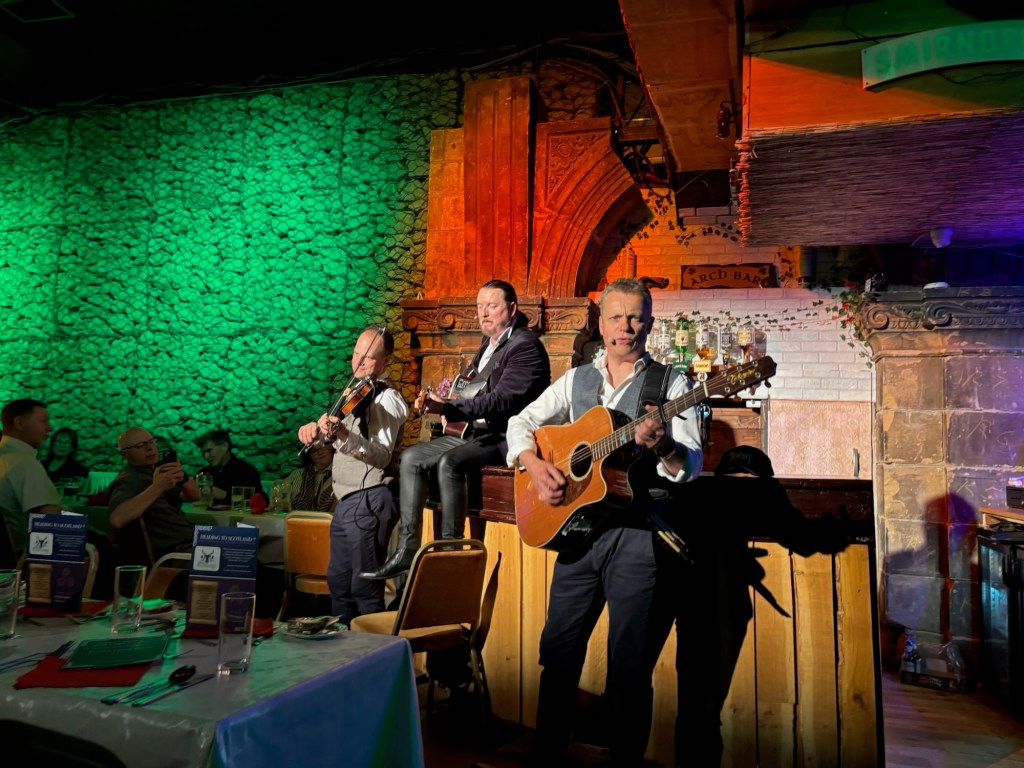
Our last night in Dublin was spent at Taylor’s Three Rock Bar for an evening of Irish cabaret, dinner, and dancing — and what a way to end our stay in the city! Located just outside Dublin in the foothills of the Dublin Mountains, Taylor’s Three Rock is one of Ireland’s best-known venues for live traditional entertainment. The pub itself dates back several decades and has earned a reputation for its warm hospitality, hearty Irish fare, and unforgettable nightly shows.
The Taylor’s Irish Cabaret features talented musicians, energetic Irish dancers, and plenty of good-natured humor. Between the lively fiddle tunes, step dancing, and sing-alongs, it’s impossible not to be swept up in the spirit of it all. The food was delicious and the show even better, offering a joyful glimpse into Irish culture — and a reminder that no one celebrates life quite like the Irish.

Monday ~ Sheep & Blarney Castle
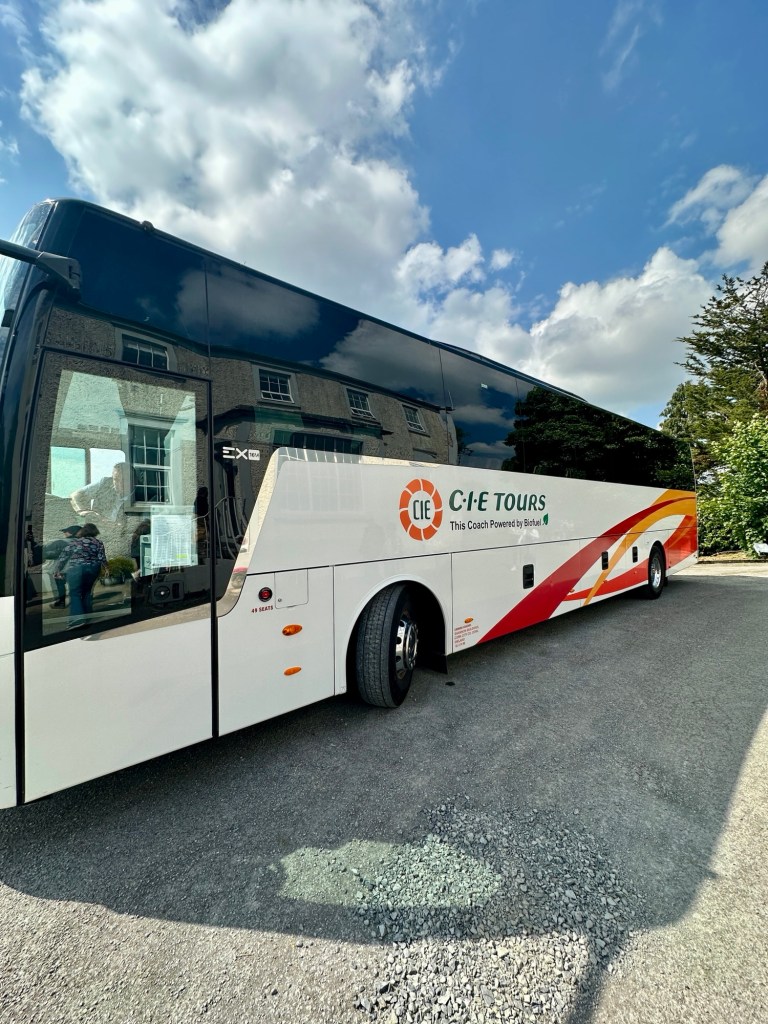
Monday morning, bright and early, we boarded the coach bus with our group of 30 and set out for the countryside of southern Ireland. The coach was quite comfortable, and CIE Tours has a thoughtful rotating seat system that ensures everyone gets a chance to sit up front and enjoy the beautiful views along the way.
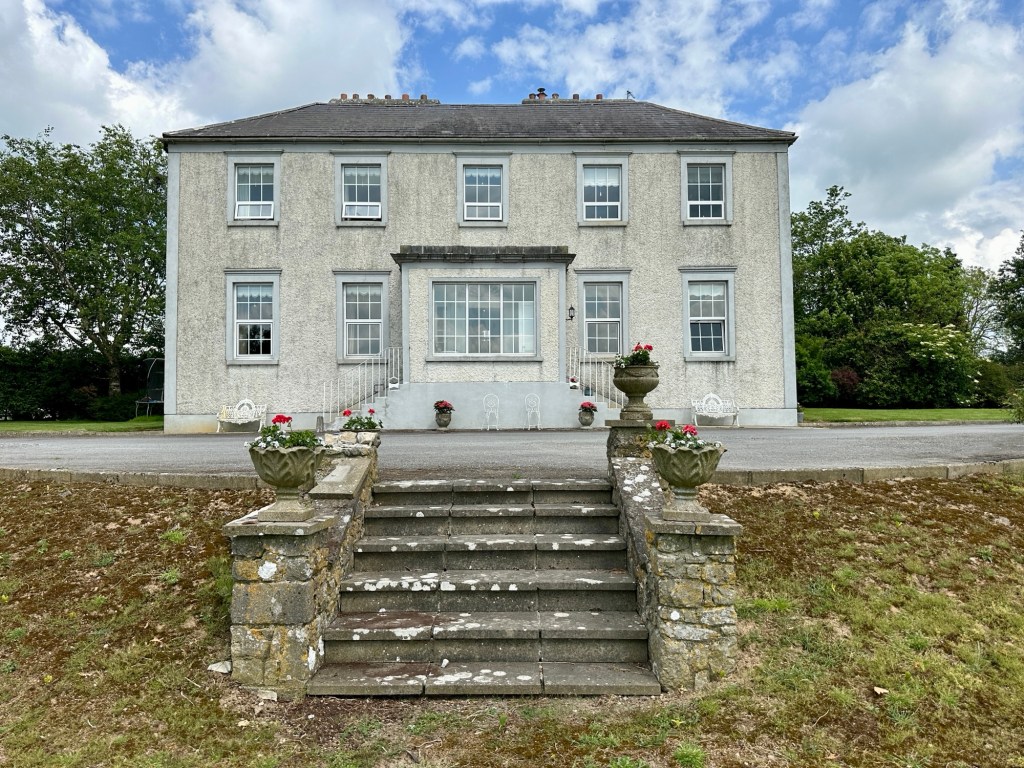
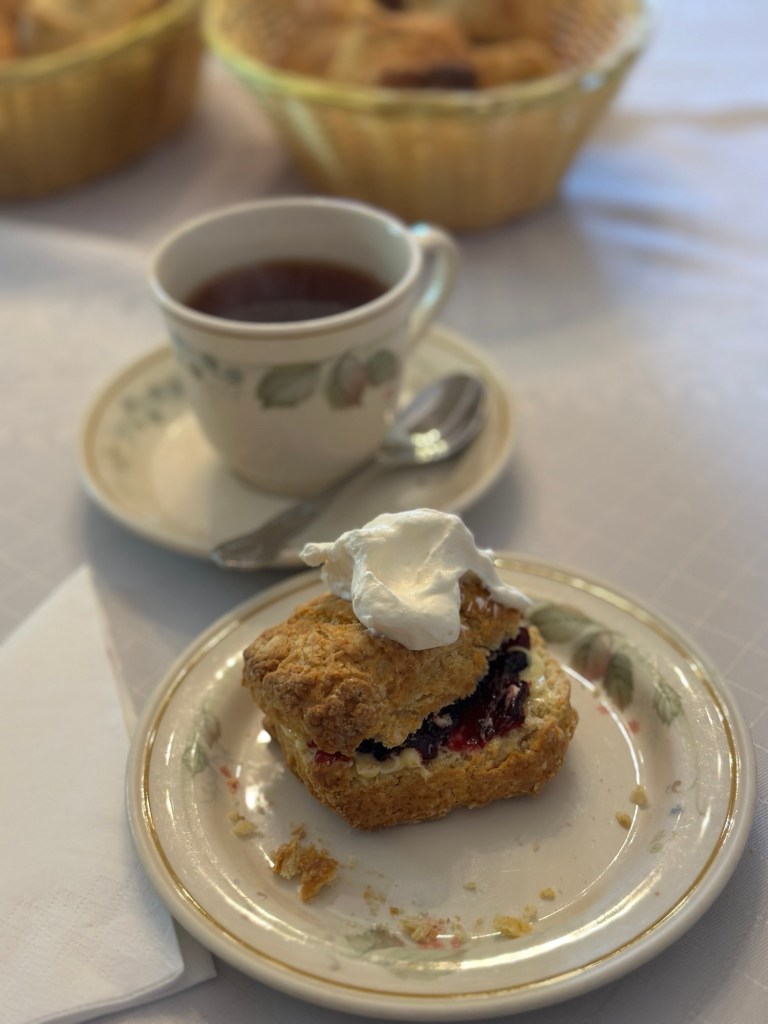
Our first stop was at the Power Family Farm in Dualla, County Tipperary. The Power family has been farming this land for generations, and their warm hospitality made us feel instantly at home. They welcomed us into their home, serving fresh tea and homemade scones — a true Irish tradition.
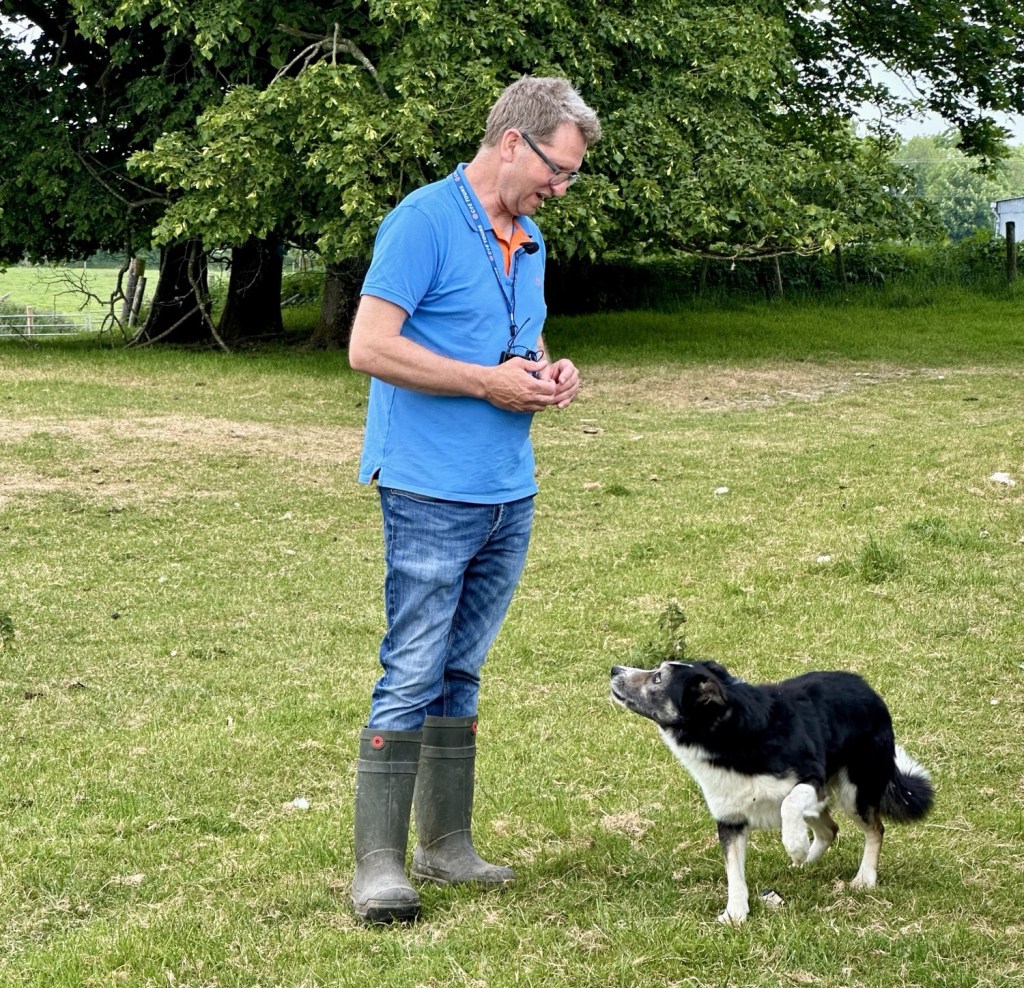
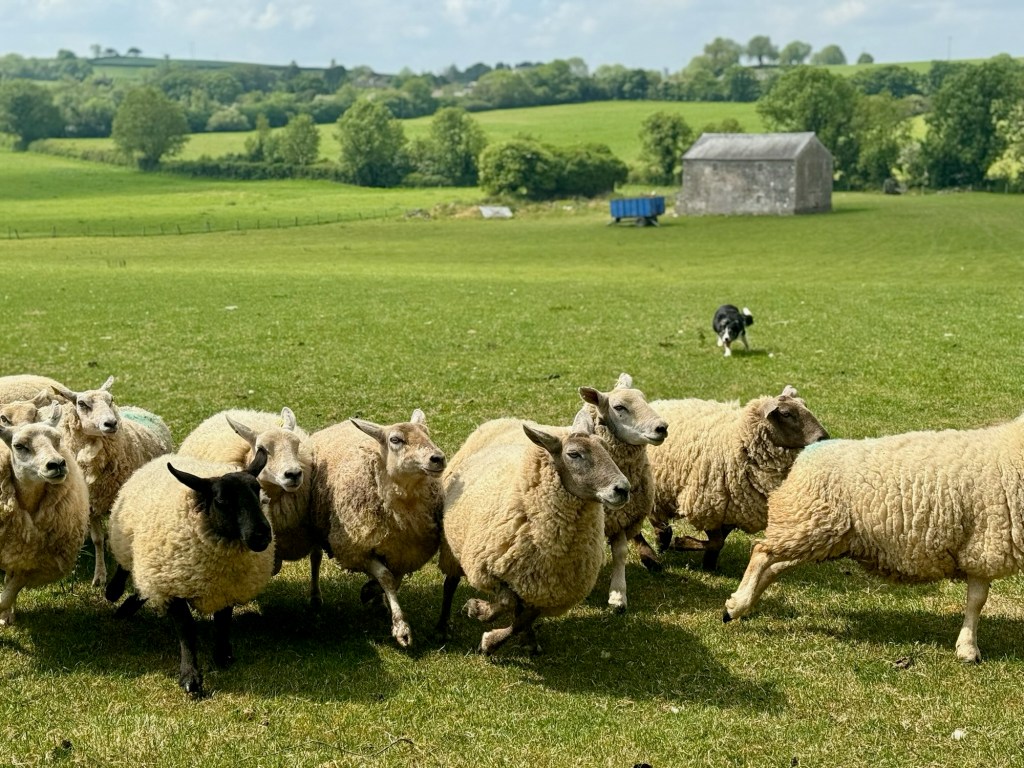
After tea, we headed outside to meet Max, one of the farm’s many border collies, and watched him in action with the resident flock of sheep. It was incredible to see how responsive he was to just a few whistle commands. Sheep farming is such an important part of Ireland’s rural life, and skilled sheepdogs like Max play an essential role — keeping the flocks together across the wide green fields with remarkable precision and teamwork.

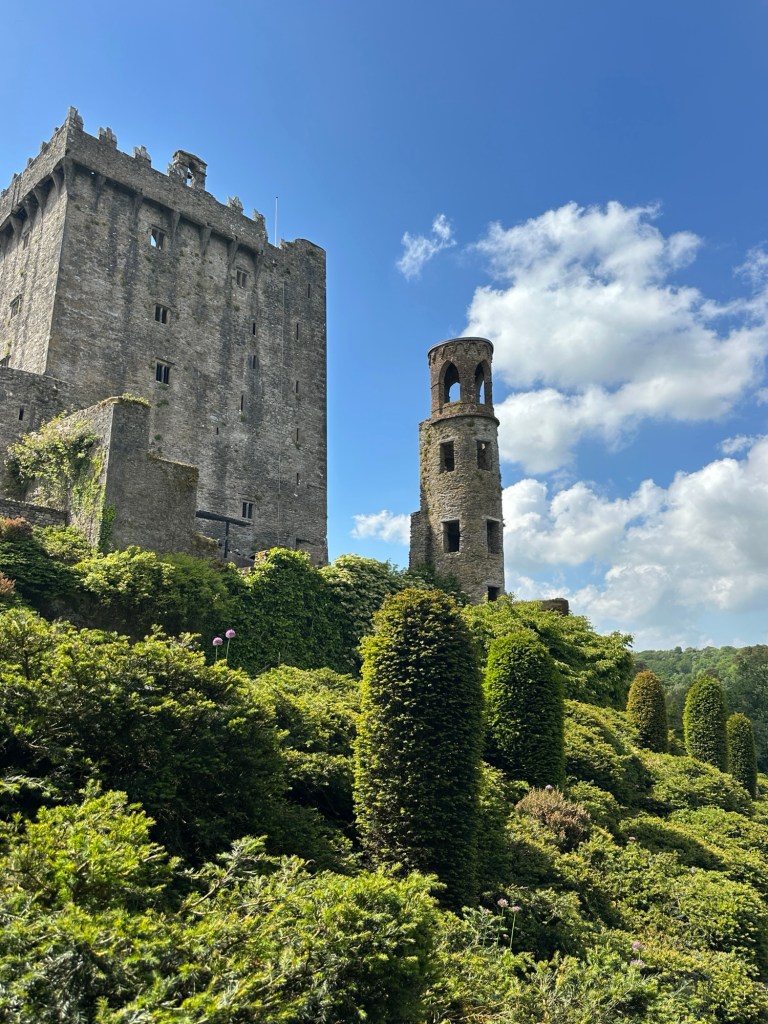
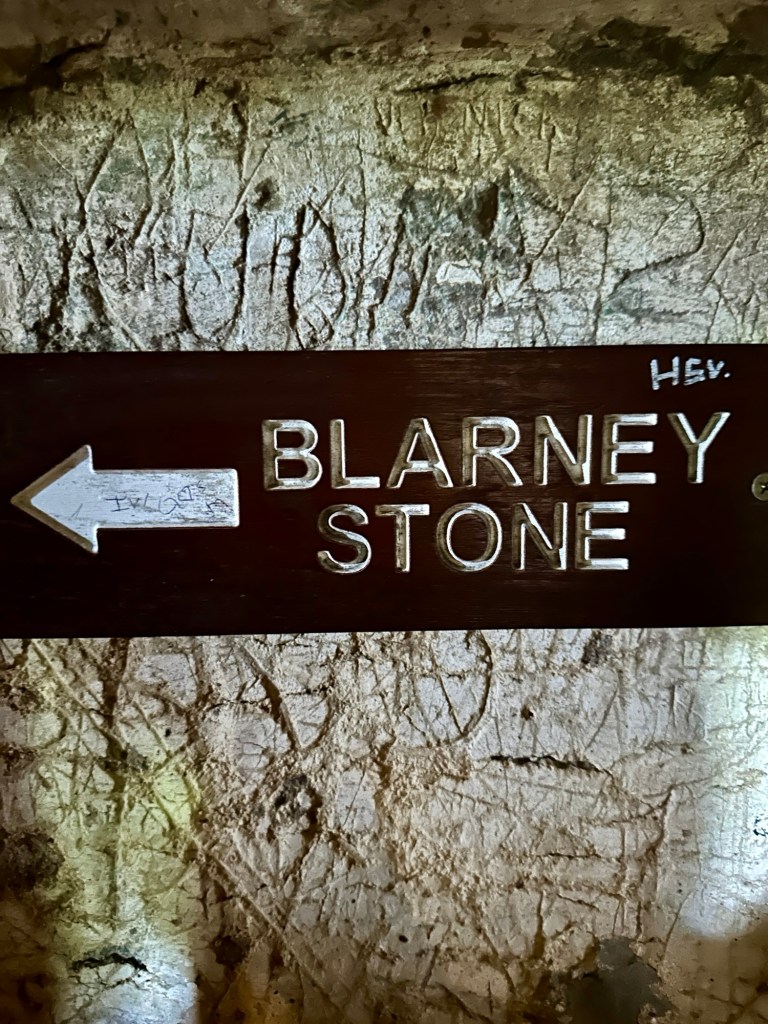
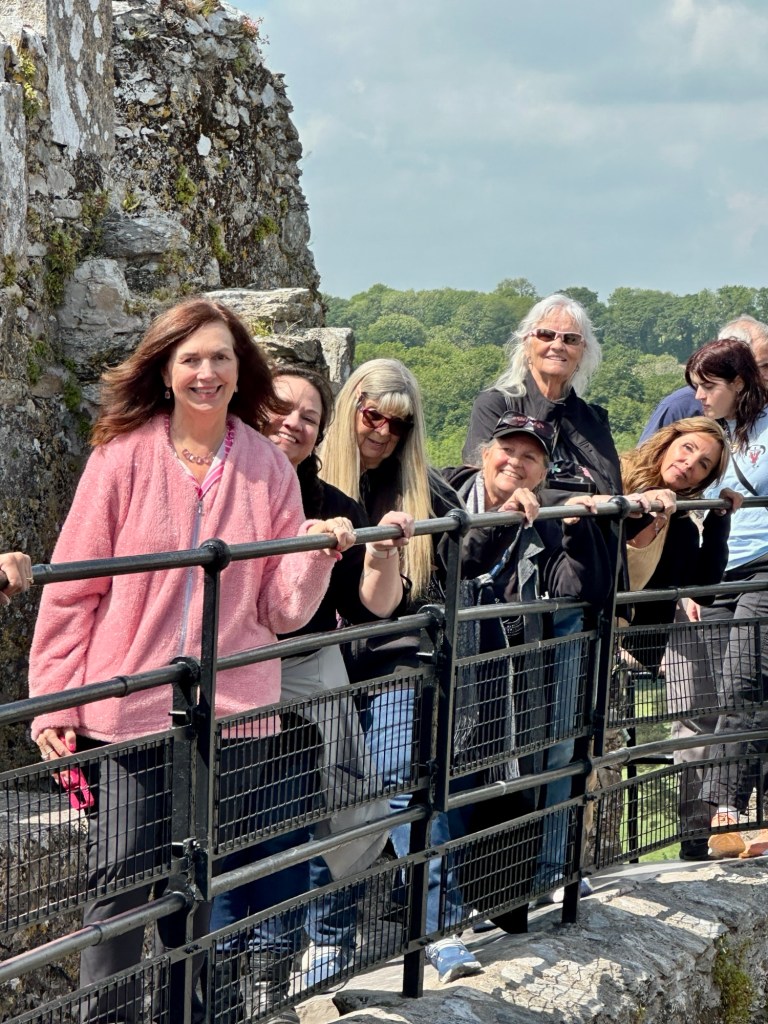
Our next stop was one of the most famous landmarks in Ireland — Blarney Castle, home of the legendary Blarney Stone. Legend has it that if you kiss the Blarney Stone, you’ll be granted the gift of eloquence — or, as the Irish like to say, “the gift of the gab.” It’s said to bless you with the ability to speak with charm, wit, and persuasion.
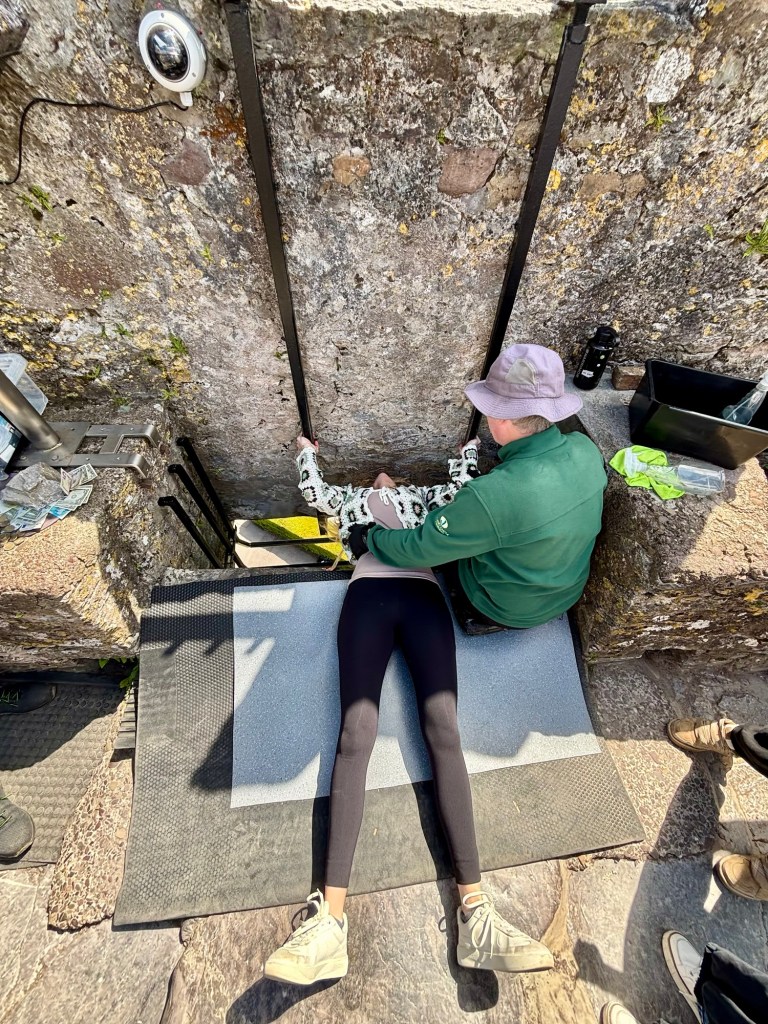
It’s no easy feat, though! To reach the stone, visitors must lie on their backs and lean backward over an open gap in the castle wall, while attendants hold you safely in place. It’s a mix of nerves, laughter, and a touch of bravery — but absolutely worth the experience.
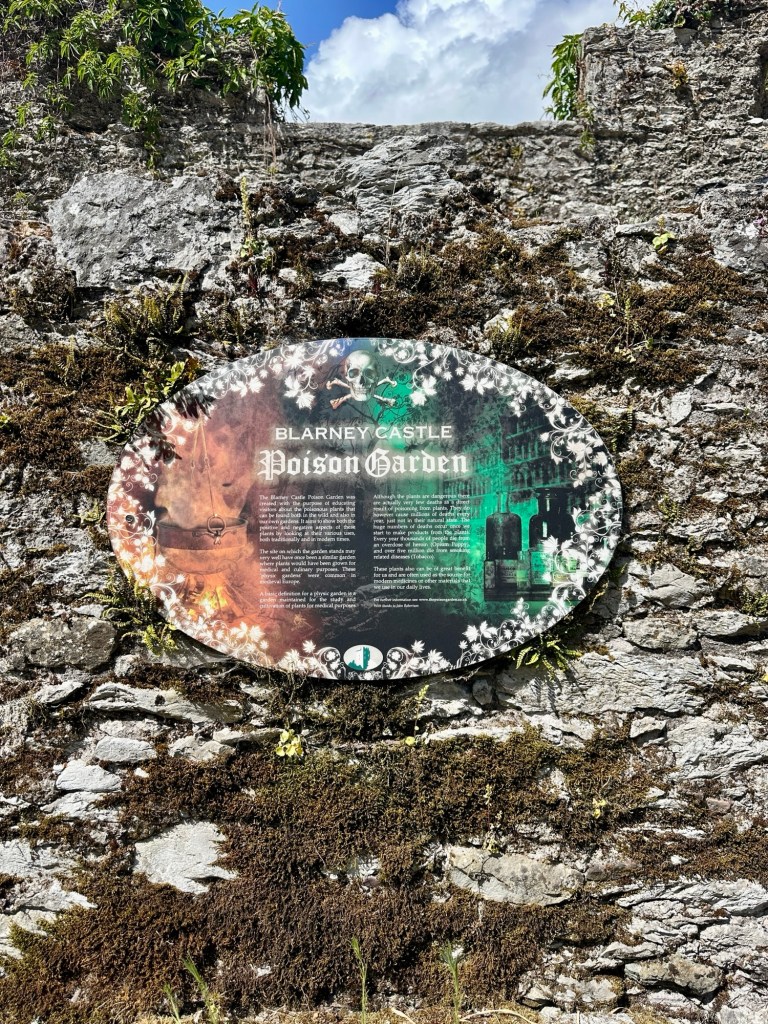
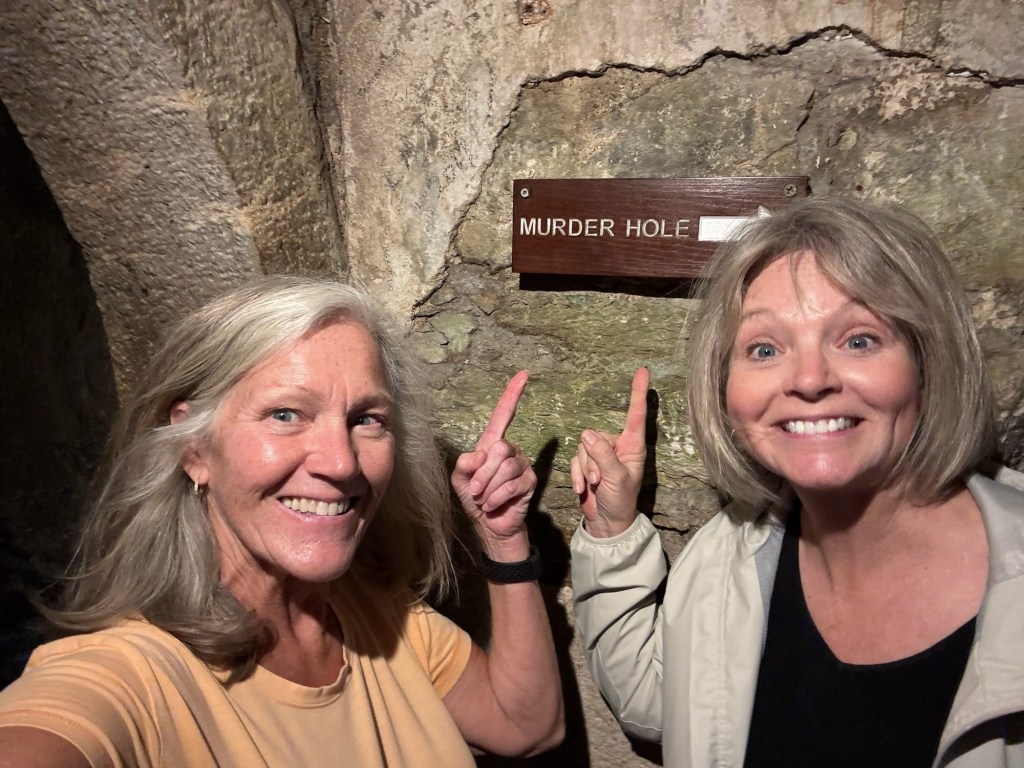
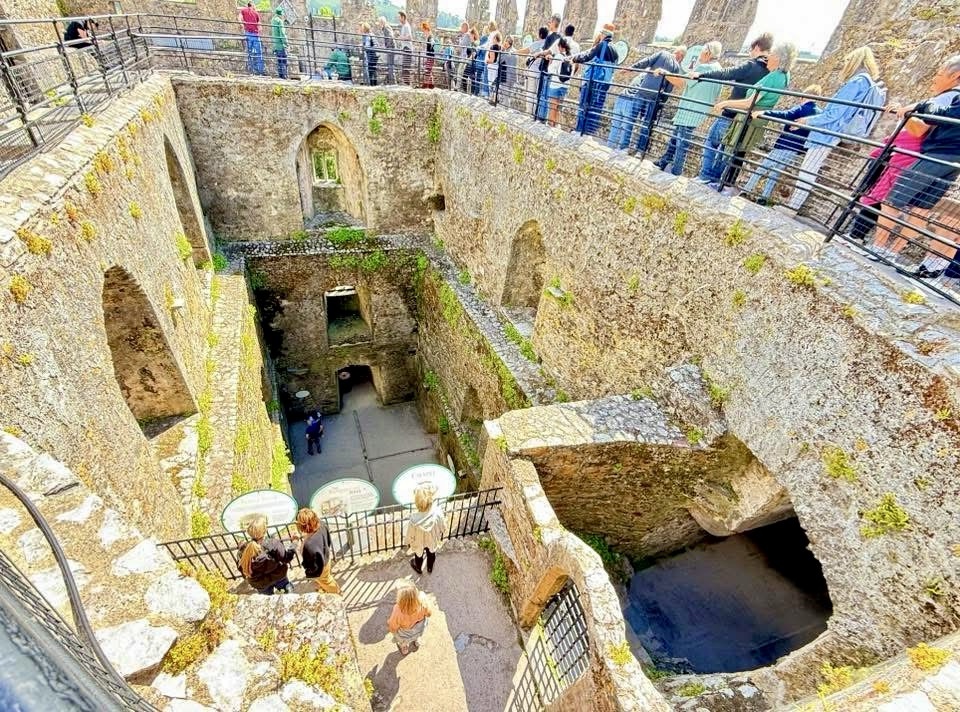
The castle itself is equally fascinating. Built in the 15th century by the powerful MacCarthy of Muskerry dynasty, Blarney Castle has a rich history filled with sieges, legends, and political intrigue. The surrounding castle grounds are beautifully kept, with winding pathways through gardens, mystical rock formations, and hidden spots like the Wishing Steps and Poison Garden — a collection of plants once used in medieval medicine and magic.
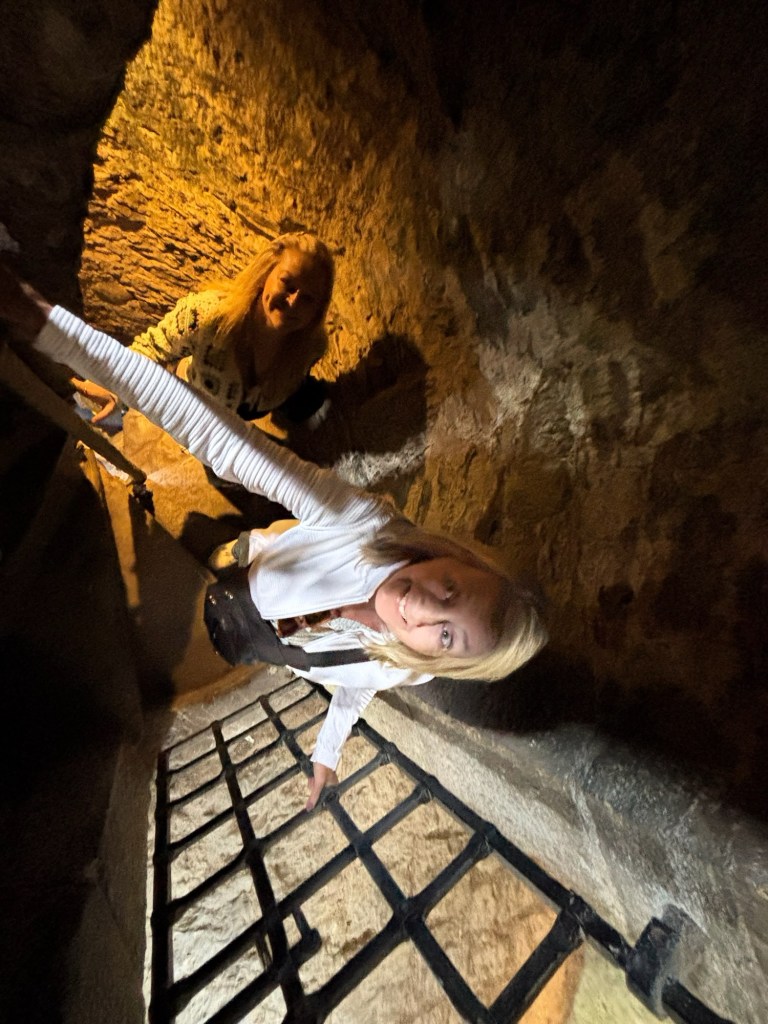
Do be prepared to climb several flights of narrow, winding stone steps to reach the top — it’s a bit of a workout, but the panoramic views of the Irish countryside from above make it all worthwhile.
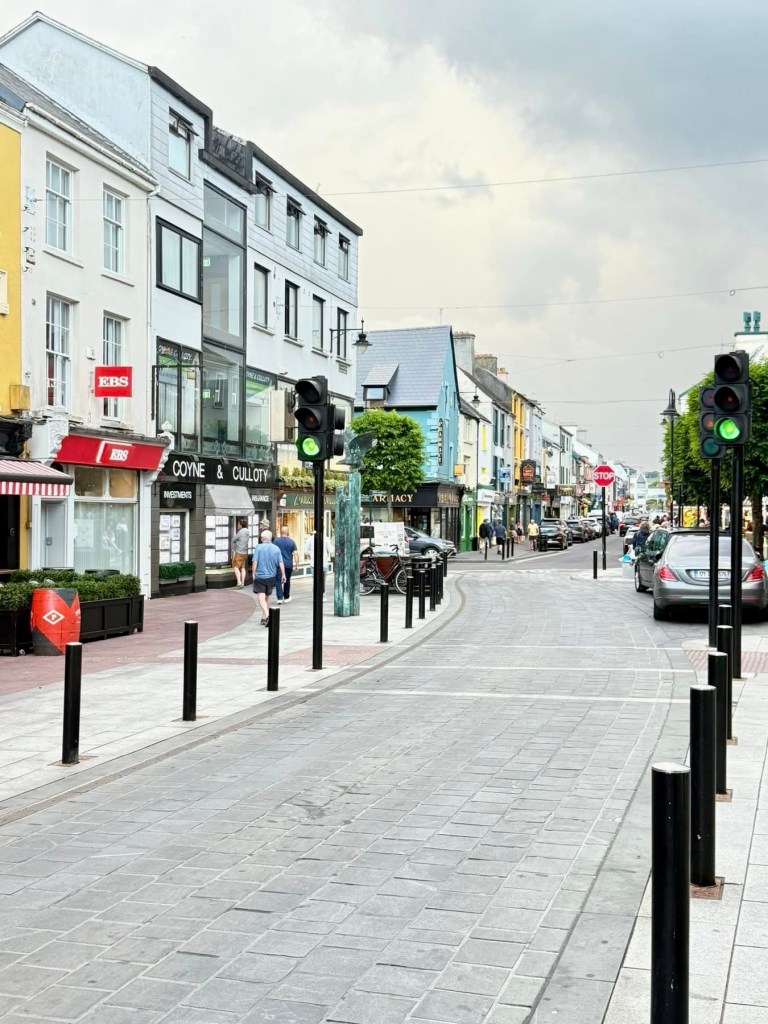
Our overnight stop in Killarney turned out to be one of our favorite towns on the entire tour. Nestled at the edge of Killarney National Park in County Kerry, this charming town has long been known as one of Ireland’s most picturesque destinations. It’s surrounded by mountains, lakes, and ancient woodlands — part of the famed Ring of Kerry route — and has been welcoming visitors since the 18th century when it became one of Ireland’s first true tourist towns.
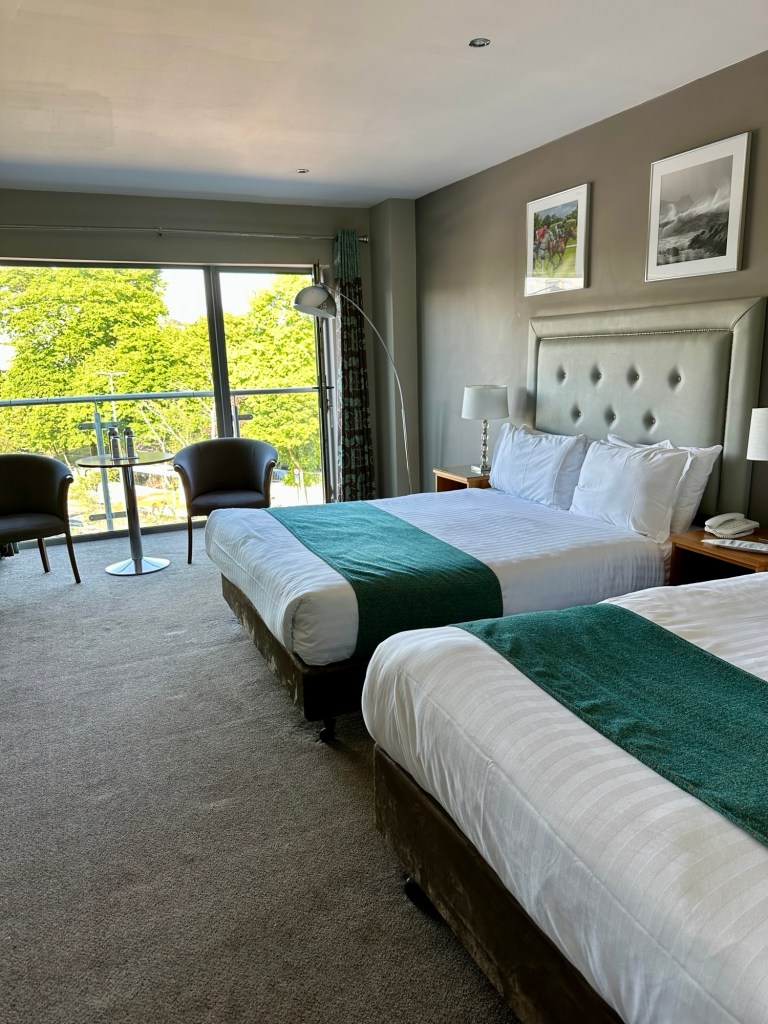
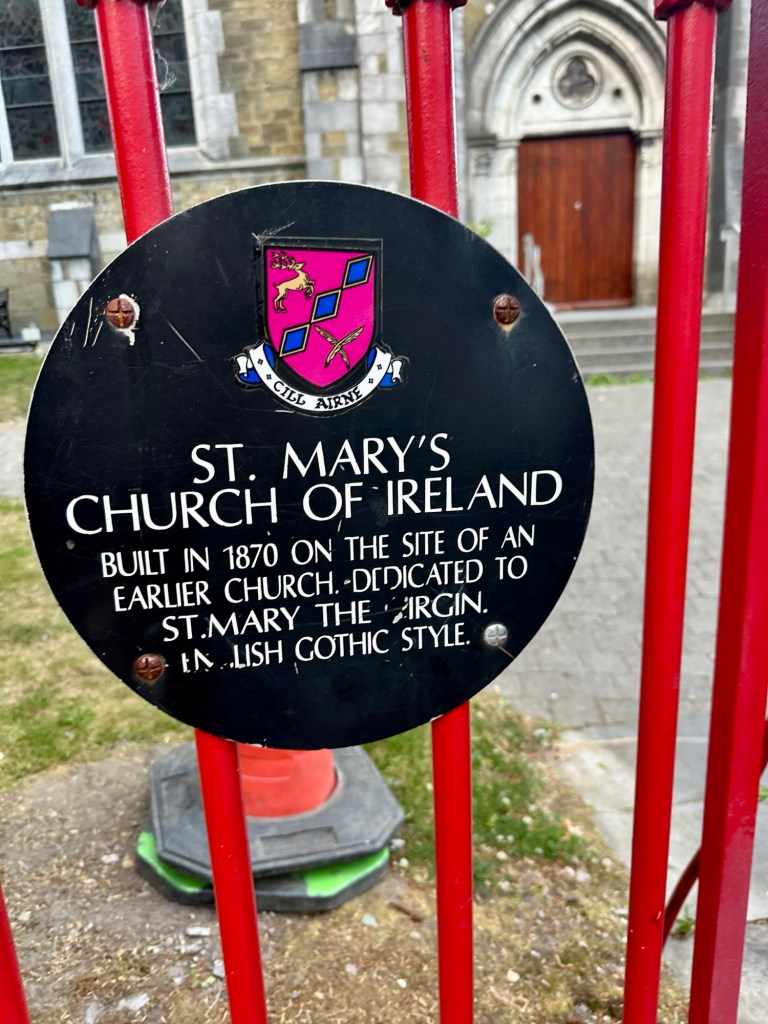
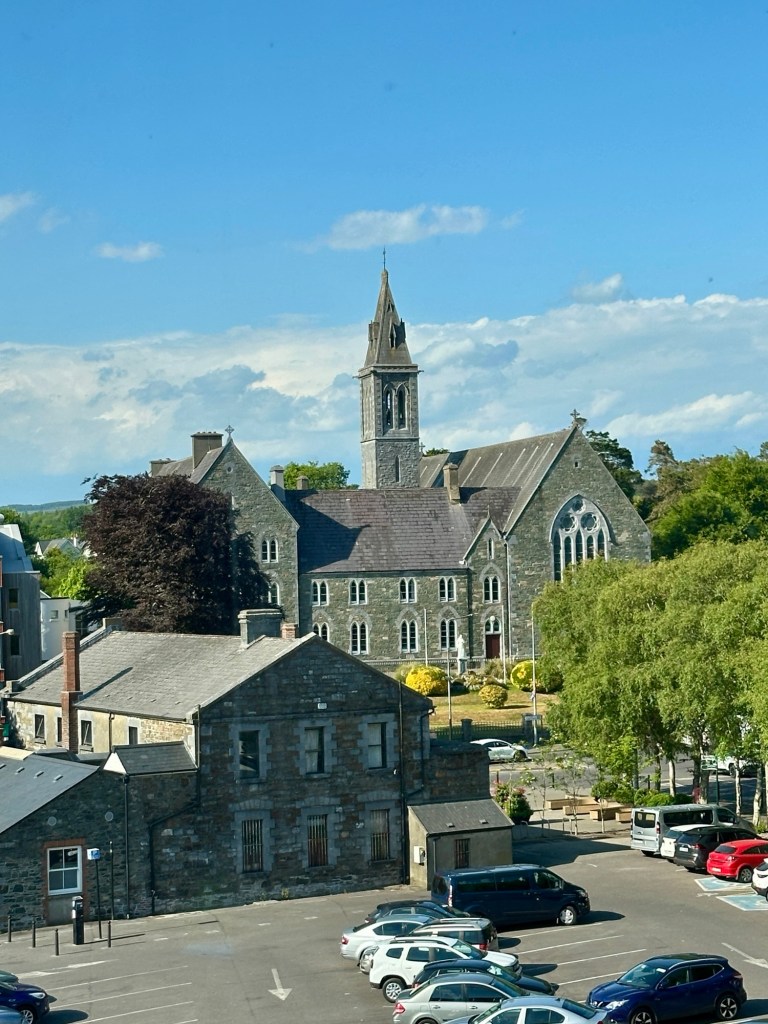
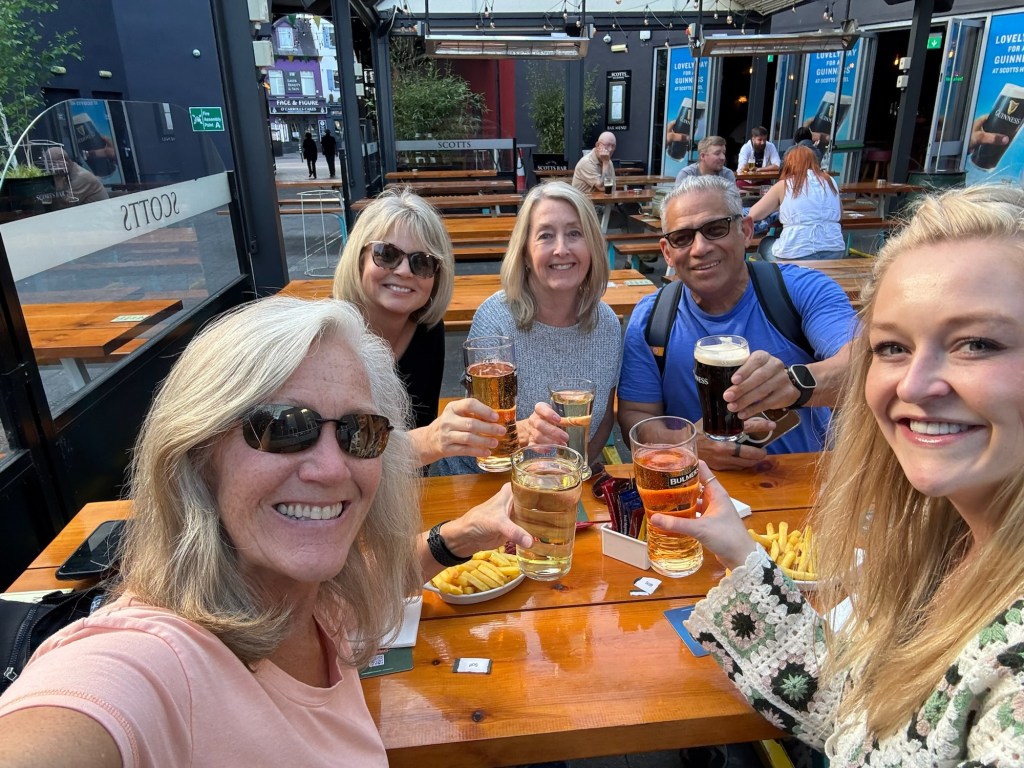
We stayed at Scott’s Hotel, perfectly located within walking distance of Killarney’s shops, pubs, and historic buildings. From our window, we had a lovely view of St. Mary’s Church of Ireland, a striking Gothic Revival church that adds so much character to the town skyline.
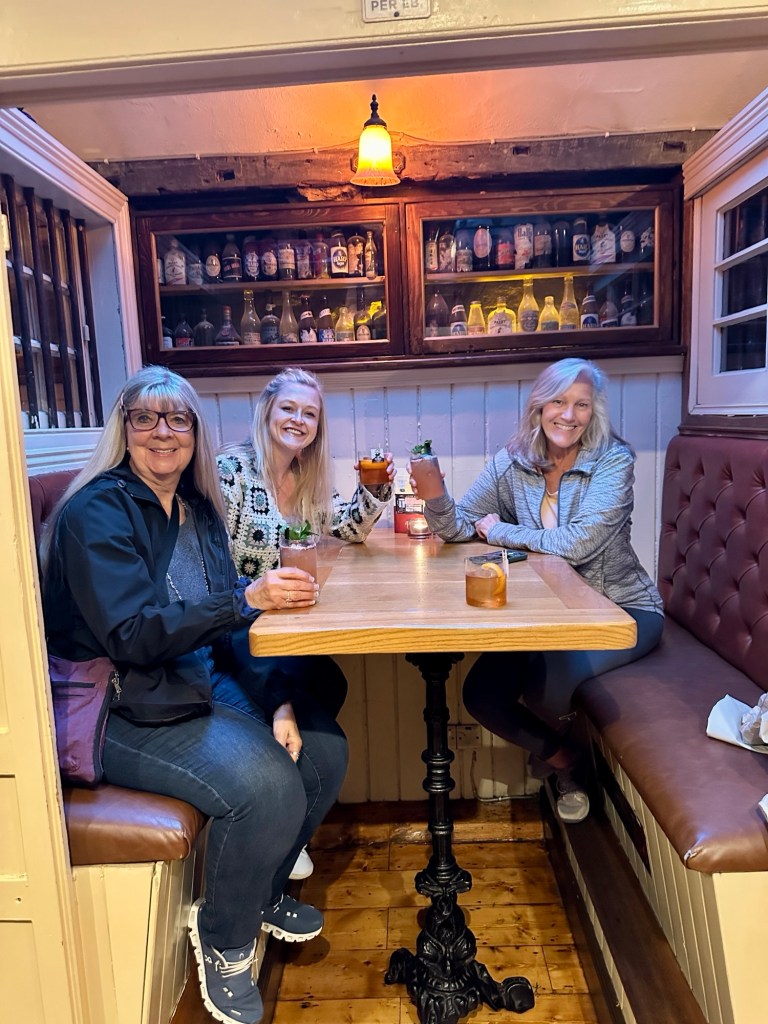
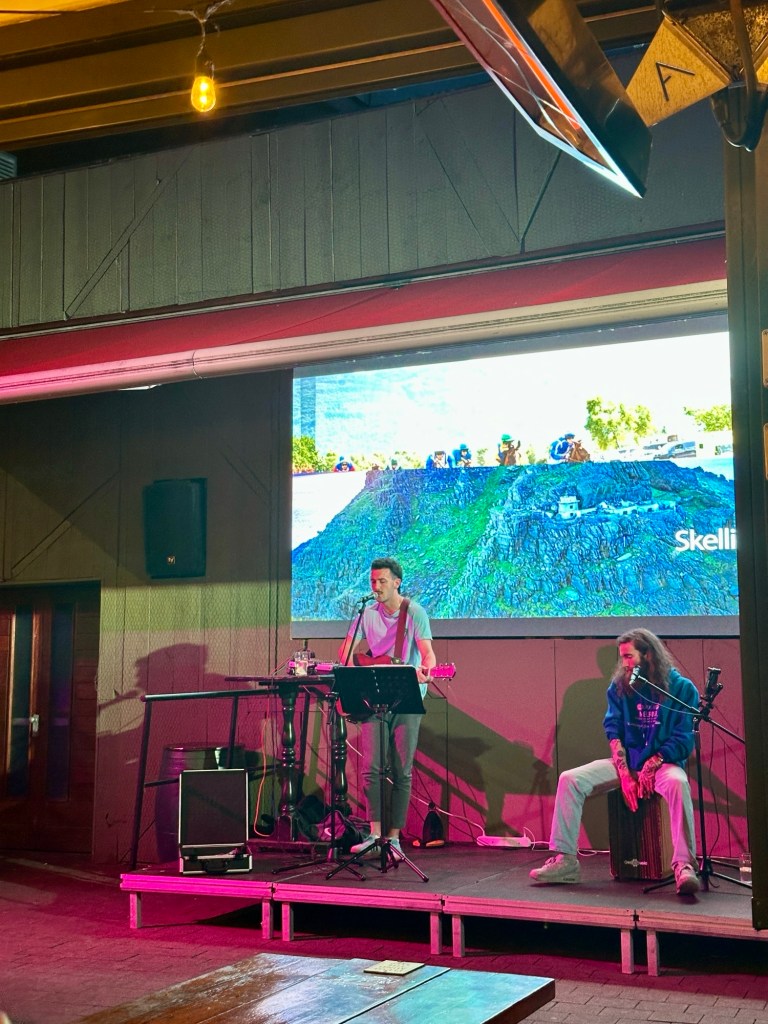
The pubs here are the heart of the experience — there’s live music in nearly every venue, and we quickly learned about “the craic” (pronounced “crack”) — the Irish word for good fun, lively conversation, and a joyful time with friends. We stopped at J.M. Reidy’s, a beloved local favorite known for its cozy atmosphere, creative cocktails, and vintage charm.
But the craic didn’t end there — even back at our hotel, an Irish duo was performing right outside our room. Naturally, we joined in for a nightcap and a few more songs before turning in. It was the perfect ending to a truly memorable evening in Killarney.

Tuesday ~ Gap of Dunloe & Dingle
Tuesday brought one of the most scenic days of our journey as we ventured out to explore The Gap of Dunloe and the Blasket Islands.
The Gap of Dunloe, a narrow mountain pass carved by glaciers, stretches between the MacGillycuddy’s Reeks and the Purple Mountain Range. It’s one of Ireland’s most breathtaking drives — a winding ribbon of road that passes stone bridges, quiet lakes, and grazing sheep along the way. The rugged beauty of this region feels like stepping into a postcard.
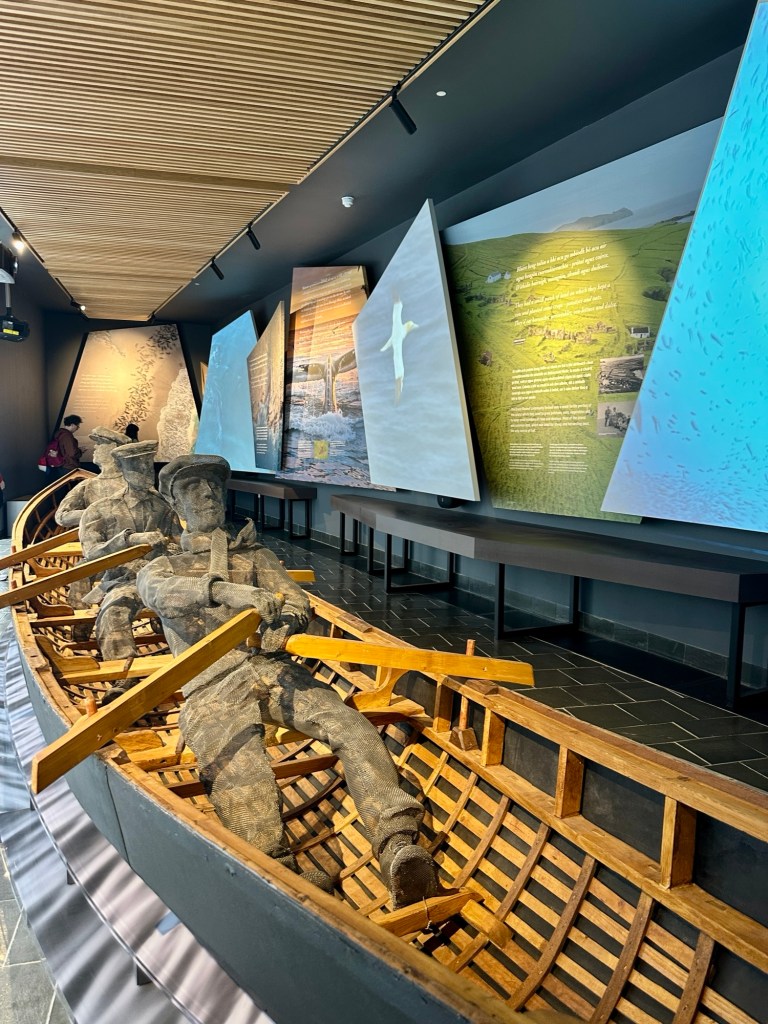
From there, we continued toward the Dingle Peninsula to visit the Blasket Island Visitor Centre. The center tells the story of the remote Great Blasket Island, once home to a small Irish-speaking community who lived simple, self-sufficient lives until the island was evacuated in 1953. Through exhibits, photos, and personal stories, you gain a deep appreciation for their resilience and the strong sense of community that defined island life.
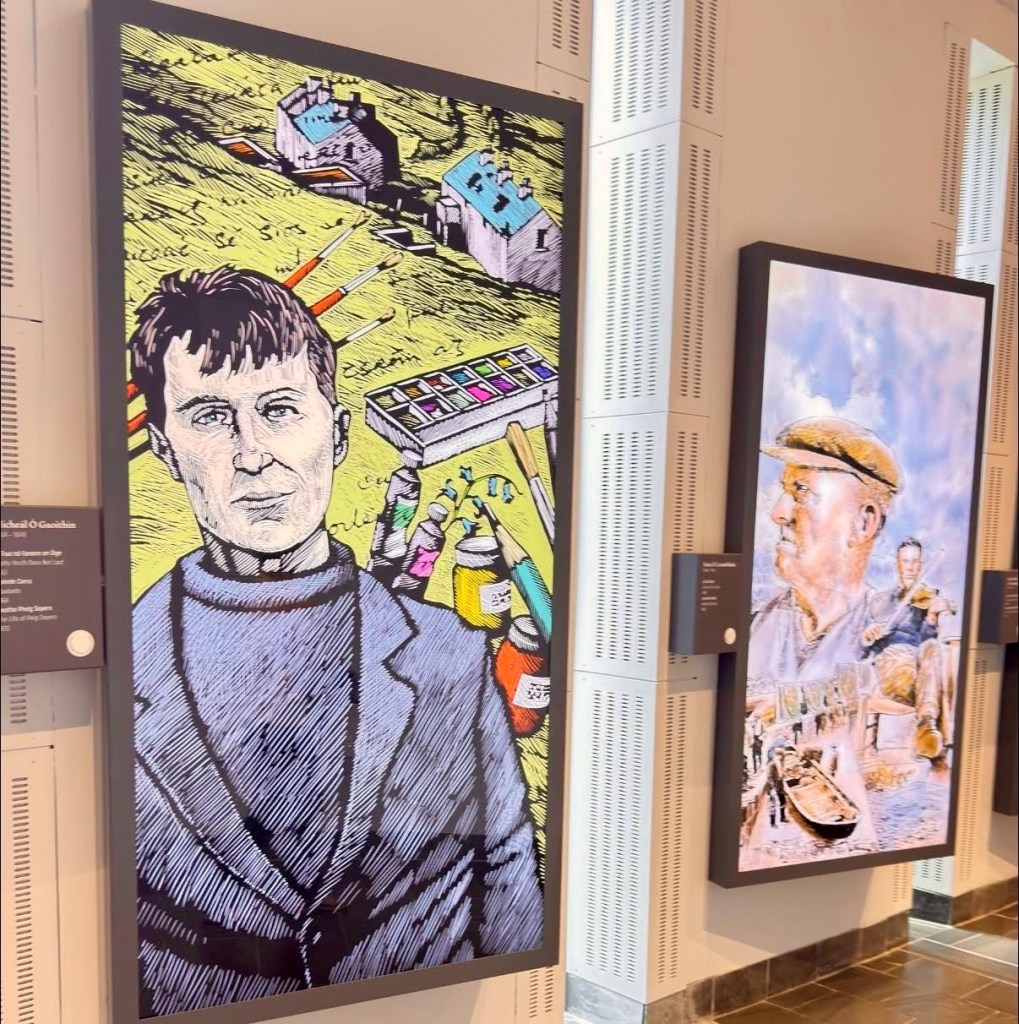
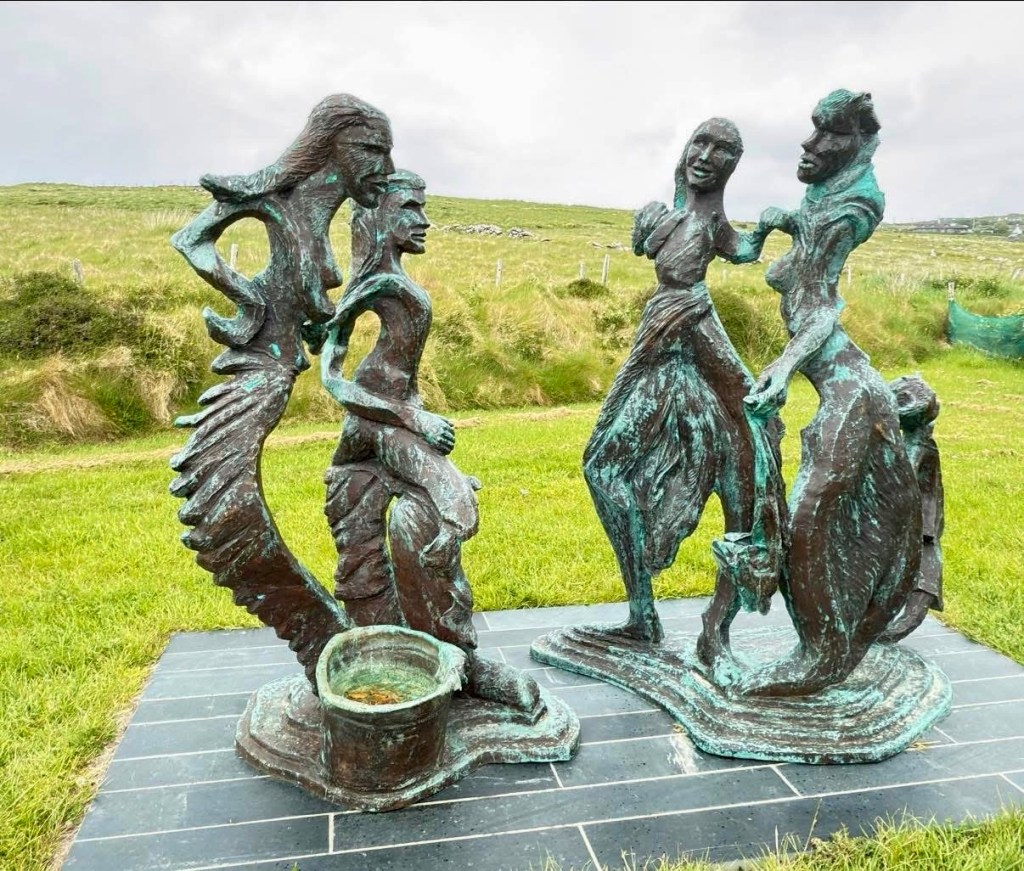
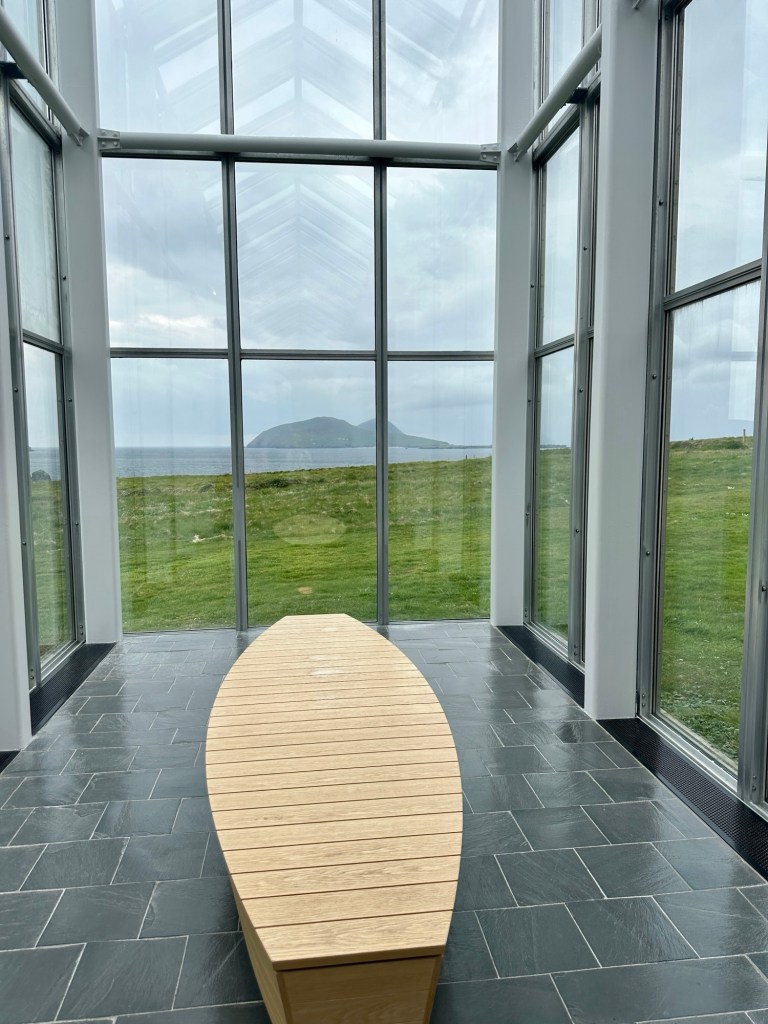
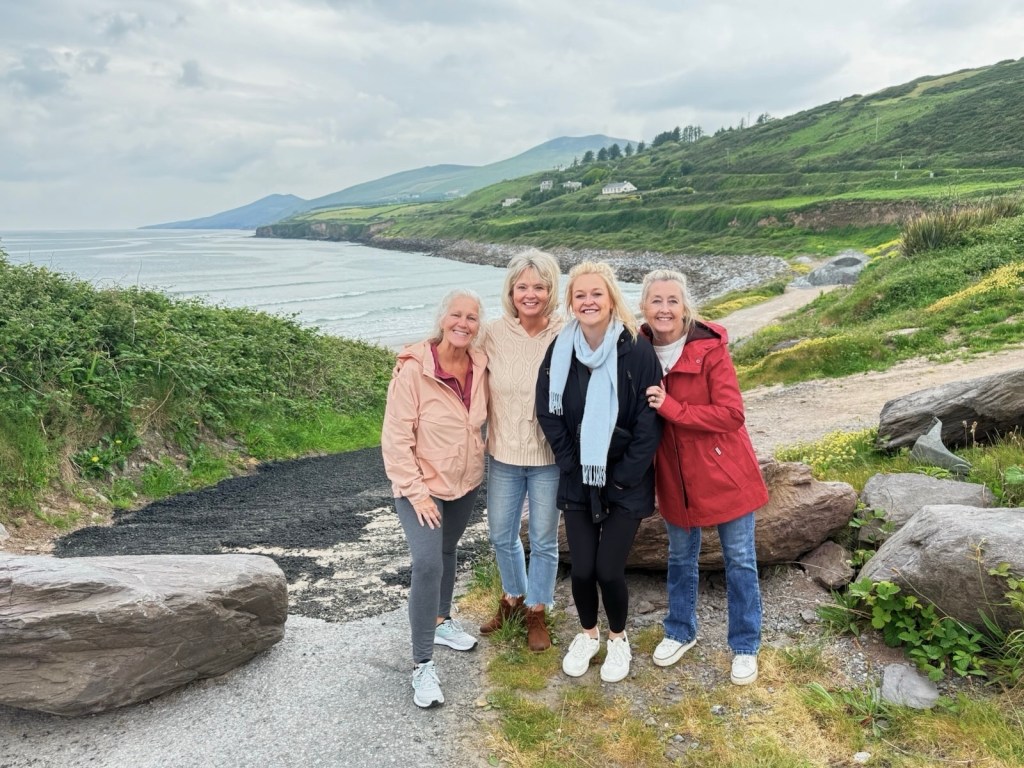
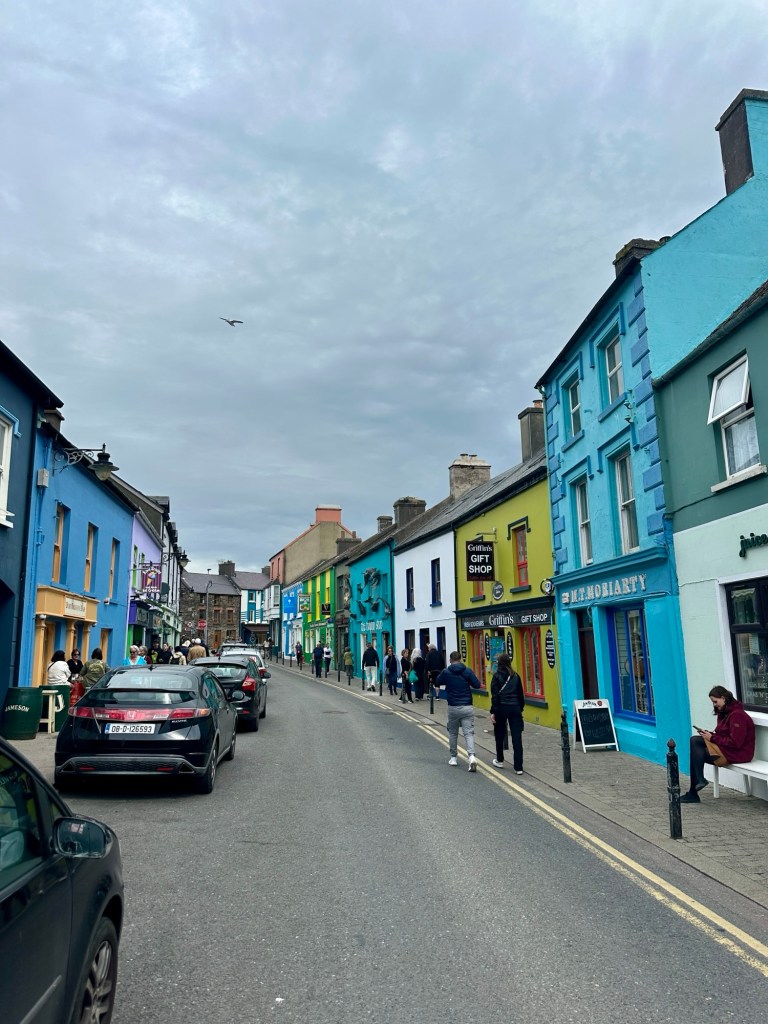
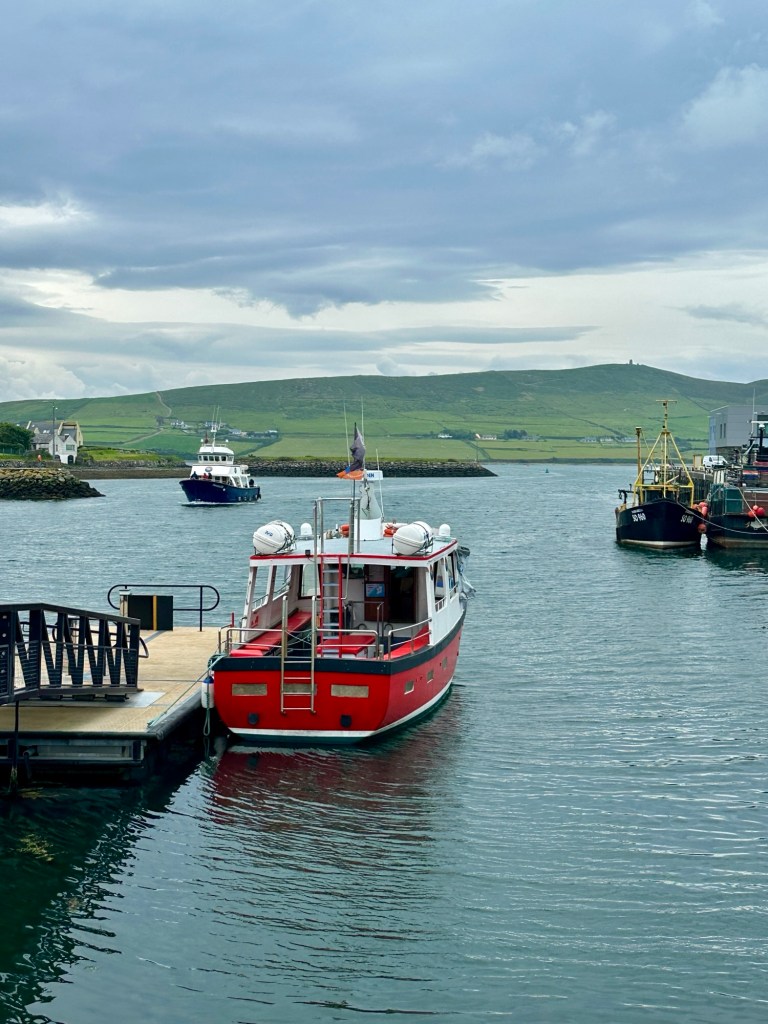
Next, we made our way to the charming coastal town of Dingle, one of the most delightful stops on our trip. Nestled on the Dingle Peninsula, this colorful harbor town is known for its friendly locals, lively pubs, and rows of cheerful shopfronts painted every color of the rainbow.
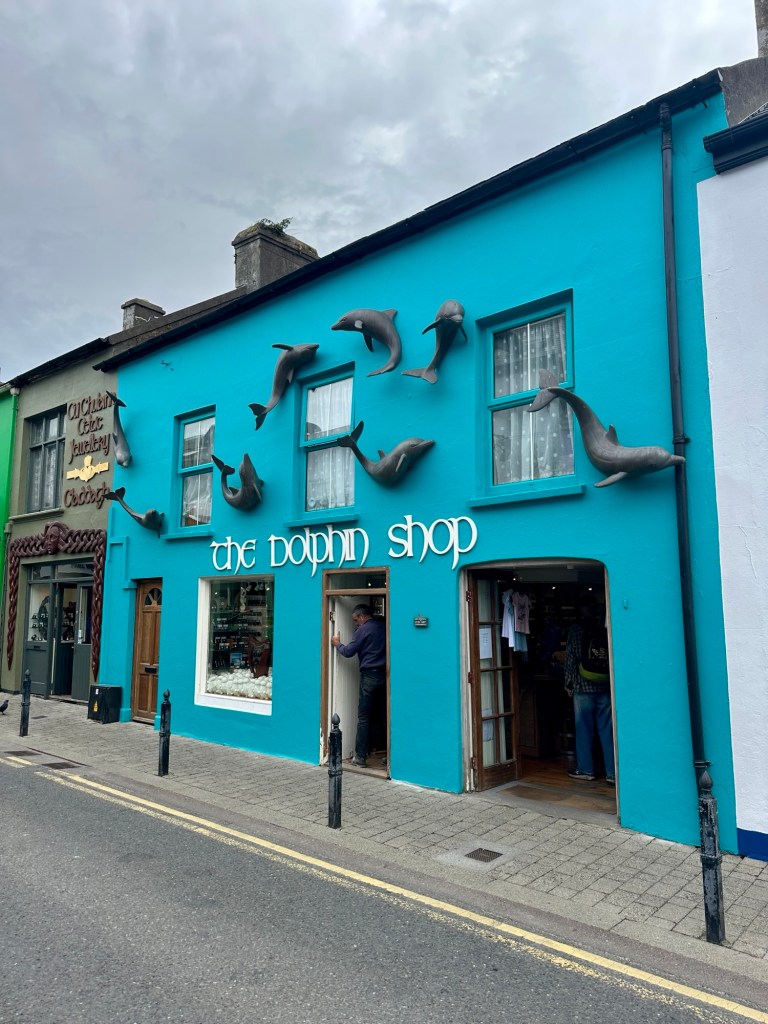
For years, Dingle was famous for its beloved resident dolphin, Fungie, who lived in the harbor and became something of a local legend. Although he hasn’t been sighted in several years, his spirit lives on in the bronze statue near the waterfront dedicated to him, where visitors still stop for photos and fond memories.
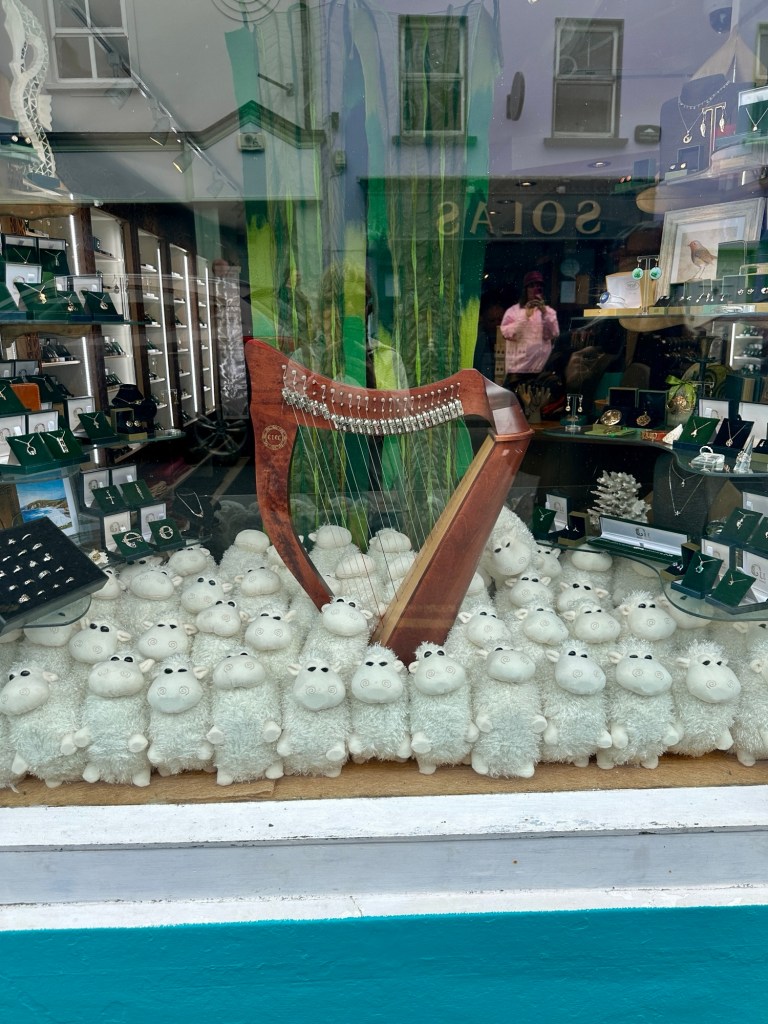
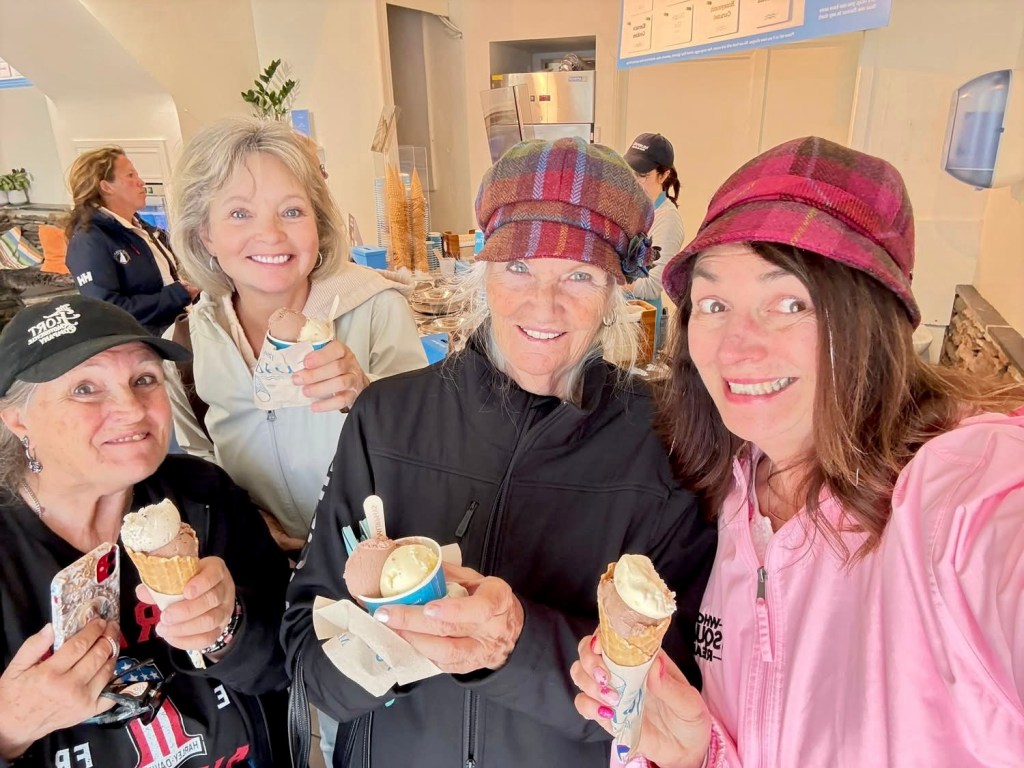
We spent the afternoon wandering through Dingle’s quaint little shops, filled with handmade crafts, cozy sweaters, pottery, and Irish art. It’s the kind of town where you can happily lose track of time — chatting with shop owners, enjoying an ice cream from Murphy’s, or just soaking up that small-town charm that makes Dingle so special.

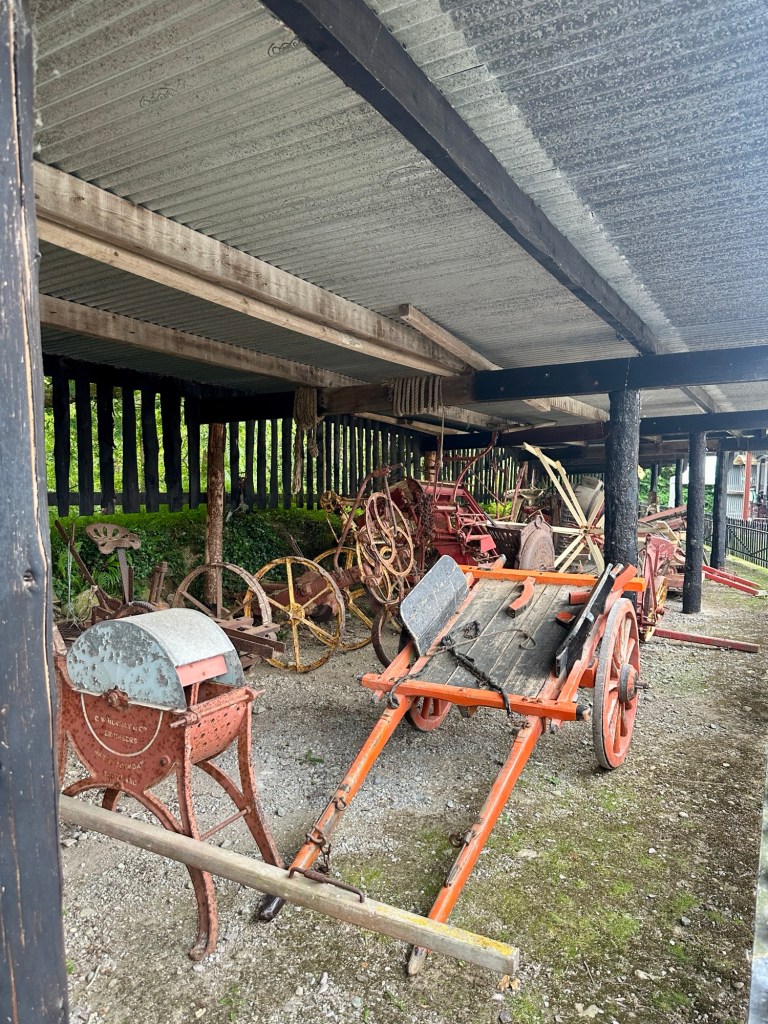
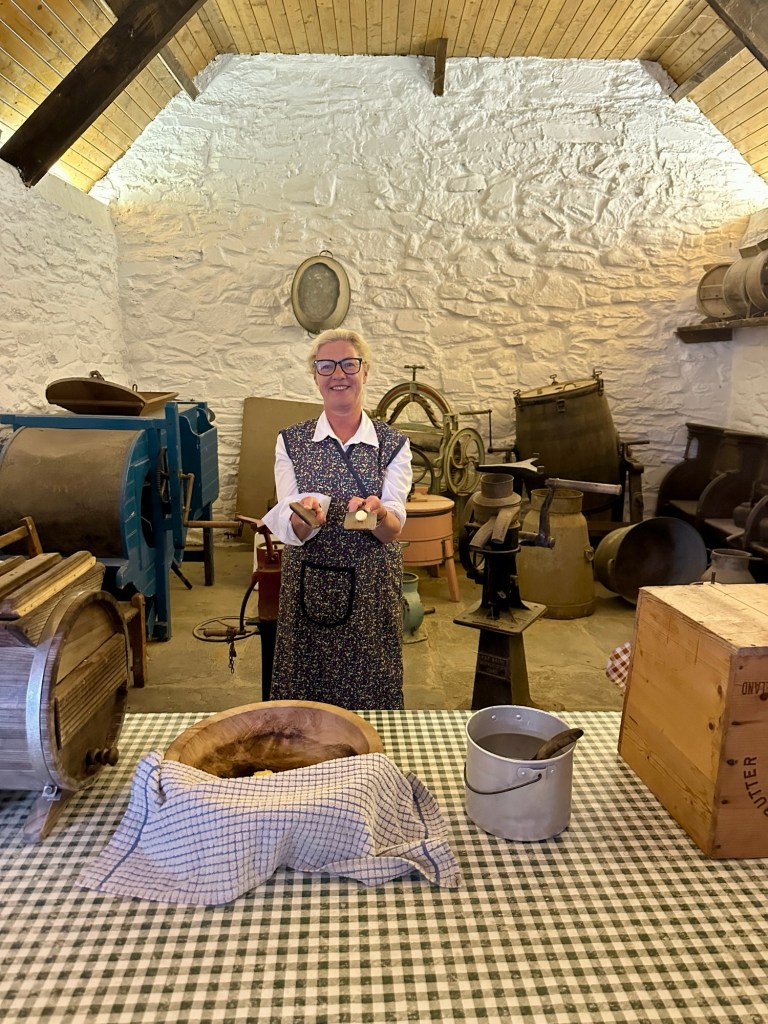
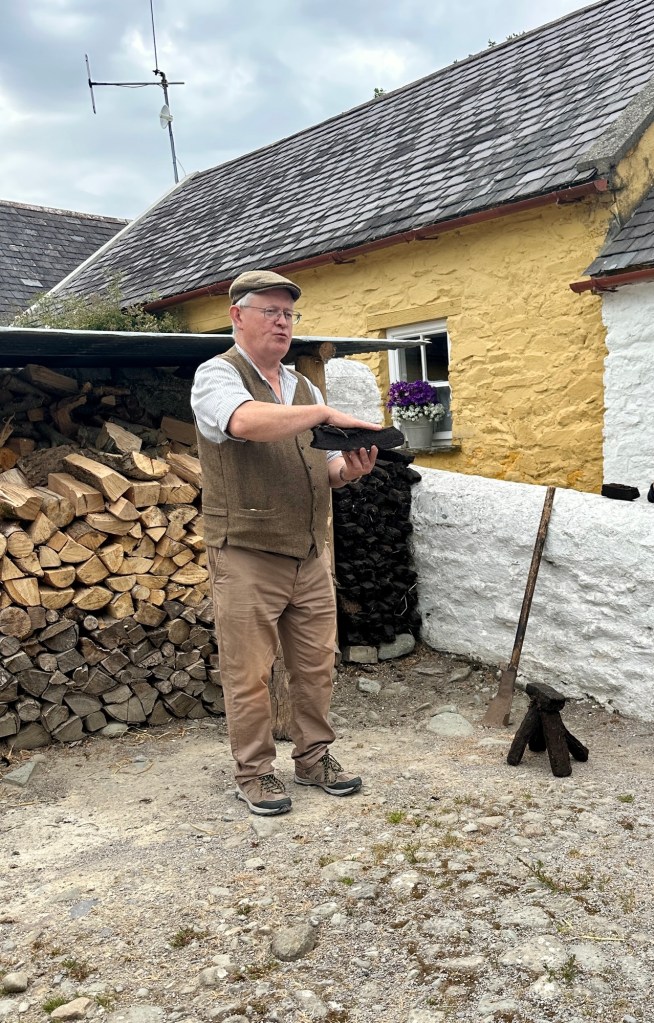
That evening, we enjoyed a truly authentic Irish experience with dinner at the Muckross Schoolhouse, set in the heart of Killarney National Park. Before the meal, we were given a tour of the surrounding Muckross Traditional Farms, where guides share how families once lived and worked the land in rural Ireland. The thatched cottages, old tools, and hands-on demonstrations offered a glimpse into a simpler time — when everything was done by hand and community meant everything.
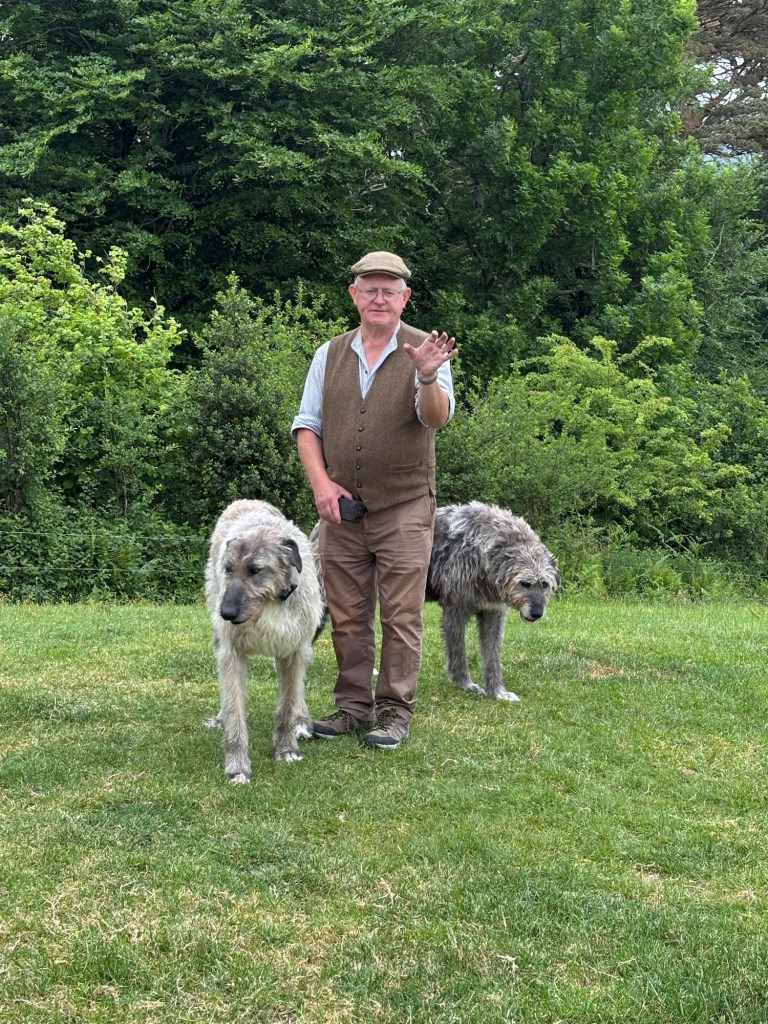
We even got to meet two magnificent Irish Wolfhounds, gentle giants who were once bred to protect herds and hunt alongside ancient Irish chieftains. They were absolutely stunning and surprisingly calm for their size!
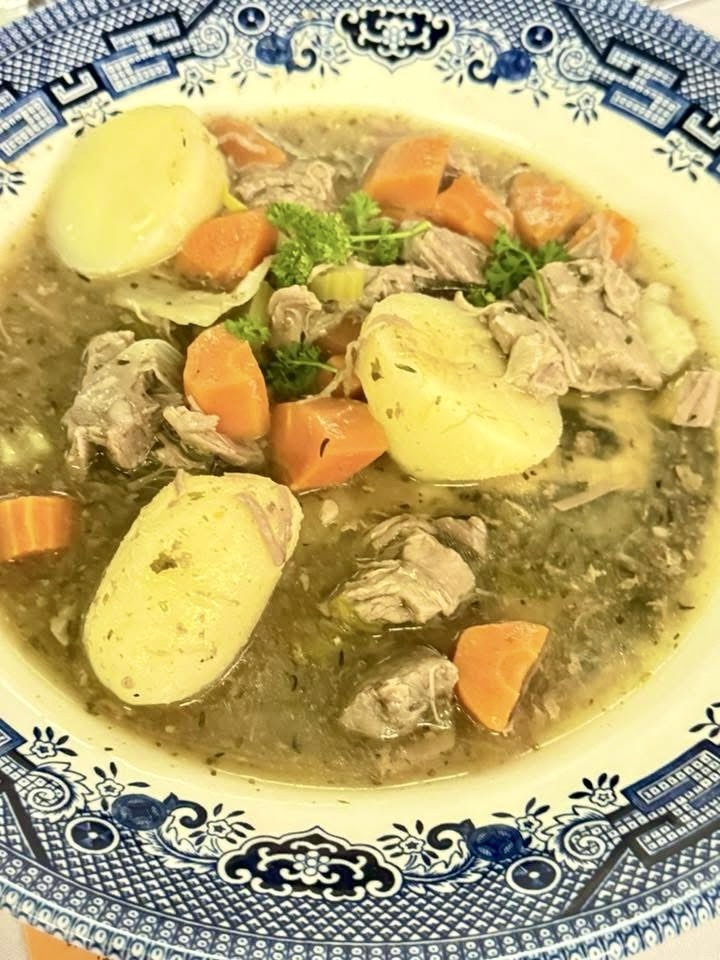
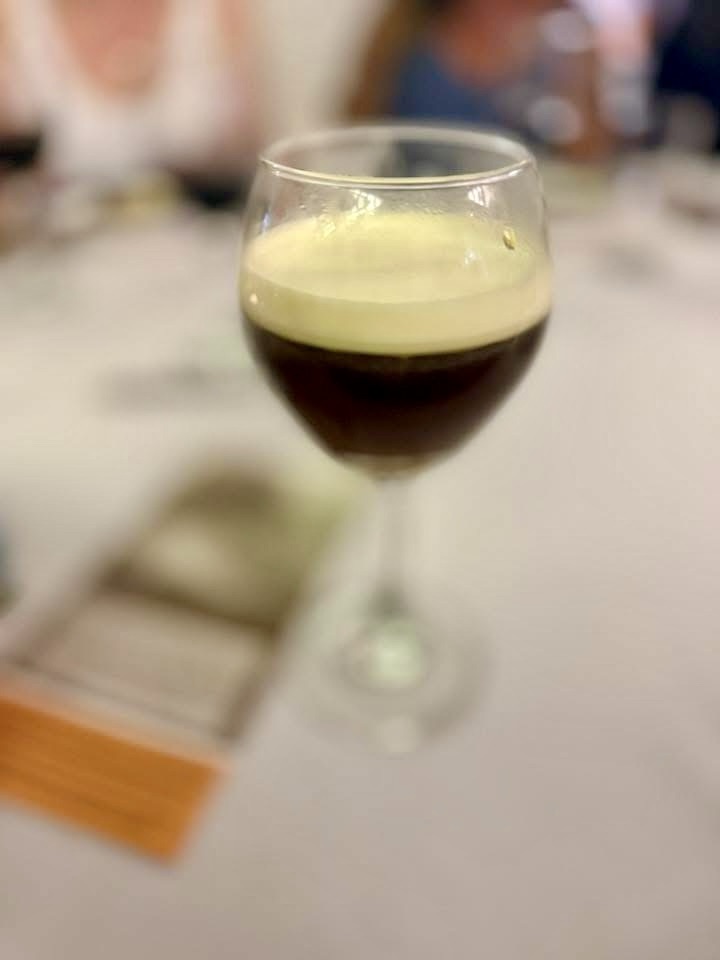
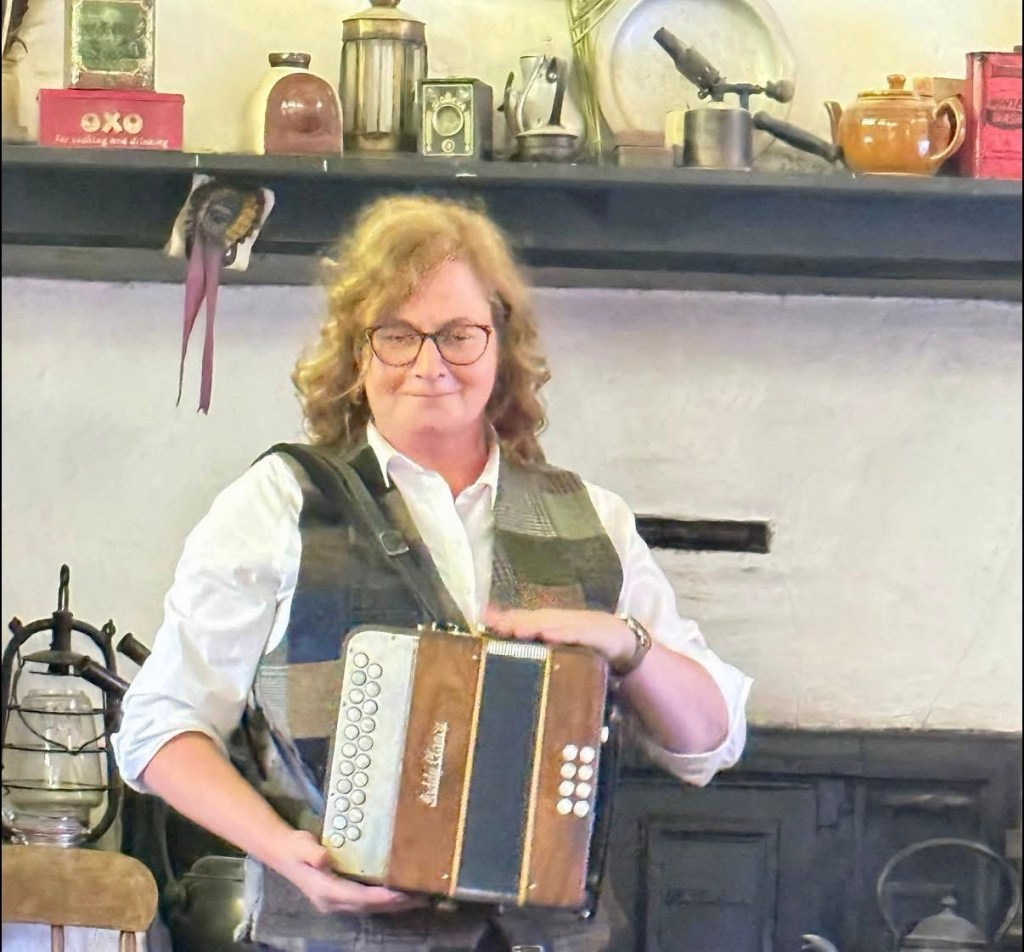
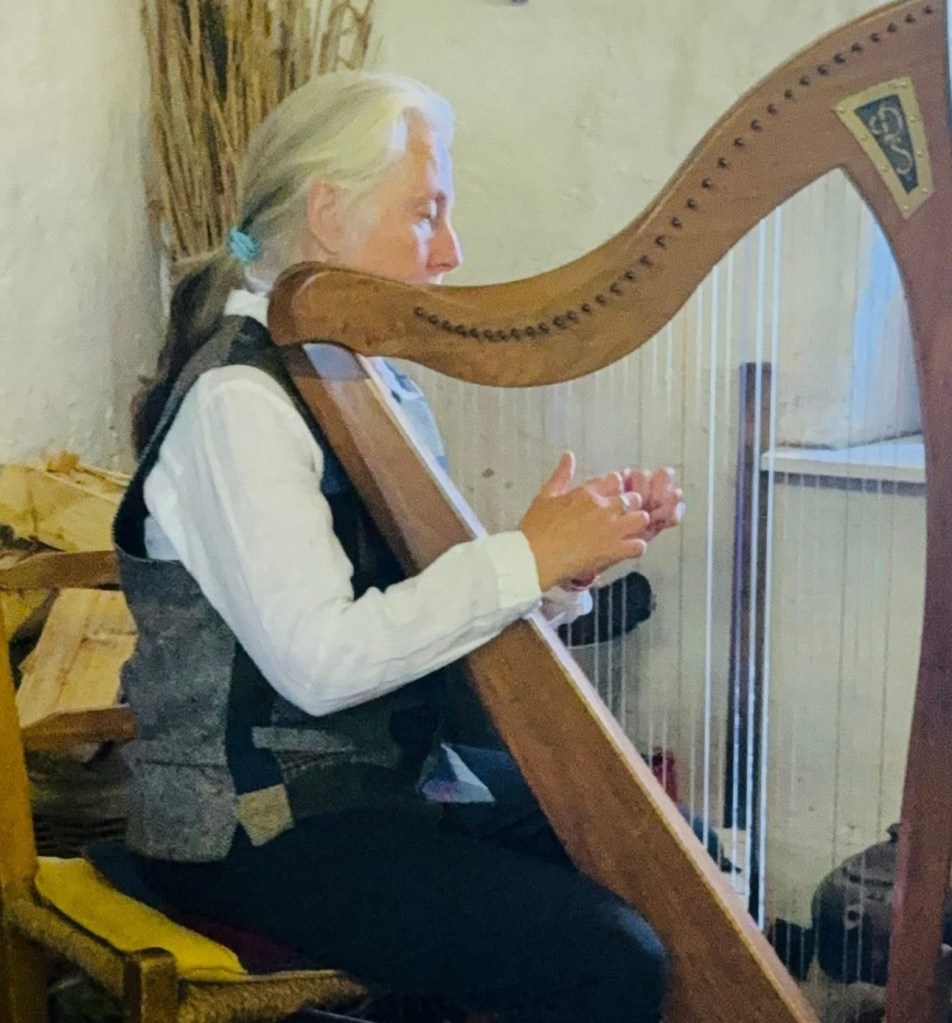
Dinner was hearty and comforting — a bowl of traditional Irish stew (made with lamb and root vegetables) and Irish coffee. As we ate, we were treated to a beautiful harp performance followed by lively clog dancing. The music, storytelling and sense of tradition made it one of the most memorable evenings of the trip — a true taste of Ireland, in every sense.
Wednesday ~ A Jaunting Car Ride, Adaire & a Medieval Festival
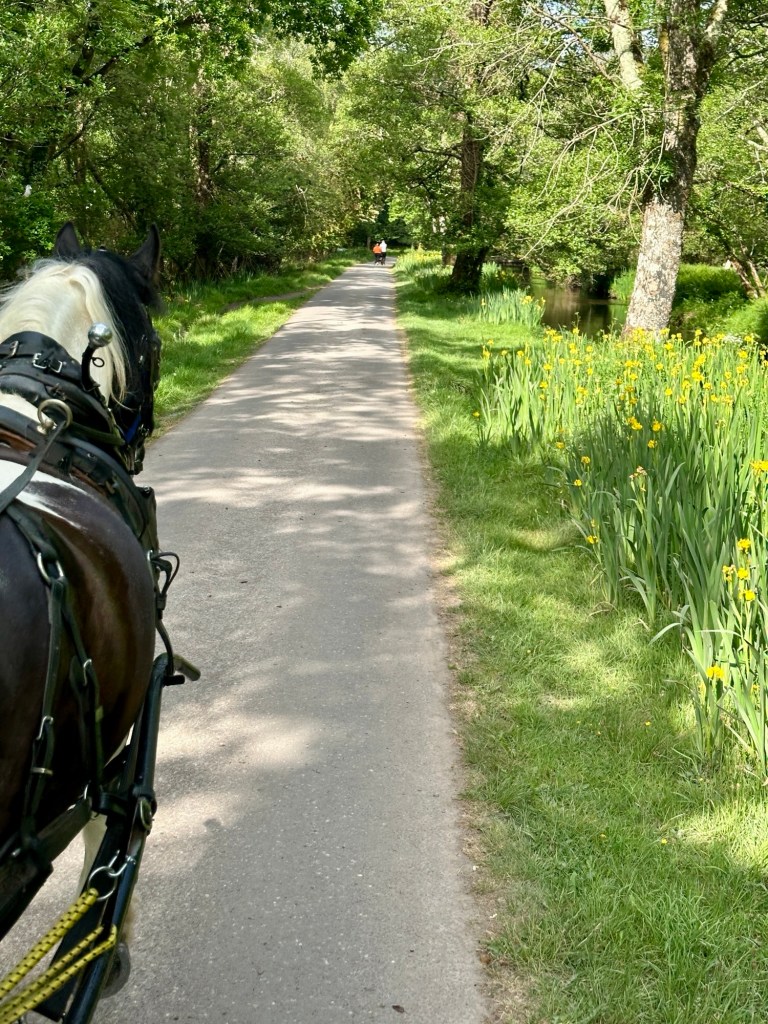
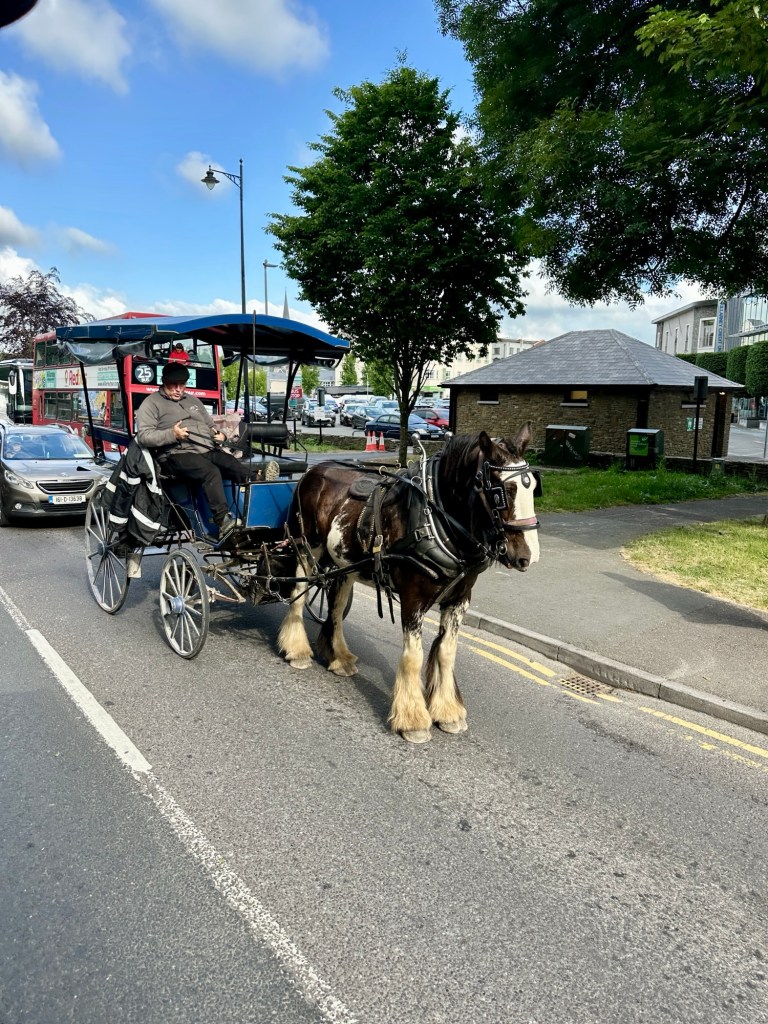
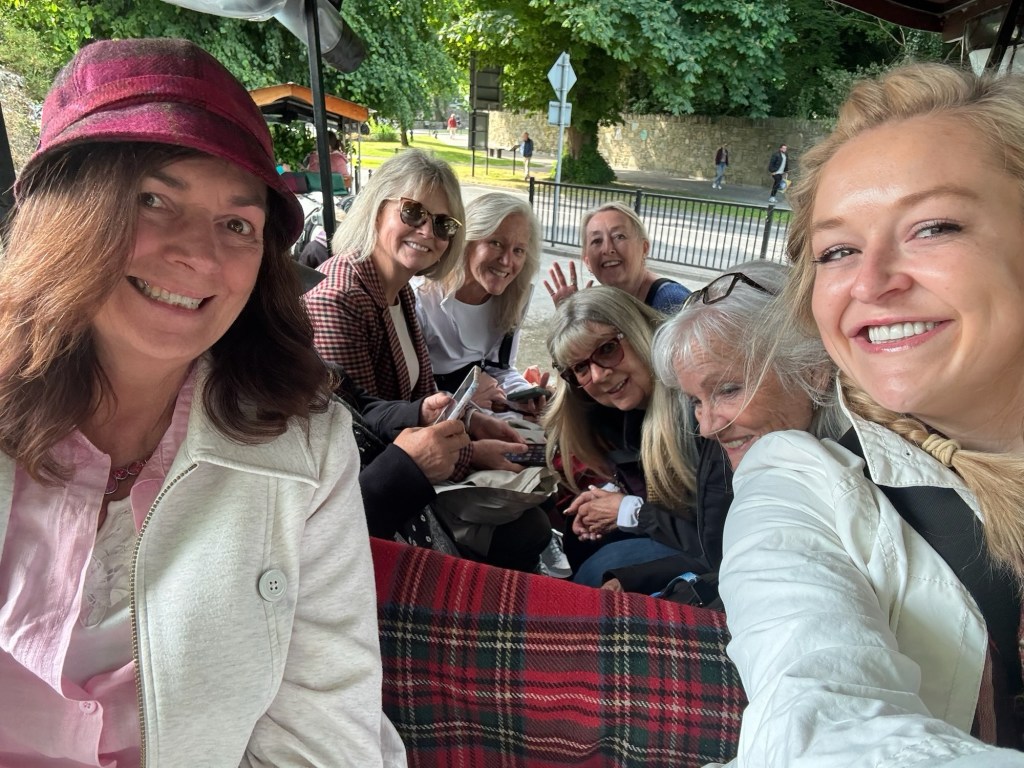
The next morning, we were so excited to set off on a jaunting car ride through Killarney National Park. What’s a jaunting car, you ask? It’s a traditional Irish horse-drawn wagon, once a common mode of transportation in the 19th century and now a charming way to explore the park. Our driver — known locally as a jarvey — serenaded us with old Irish tunes as we clip-clopped along the path beside Lough Leane, the largest of Killarney’s three lakes. The scenery was breathtaking, with misty mountains, ancient oaks, and serene water views all around.
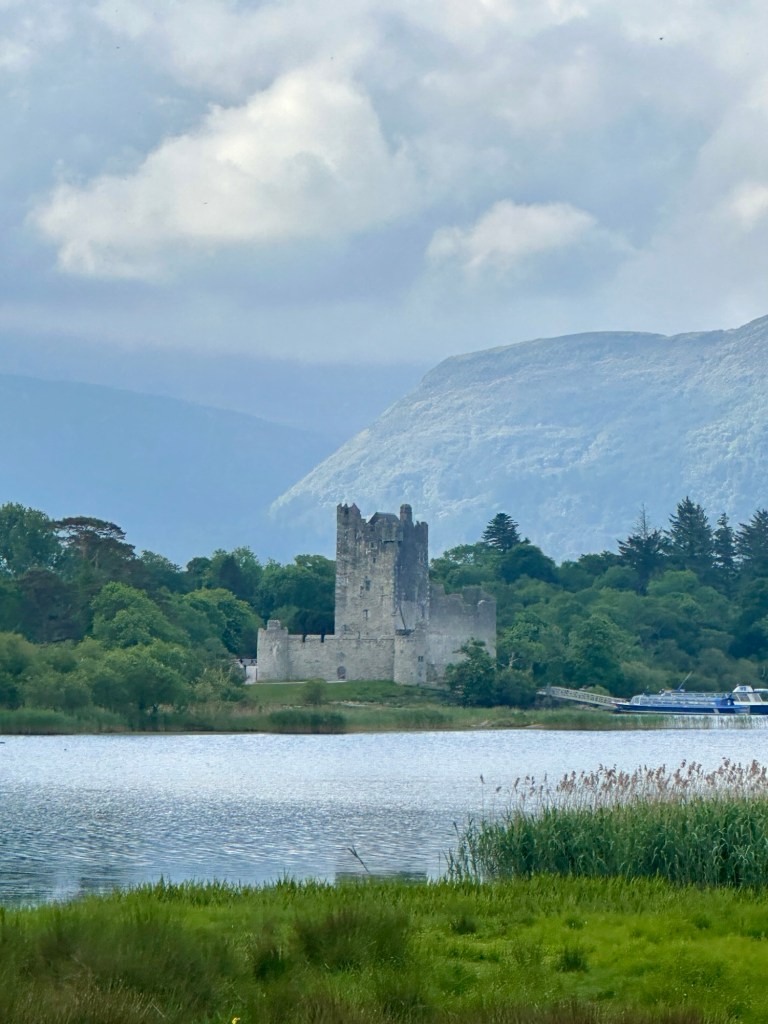
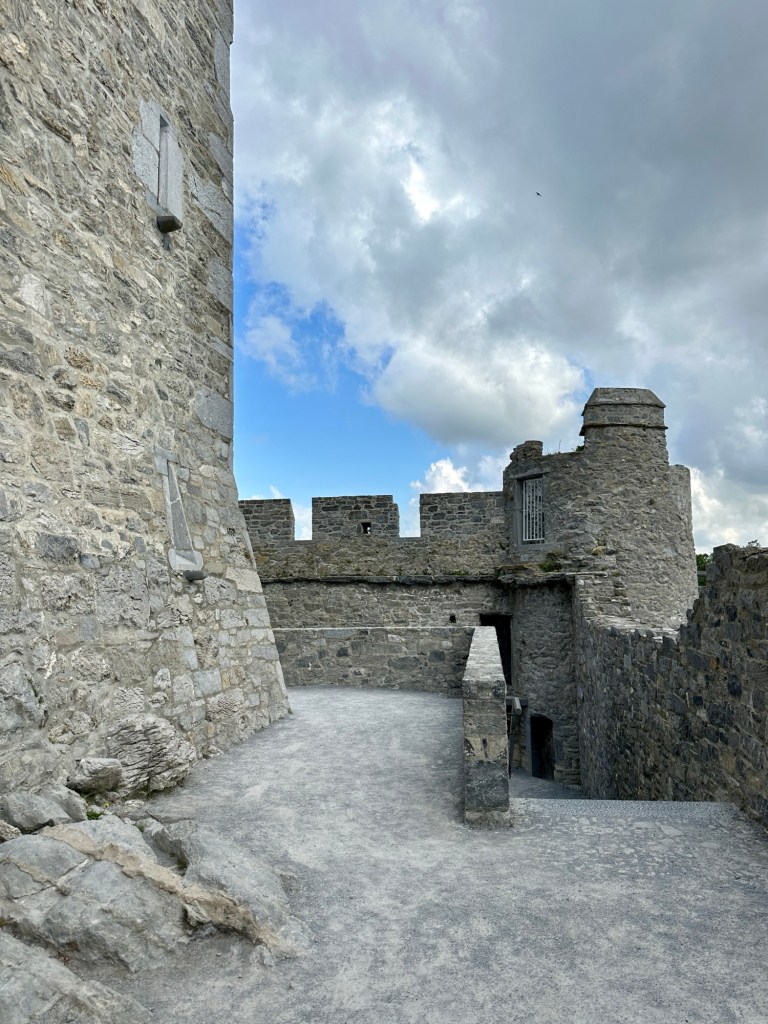
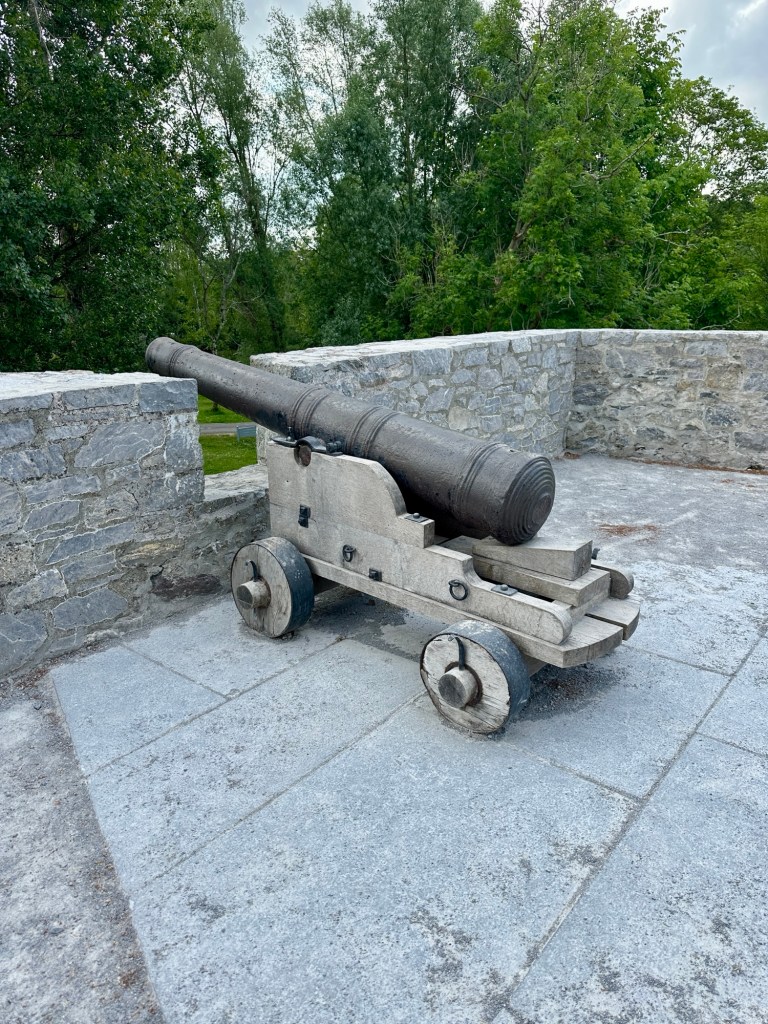
Our destination was Ross Castle, a striking 15th-century fortress built around 1410 by the O’Donoghue clan. The castle sits right on the edge of the lake, and legend has it that O’Donoghue himself still sleeps beneath the waters, occasionally rising on his white horse to circle the lake at sunrise. The castle’s sturdy stone towers and thick walls offer a glimpse into medieval Ireland — and it’s easy to imagine knights, clans, and battles from centuries long past.
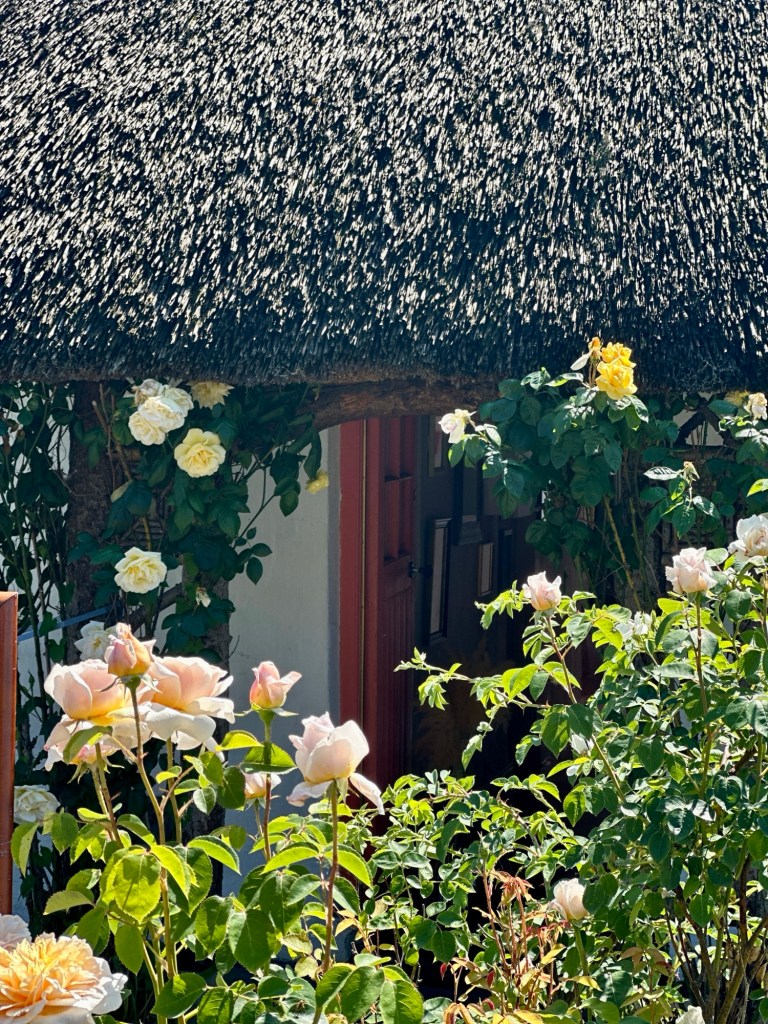
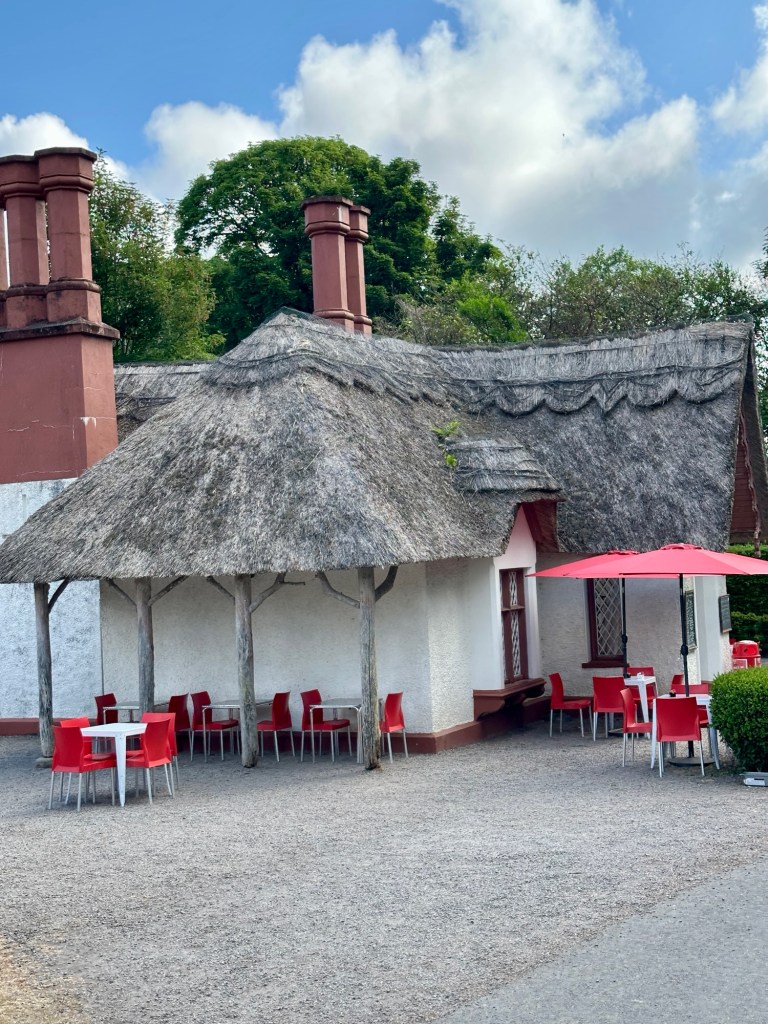
Back on the coach, we had about a two-hour ride before reaching the charming village of Adare, often called “Ireland’s prettiest village.” It’s easy to see why — Adare is one of the few places in Ireland where you can still see traditional thatched-roof cottages, lovingly maintained and lining the main street like something out of a storybook.
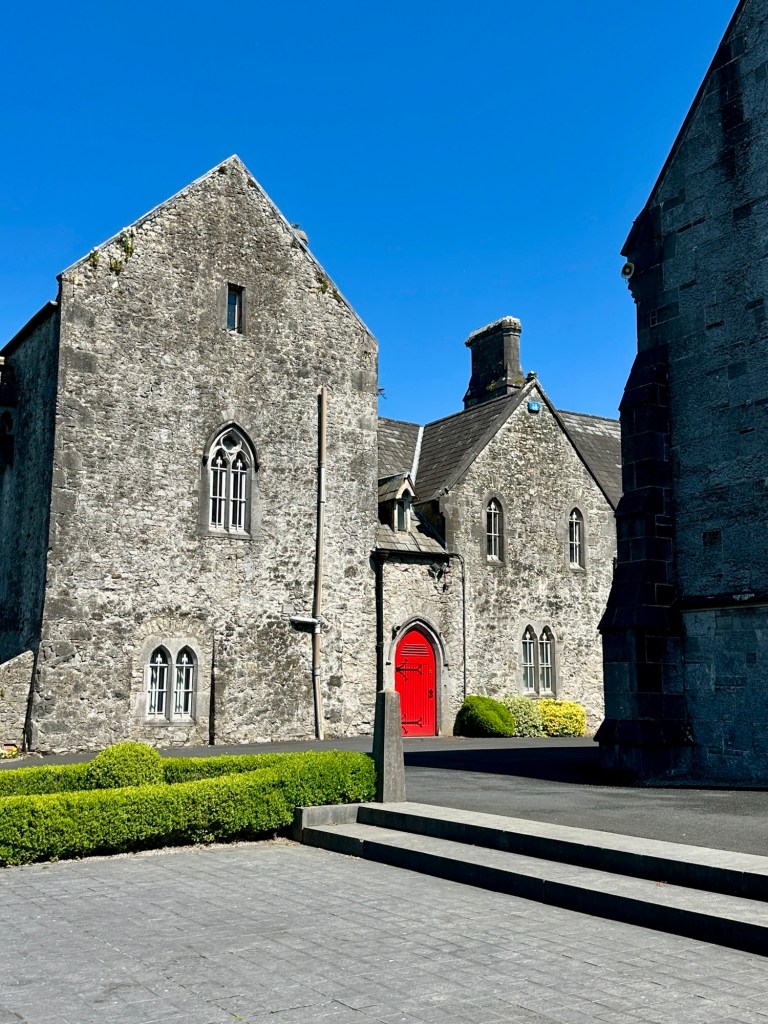
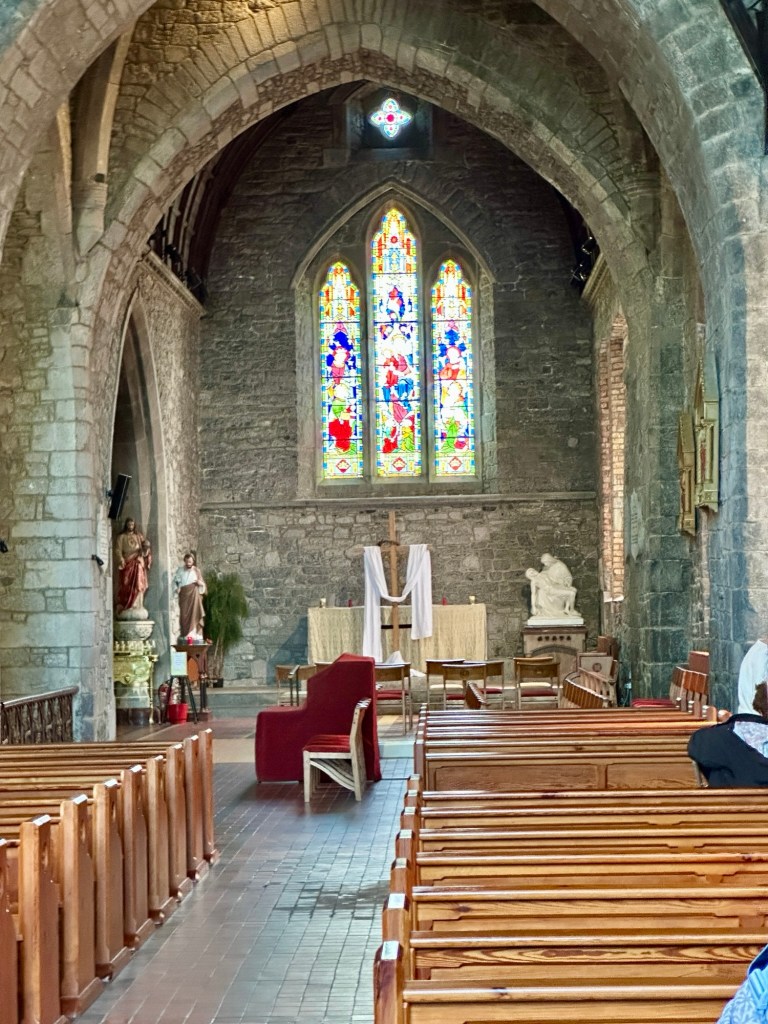
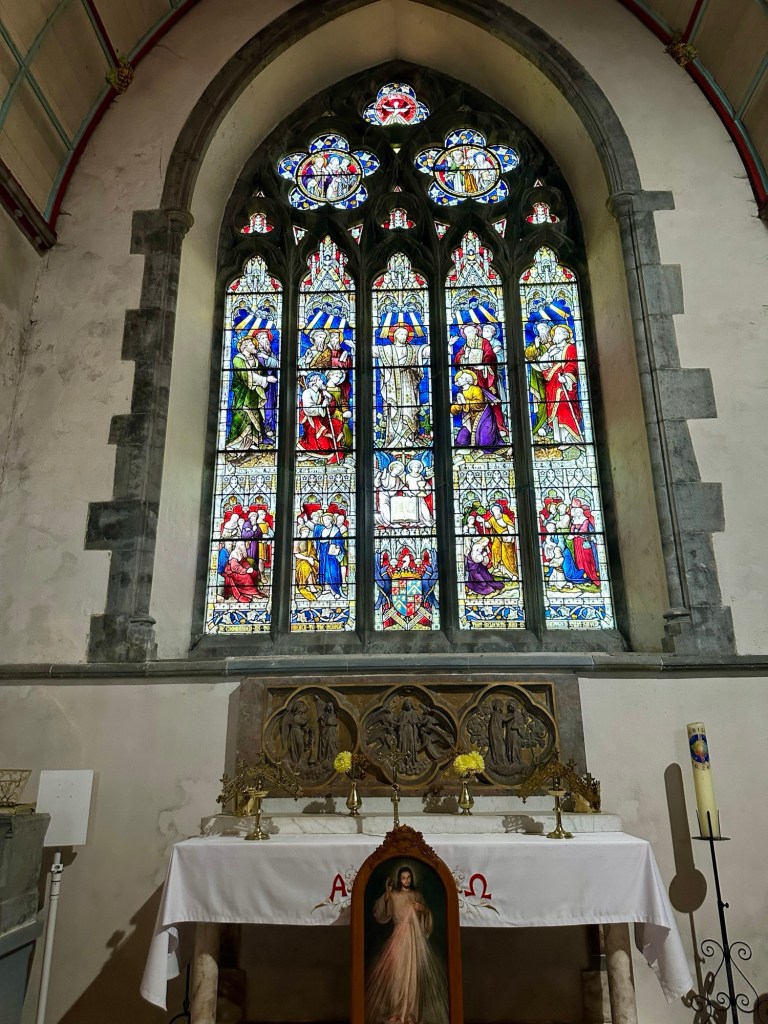
At the heart of town stands the Holy Trinity Abbey Church, originally built in the 13th century as a Franciscan friary. Its Gothic arches and stone walls carry centuries of history, yet it remains an active parish church to this day.
We picked up sandwiches and a bottle of wine from a local gourmet shop and enjoyed a peaceful lunch in the park — the perfect way to soak in the village’s charm before continuing our journey.
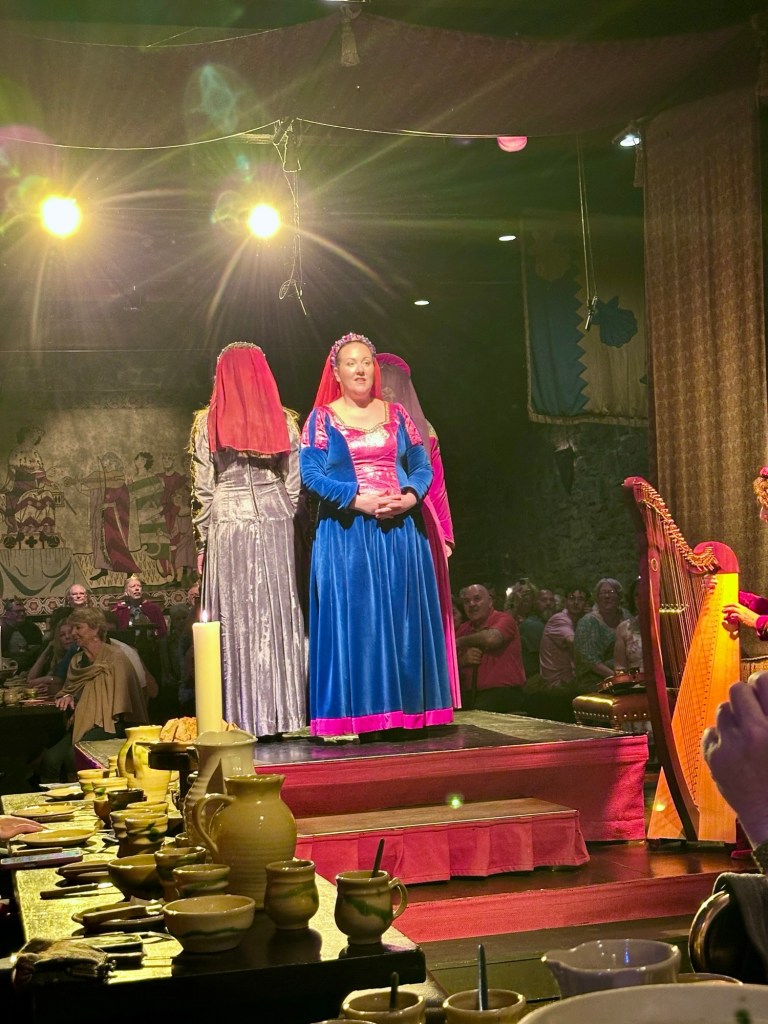
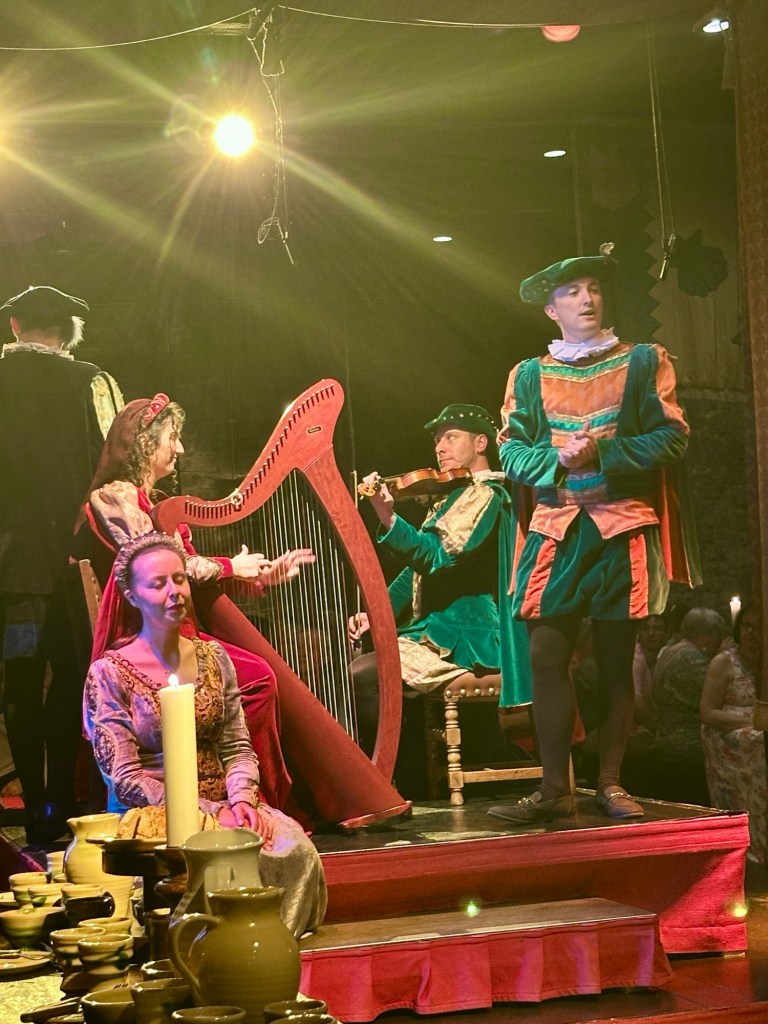
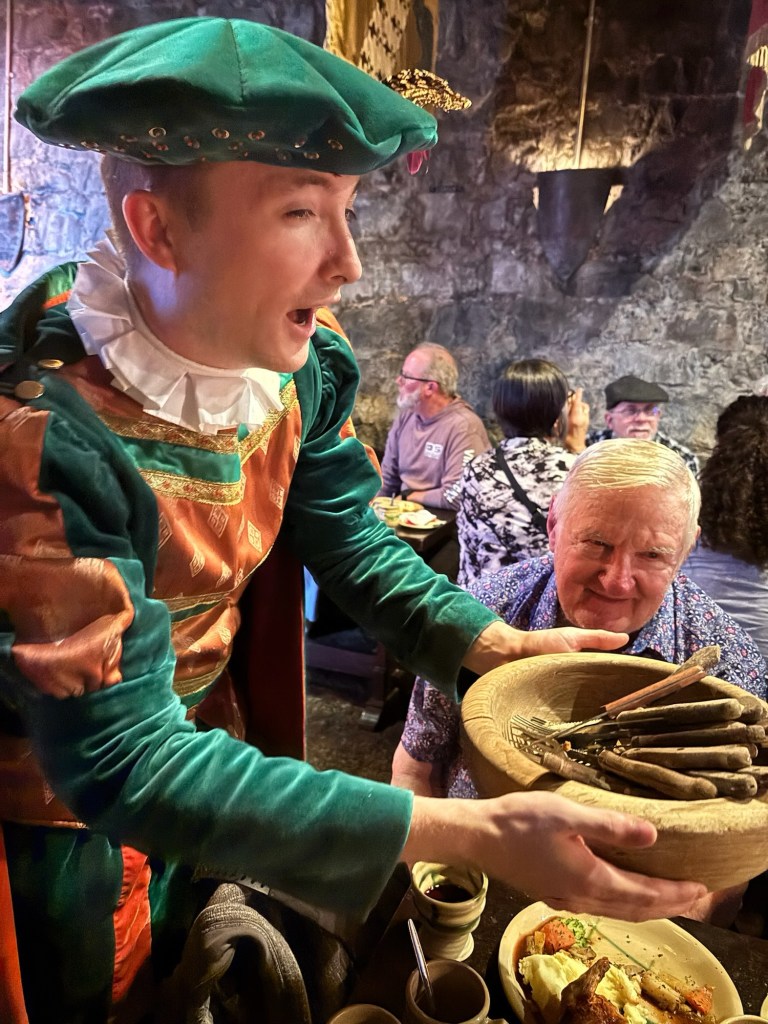
That evening, near the village of Sixmilebridge, we attended a lively medieval banquet at Knappogue Castle — an unforgettable experience that transported us straight back to the days of knights, nobles, and minstrels.
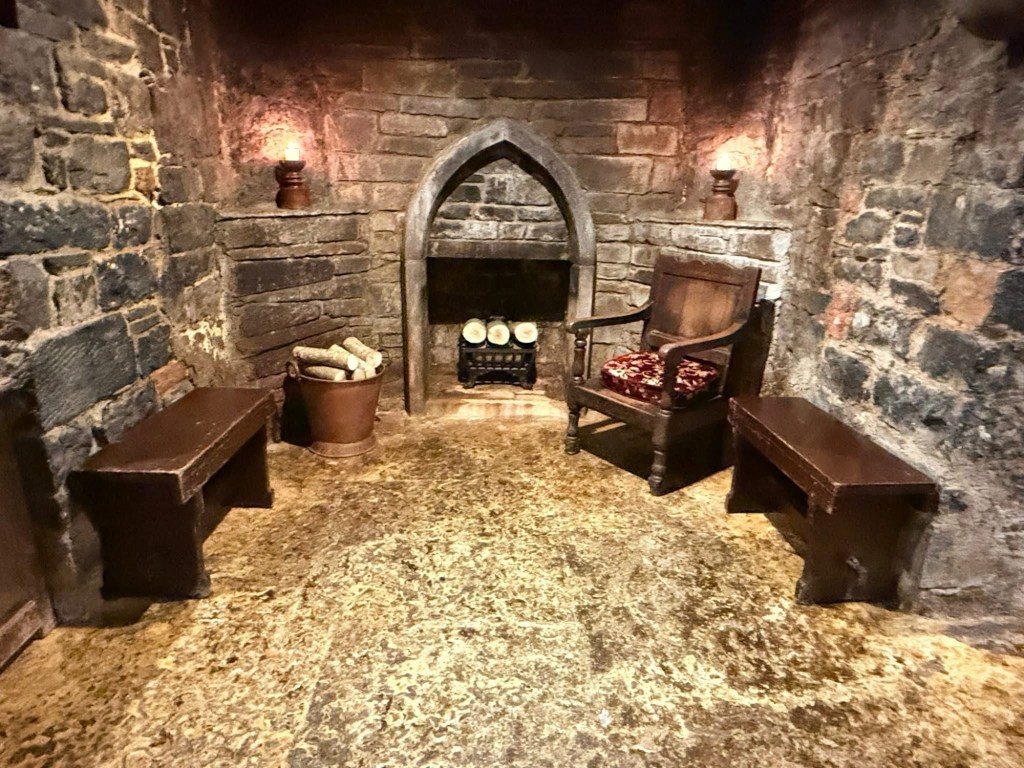
Knappogue Castle dates back to 1467 and was originally built by Sean MacNamara, a powerful chieftain of the region. The castle has been beautifully restored, with candlelit halls, stone archways, and long wooden tables that set the perfect stage for an evening of history and entertainment.
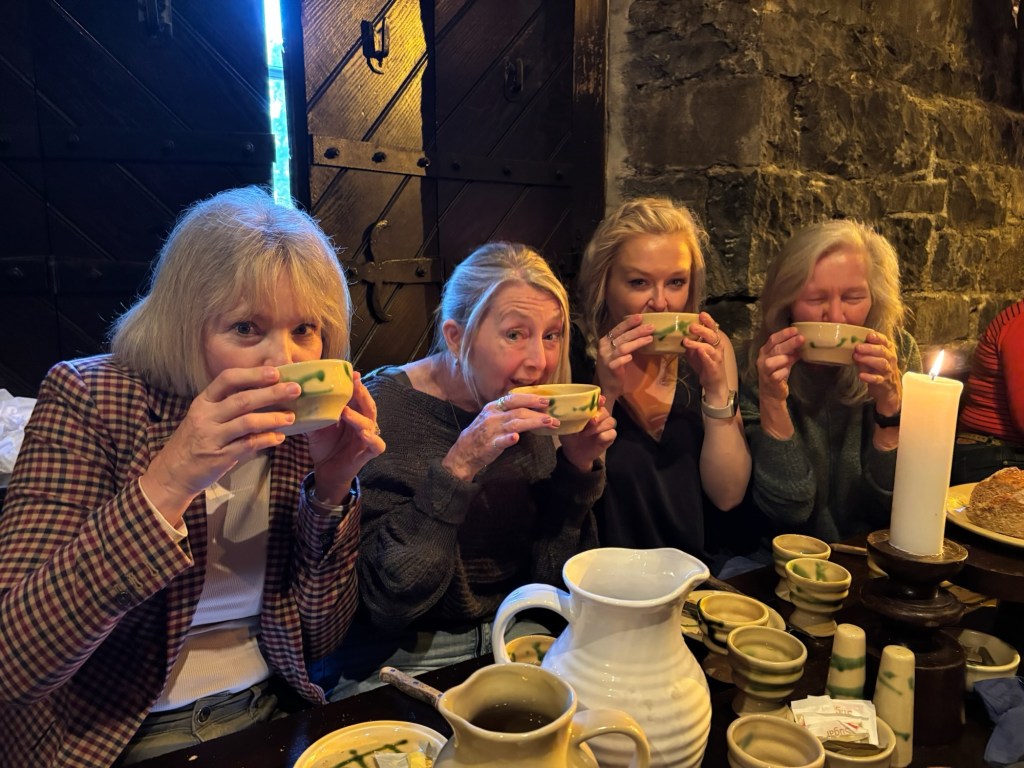
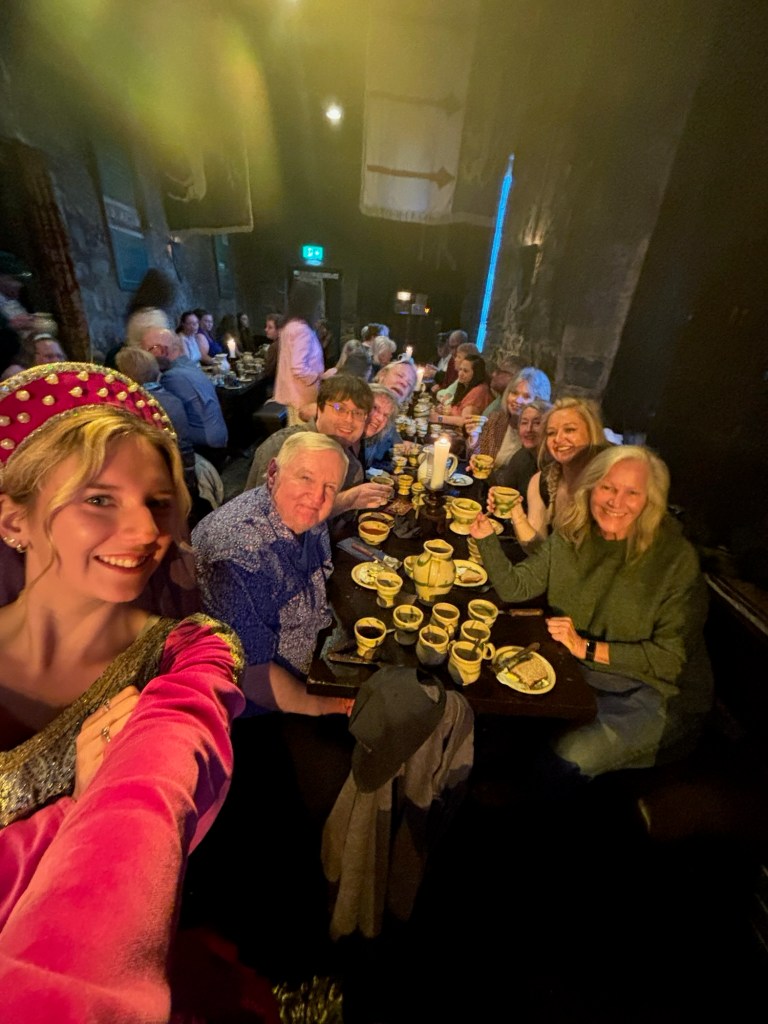
As guests of the “Lords and Ladies of the Castle,” we were regaled with music, song, and stories from centuries past, all while sipping generous cups of mead — a sweet honey wine once reserved for nobility. Dinner was served in true medieval style: hearty vegetable soup (no spoons allowed!), roasted chicken, potatoes, and plenty of wine.
The evening ended on a joyful note with spirited step dancing and lively fiddling, the kind of energy that fills the entire hall and leaves you smiling long after the last note fades. It was one of those nights that perfectly captured Ireland’s magic from centuries past.
Thursday ~ Cliffs of Mohr & Galway
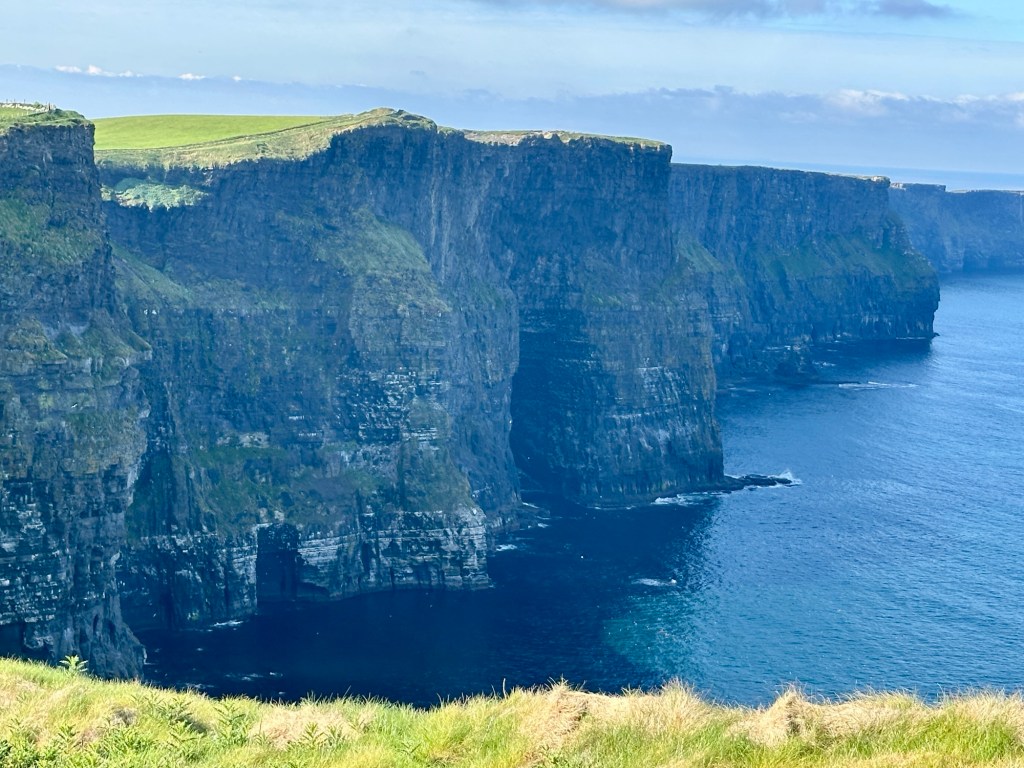
Thursday brought one of our most anticipated excursions — a visit to the world-famous Cliffs of Moher, one of Ireland’s most awe-inspiring natural landmarks. Stretching for about 5 miles (8 kilometers) along the Wild Atlantic Way, the cliffs rise to over 700 feet (214 meters) above the Atlantic Ocean, offering sweeping, dramatic views of the Aran Islands, Galway Bay, and the distant mountains of Connemara on a clear day.
We had been warned that the cliffs are often rainy, windy, and chilly — but we were blessed with a perfect weather day, blue skies and gentle breezes that allowed us to fully appreciate the magnitude and majesty of this incredible place.
There is a fairly steep incline and many steps leading up to the top, where you’ll find O’Brien’s Tower — the round stone structure that looks a bit like a lighthouse. Built in 1835 by Sir Cornelius O’Brien, the tower was designed as a viewing point for Victorian tourists, and it still offers one of the best vantage spots along the cliffs today. For those needing a little extra assistance, the visitor center provides golf cart rides up the incline, making the experience accessible to more travelers.
Words — and even photos — can hardly capture the breathtaking beauty of standing at the edge of the Cliffs of Moher, feeling the wind, and hearing the waves crash far below.
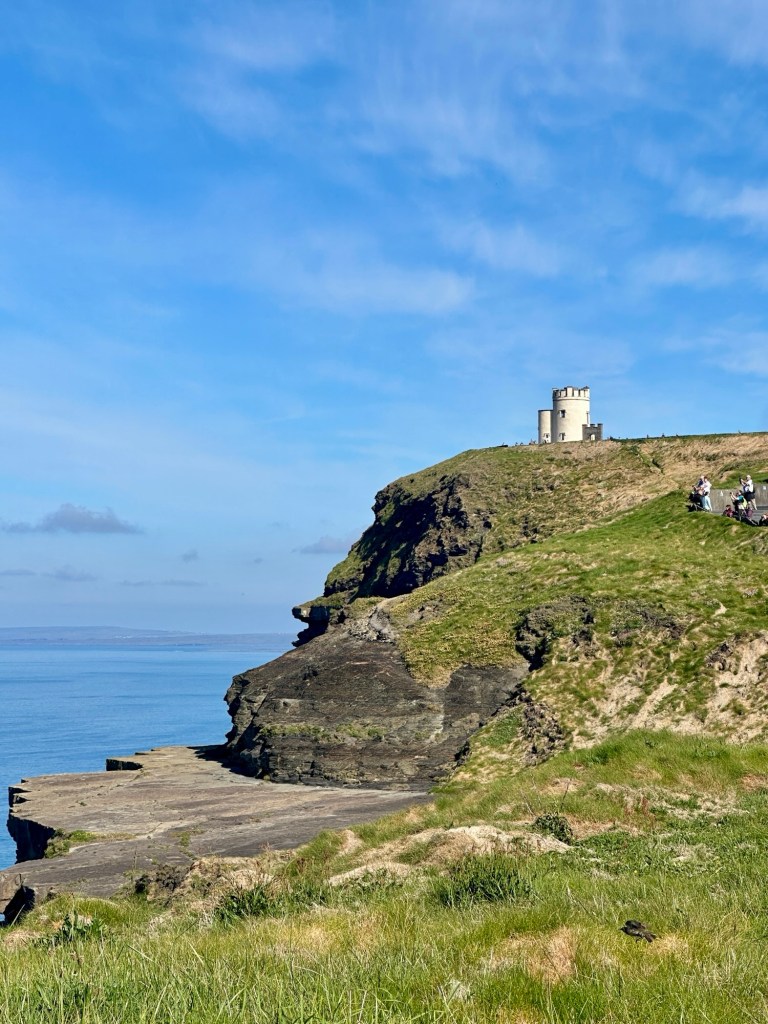
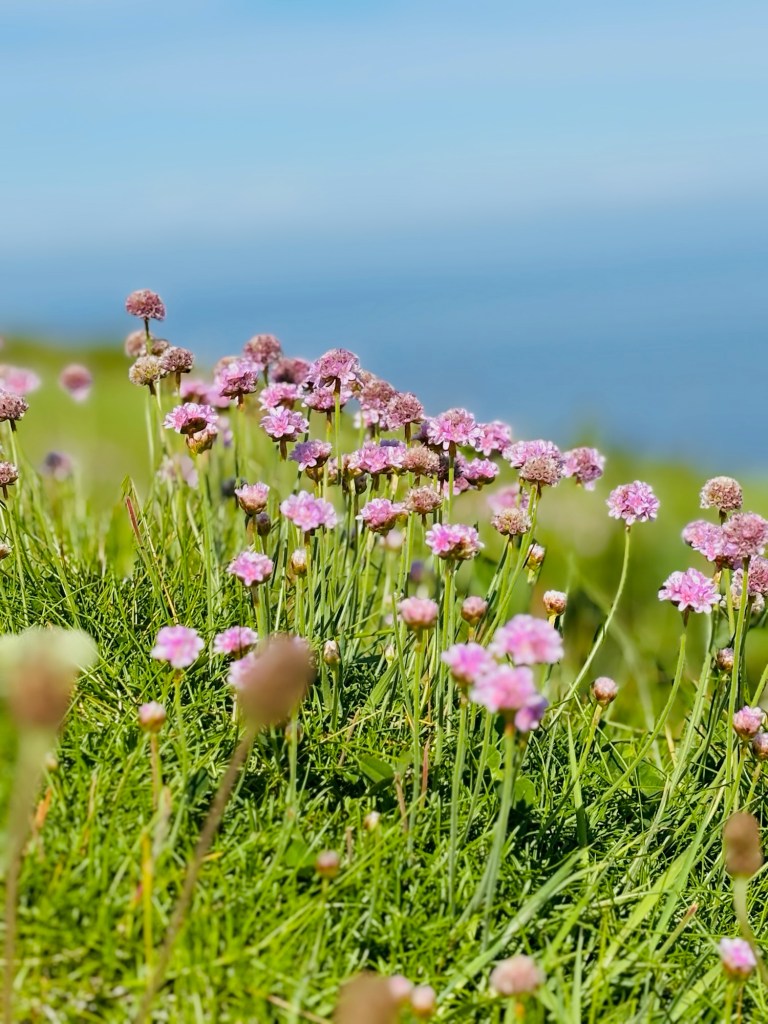
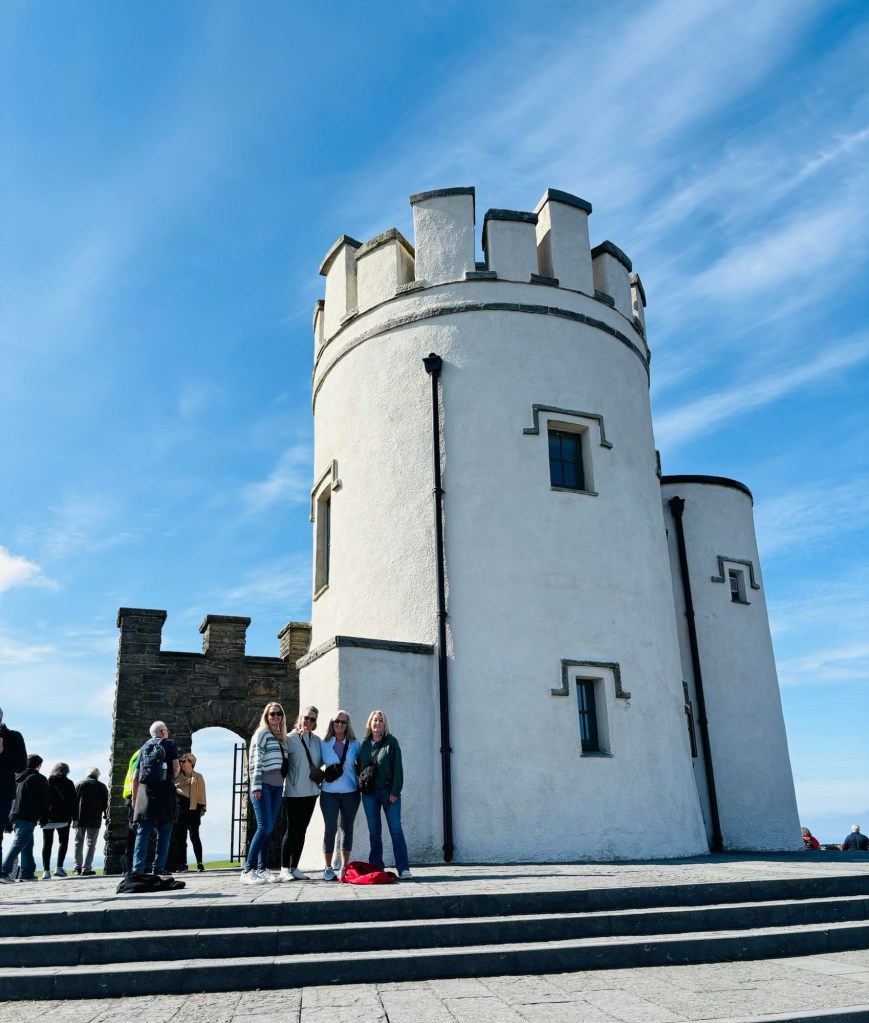
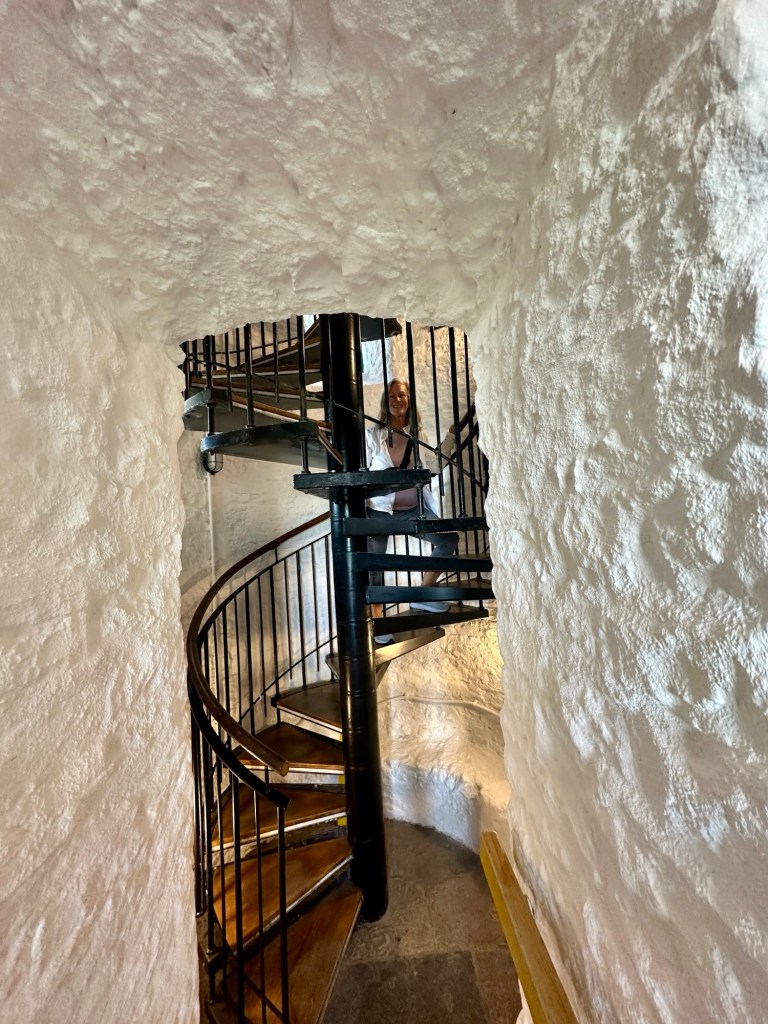
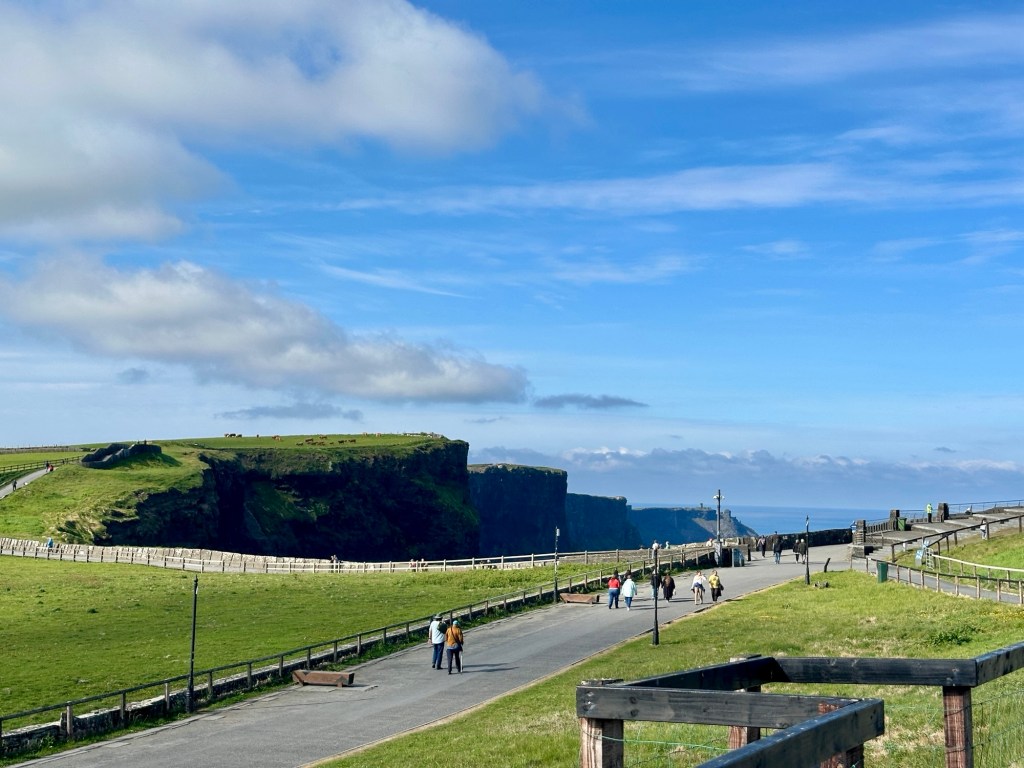
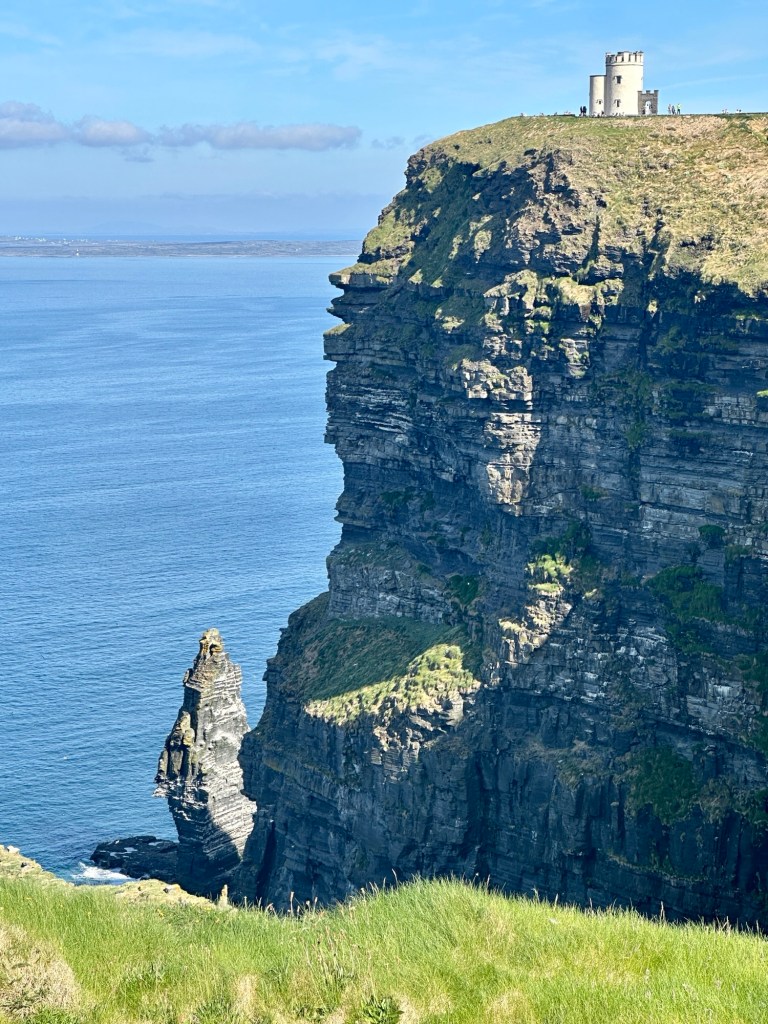

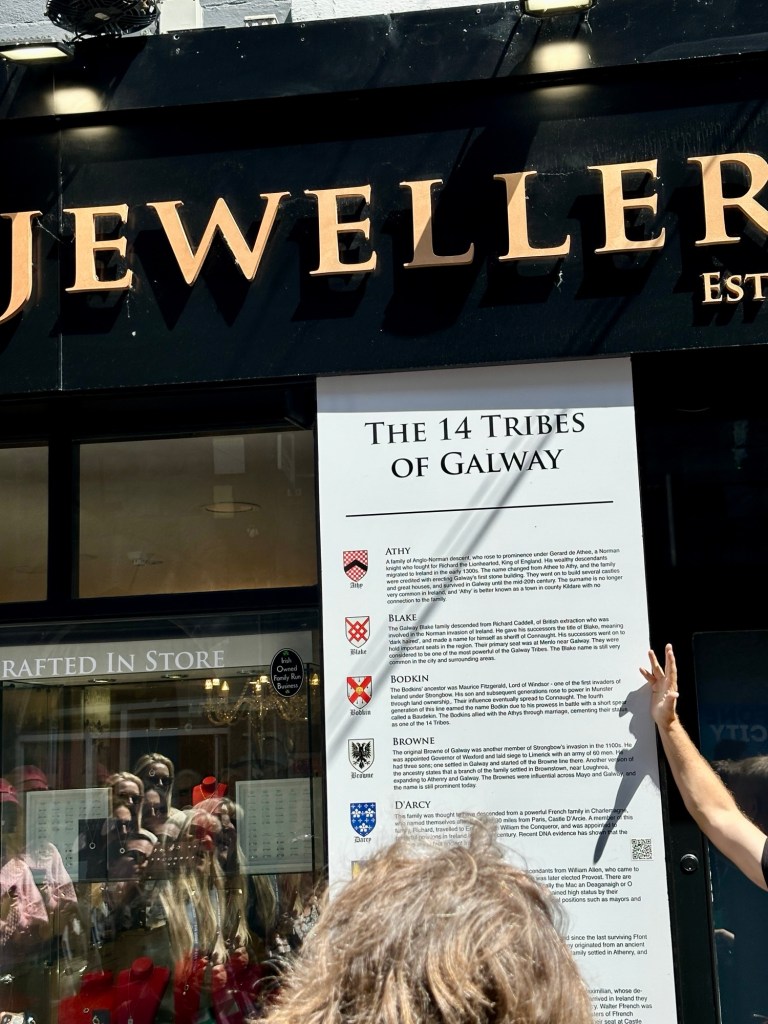
After visiting the cliffs, we made our way to the lively city of Galway for a walking tour and lunch. Situated along Ireland’s western coast, where the River Corrib meets the Atlantic, Galway is often called the “Cultural Heart of Ireland.” The city traces its roots back more than 800 years, founded around 1232 when a fort was built by the Anglo-Norman de Burgo family. Over the centuries, it evolved into a thriving port and trading hub — and today, it’s famous for its festivals, music, and arts scene.
Galway’s streets were bustling with people — a blend of locals, students, and tourists filling the colorful lanes lined with shops, pubs, and street performers. It’s also the birthplace of the iconic Claddagh ring, a traditional Irish ring symbolizing love, loyalty, and friendship. The design features two hands holding a heart topped with a crown, and you’ll find beautiful Celtic knot and Claddagh jewelry all throughout the city’s artisan shops.
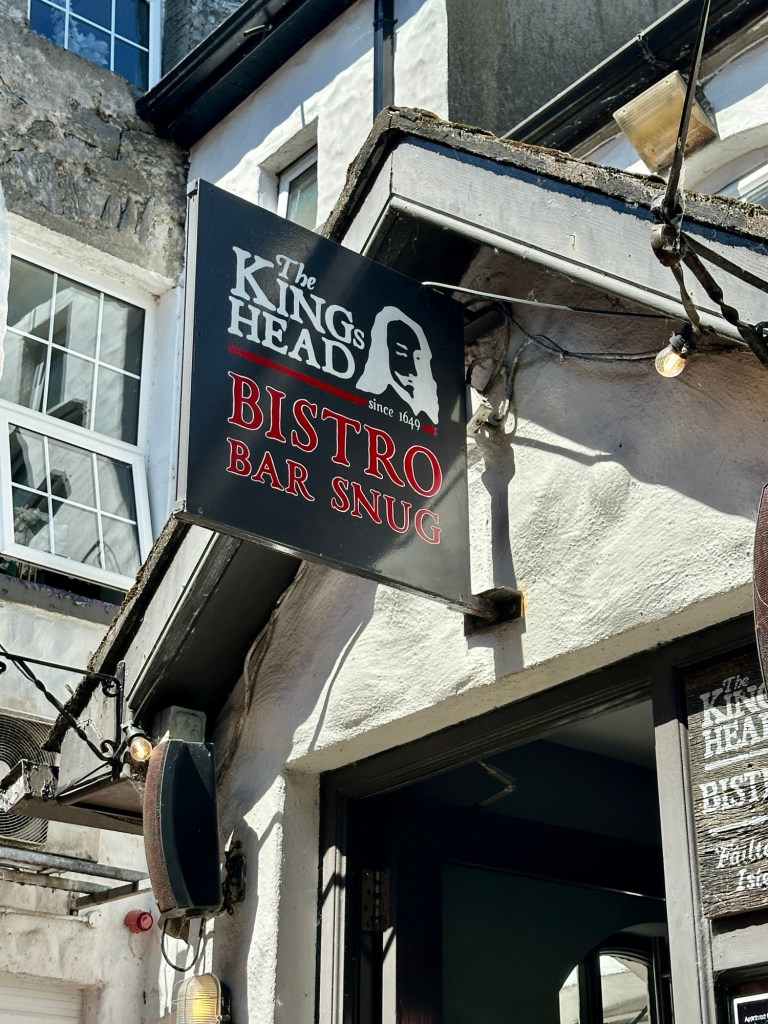
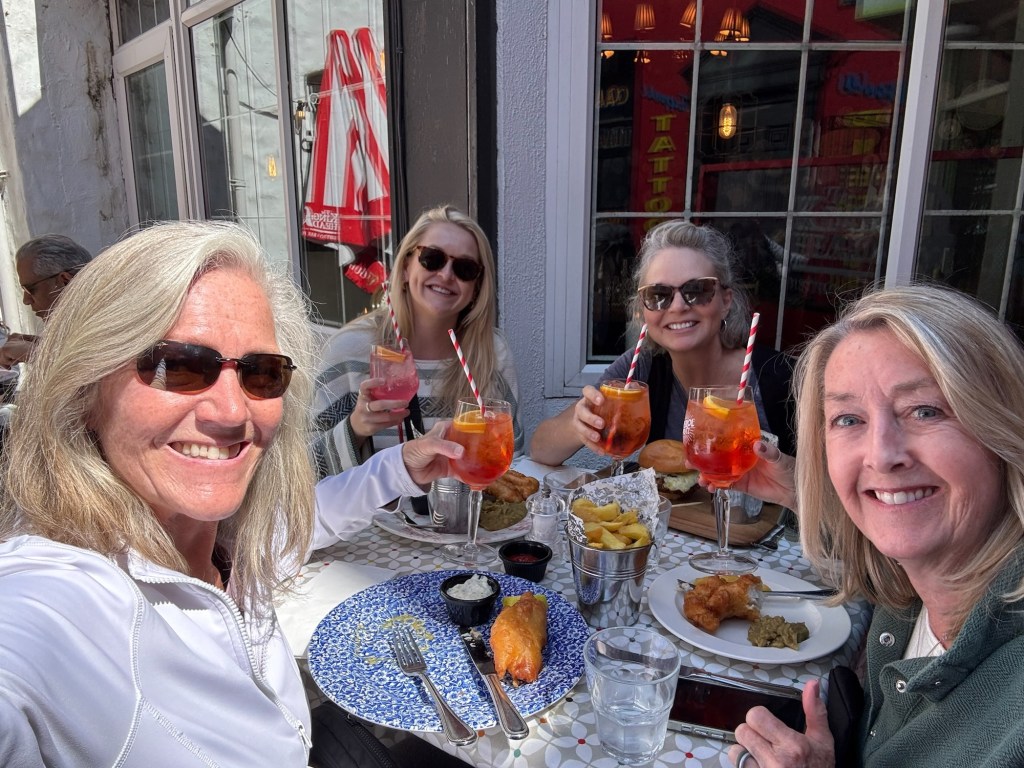
We stopped for lunch at The King’s Head, a historic pub that dates back over 800 years and is said to have once belonged to an executioner involved in the beheading of England’s King Charles I. Thankfully, the atmosphere is far lighter today! We enjoyed an apéritif and a leisurely meal while soaking up some sunshine — a perfect way to unwind after a full morning of sightseeing.
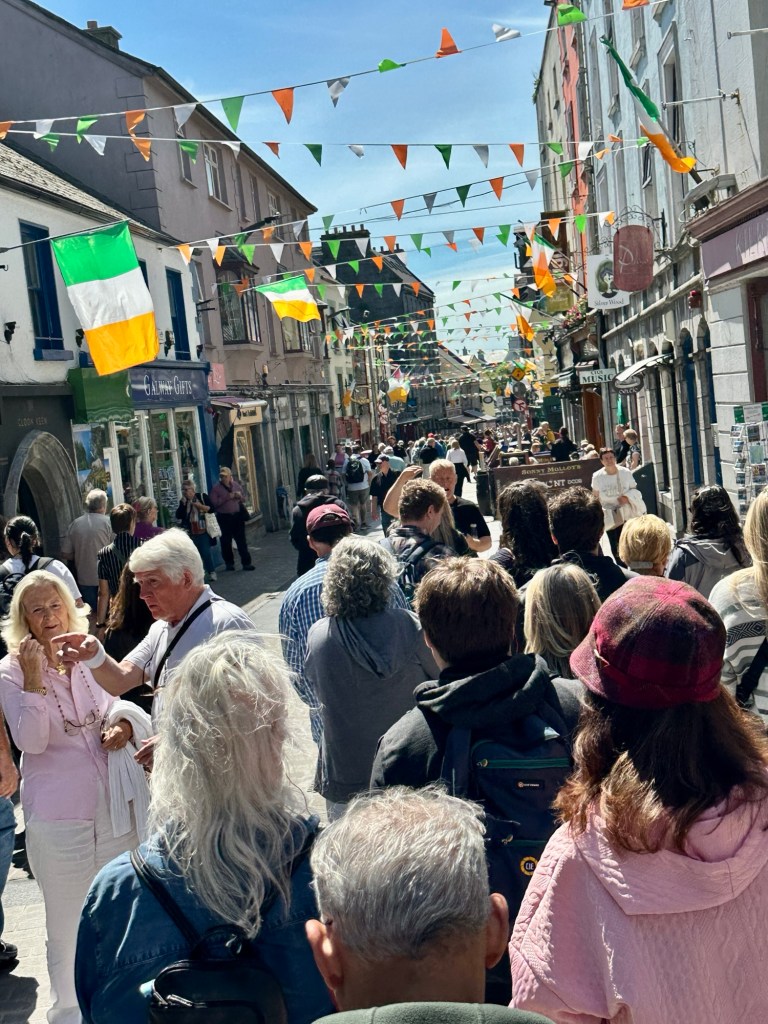
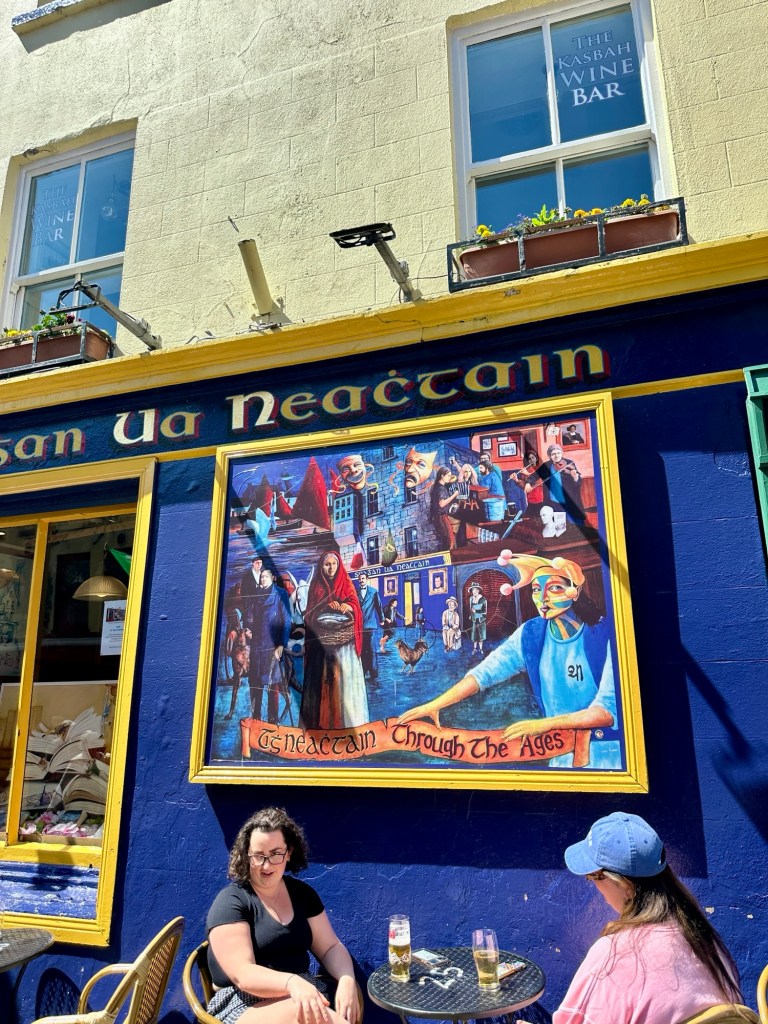

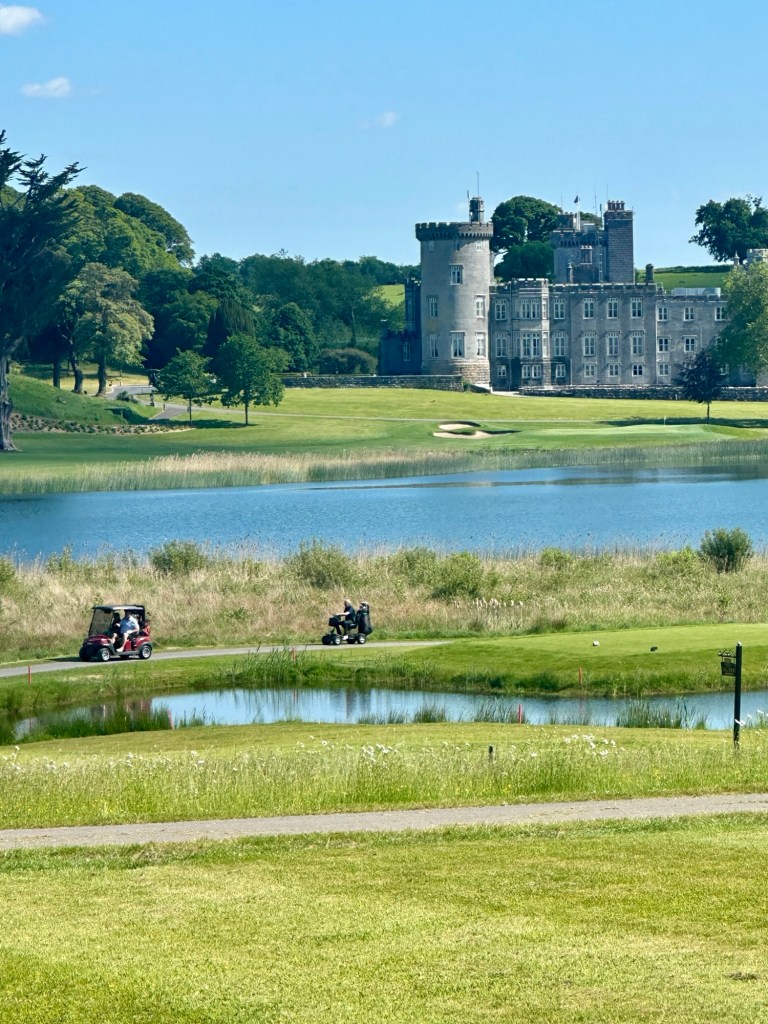
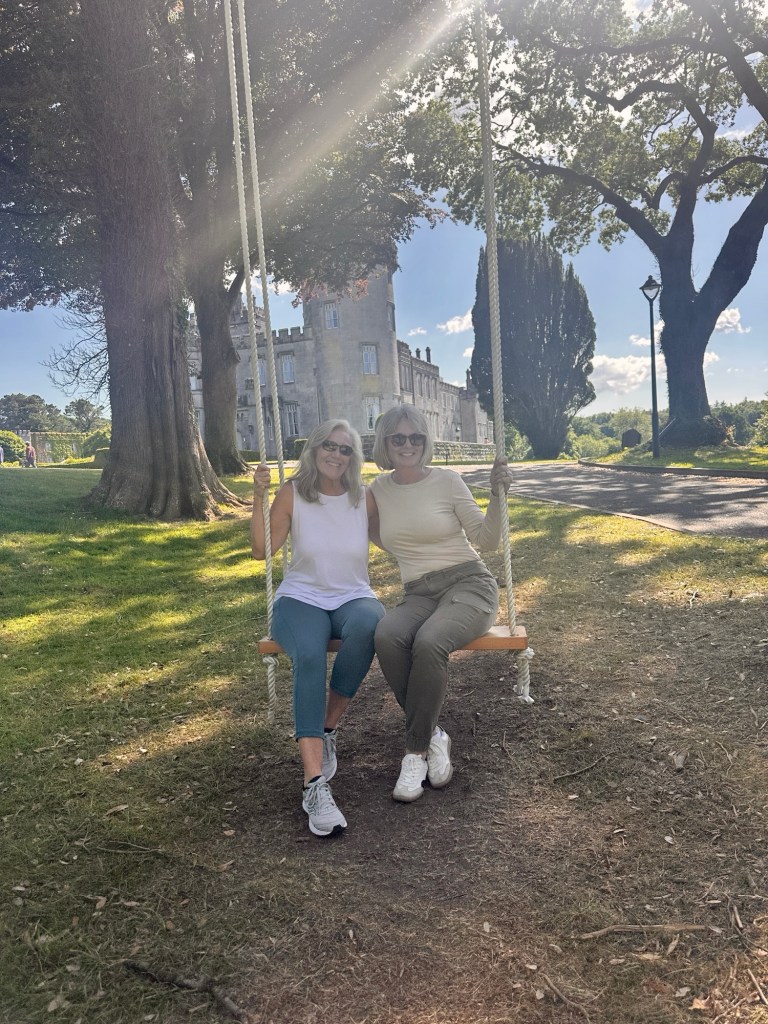
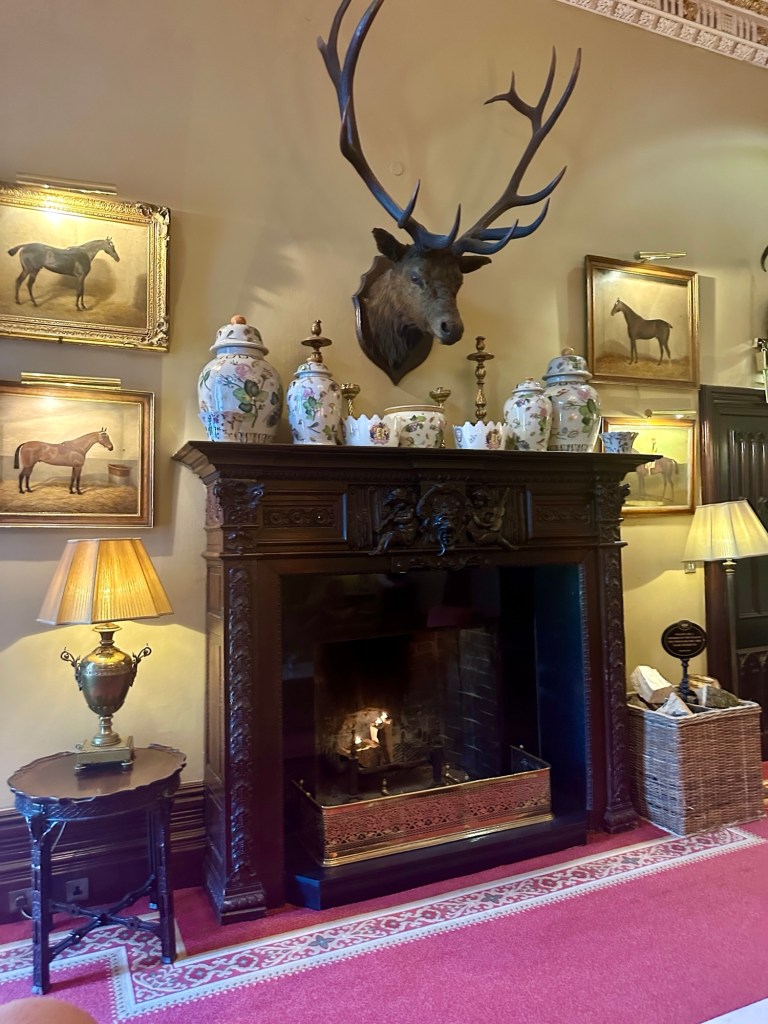
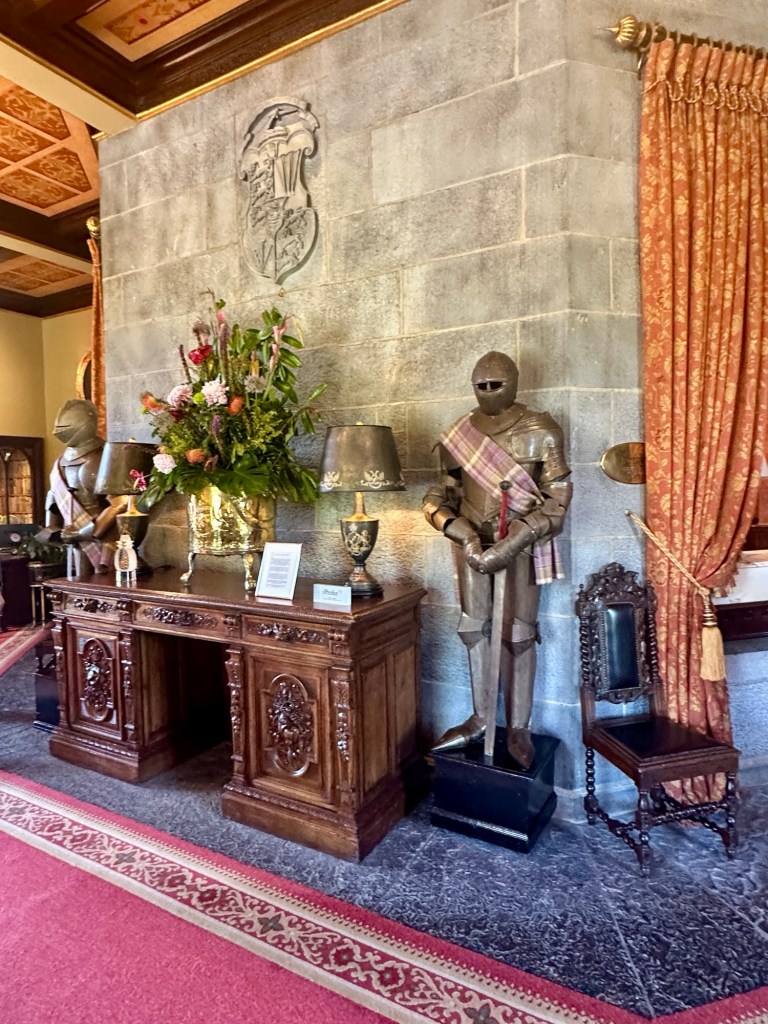
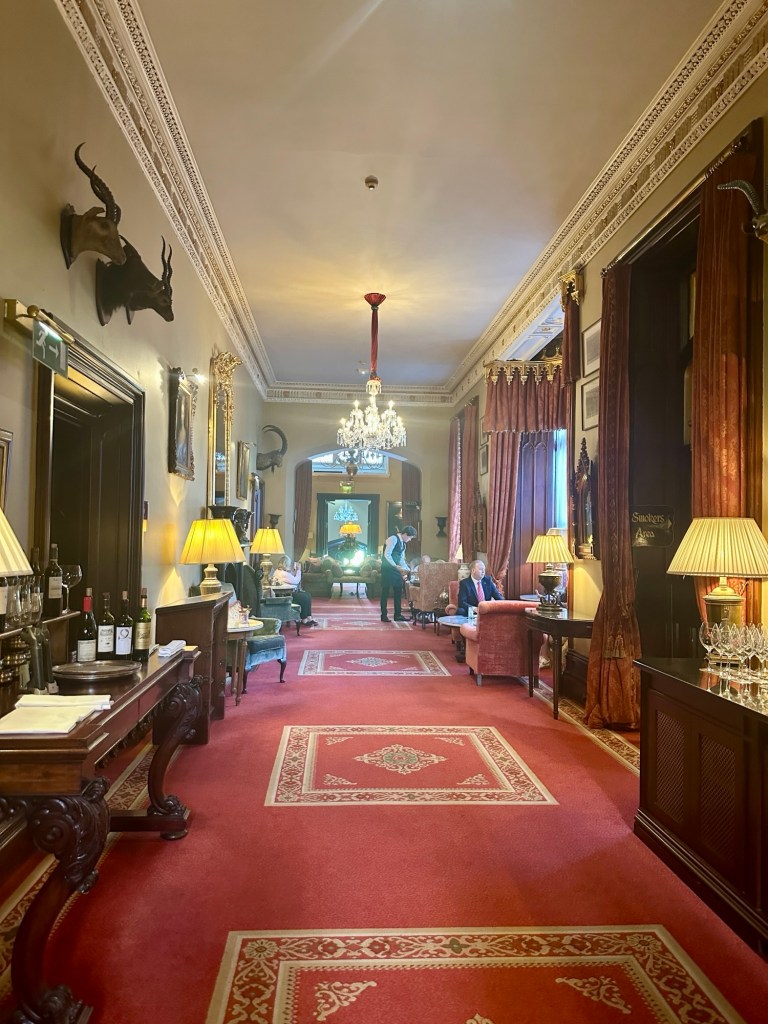
Our stop over for the evening was the Inn at Dromoland, located in Newmarket-on-Fergus, County Clare. The inn sits on the beautiful grounds of Dromoland Castle, one of Ireland’s most famous estates.
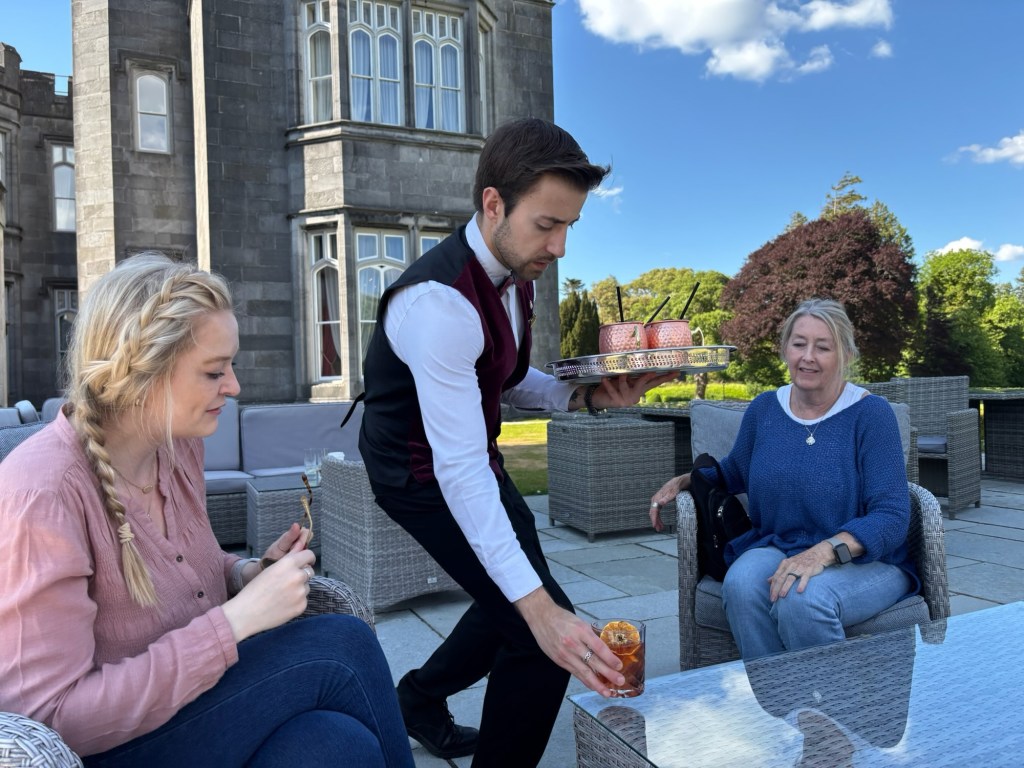
Dromoland Castle itself is now a luxury resort, welcoming guests from around the world to stay within its grand stone walls. The estate features elegant rooms, fine dining, and an exclusive championship golf course that attracts players from across the globe. Even if you’re not a golfer, it’s hard not to be impressed by the manicured greens, peaceful lakes, and the castle rising majestically in the background — a perfect picture of Irish elegance and charm. We enjoyed a drink on the Castle’s garden grounds and began to feel melancholy that we had only one day left in Ireland.
Friday ~ Irish National Stud Farm & a Return to Dublin
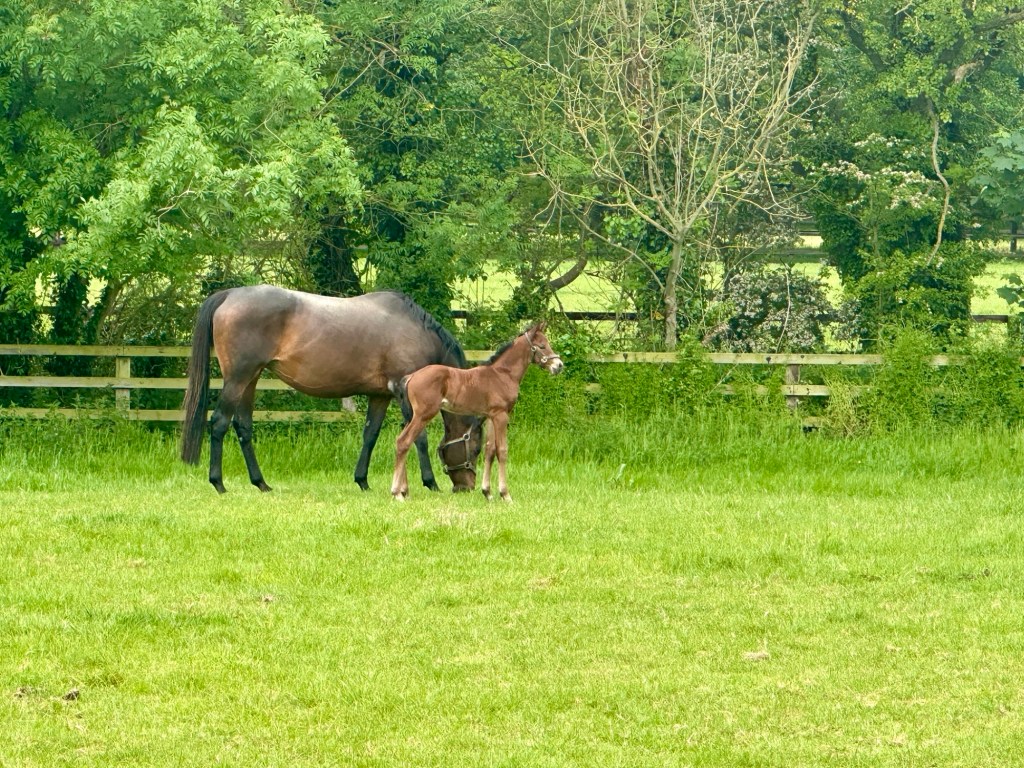
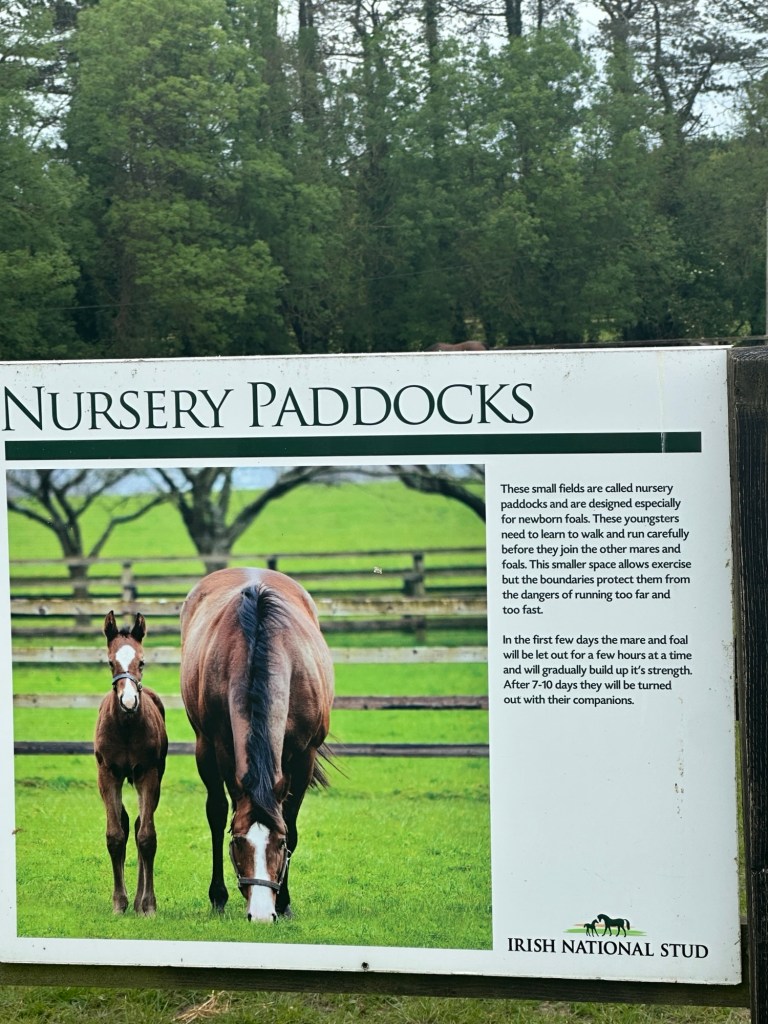
Our time in Southern Ireland was nearly at an end, but as we finished our loop back toward Dublin, CIE Tours planned one final and memorable stop — the Irish National Stud Farm & Japanese Gardens.
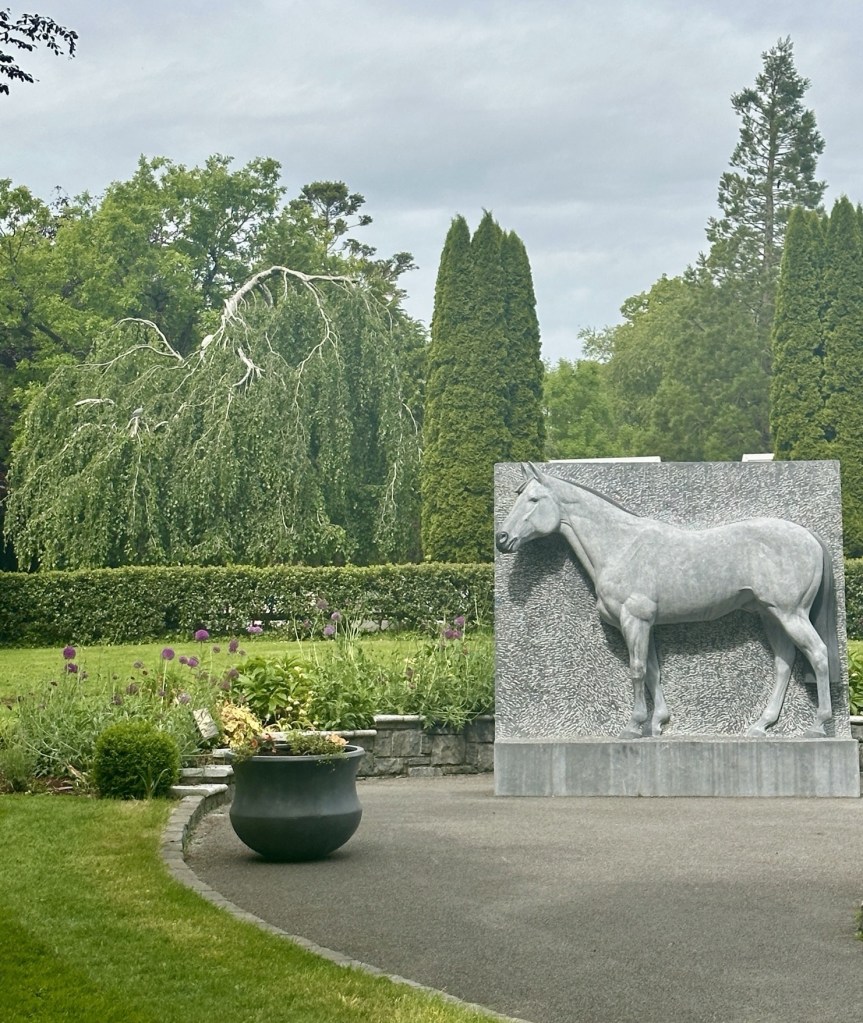
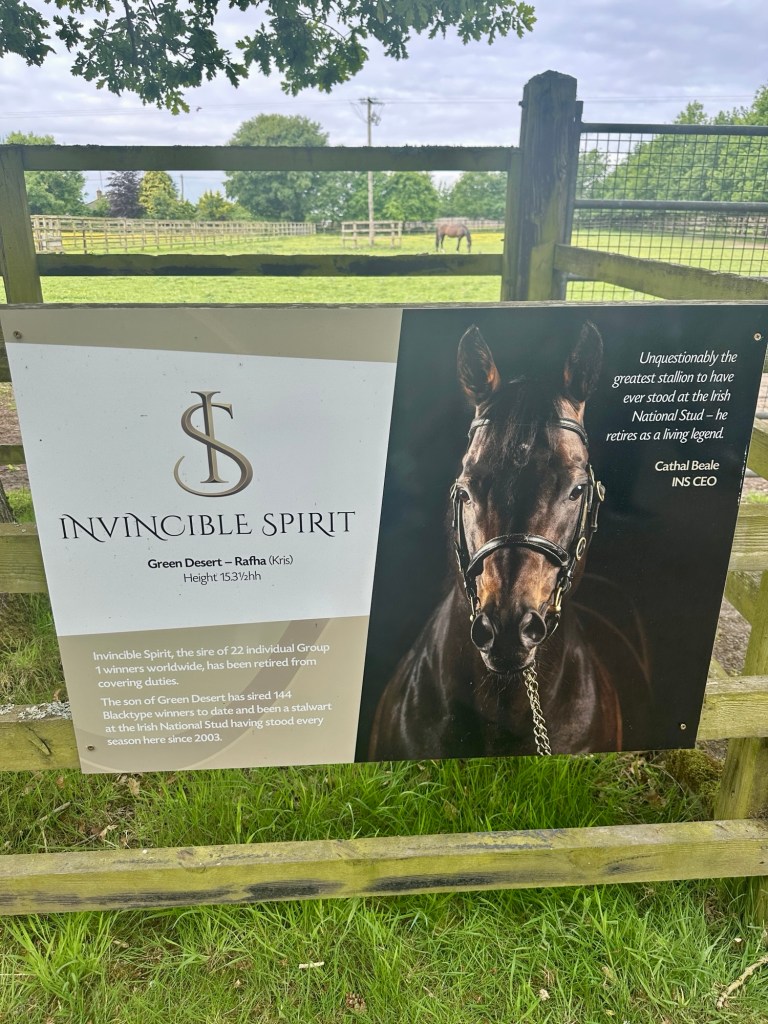
Located in County Kildare, this world-renowned stud farm has been at the heart of Ireland’s horse-breeding tradition for over a century. Established in 1900, it’s famous for producing some of the finest Thoroughbred racehorses in the world. We were taken on a guided tour and learned how deeply horses are woven into Ireland’s culture and economy — not just as sport, but as a proud symbol of heritage and excellence. We even got to meet a few of their most famous stallions, some still active and others enjoying a well-earned retirement.
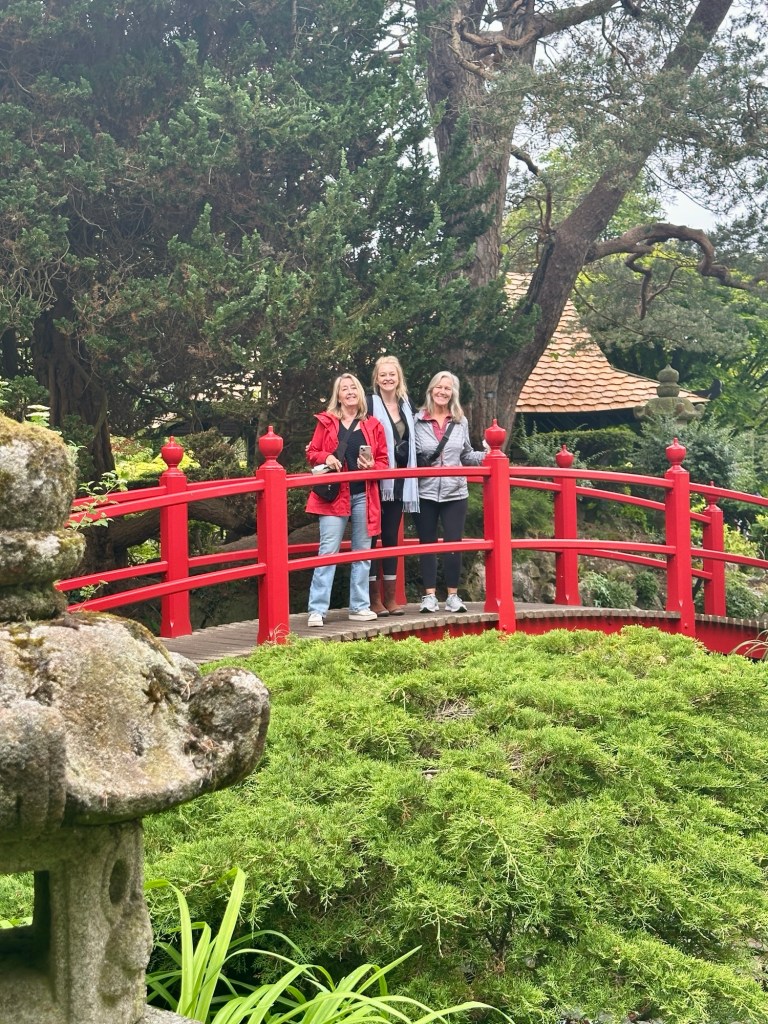
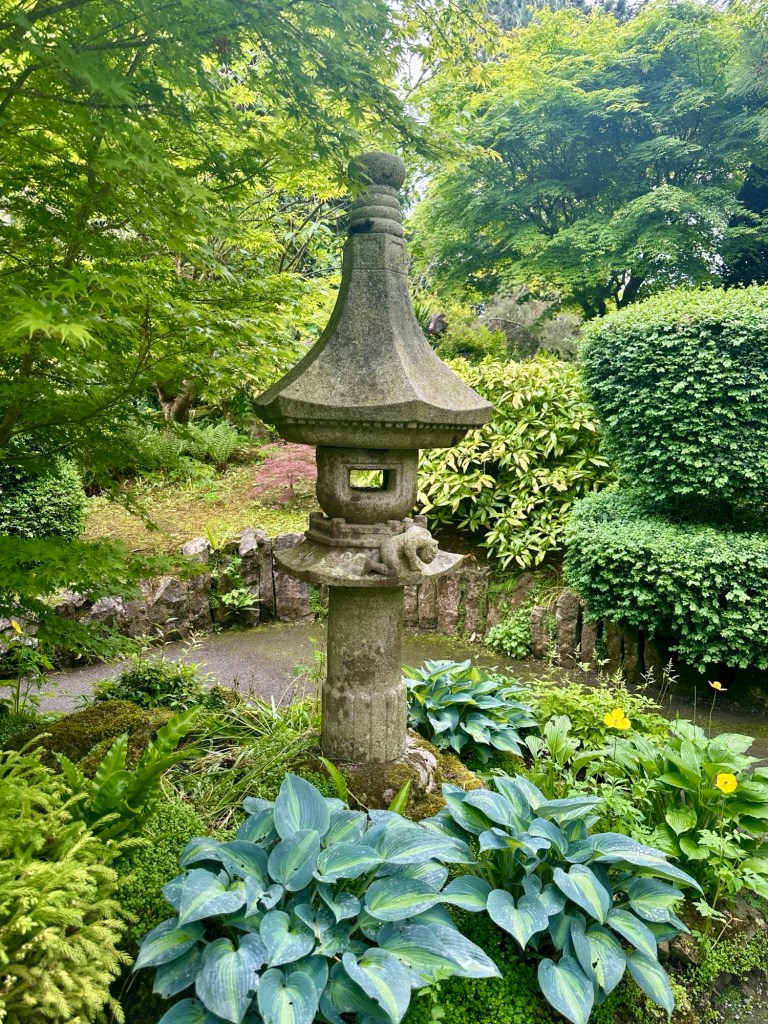
On the same grounds, the Japanese Gardens offer a completely different kind of beauty. Created between 1906 and 1910 by Colonel William Hall Walker (the stud’s founder) and Japanese craftsman Tassa Eida, the gardens symbolize the “Life of Man,” leading visitors through winding paths, bridges, and tranquil ponds. With only a few minutes to spare after lunch, we took a quick peek — and it was absolutely enchanting. It’s definitely a place to spend more time if you have the chance.
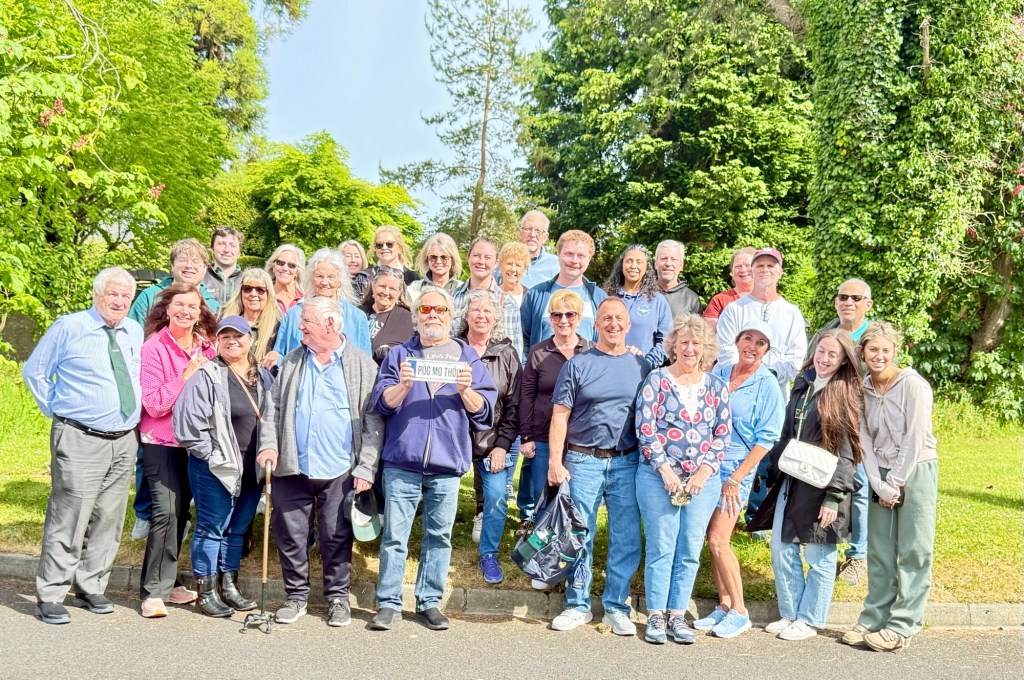
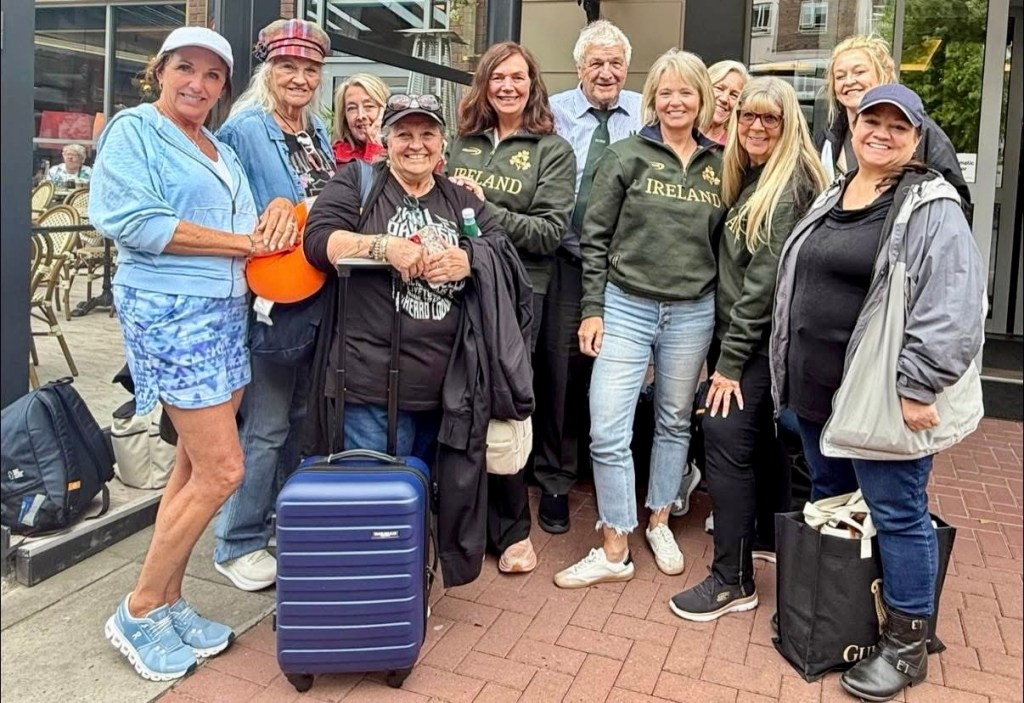
Before heading back to Dublin, we gathered our entire group of thirty travelers for a final photo together. After a week on the road, shared stories, adventures, and a few pints along the way, it truly felt like we were saying goodbye to old friends rather than new acquaintances.
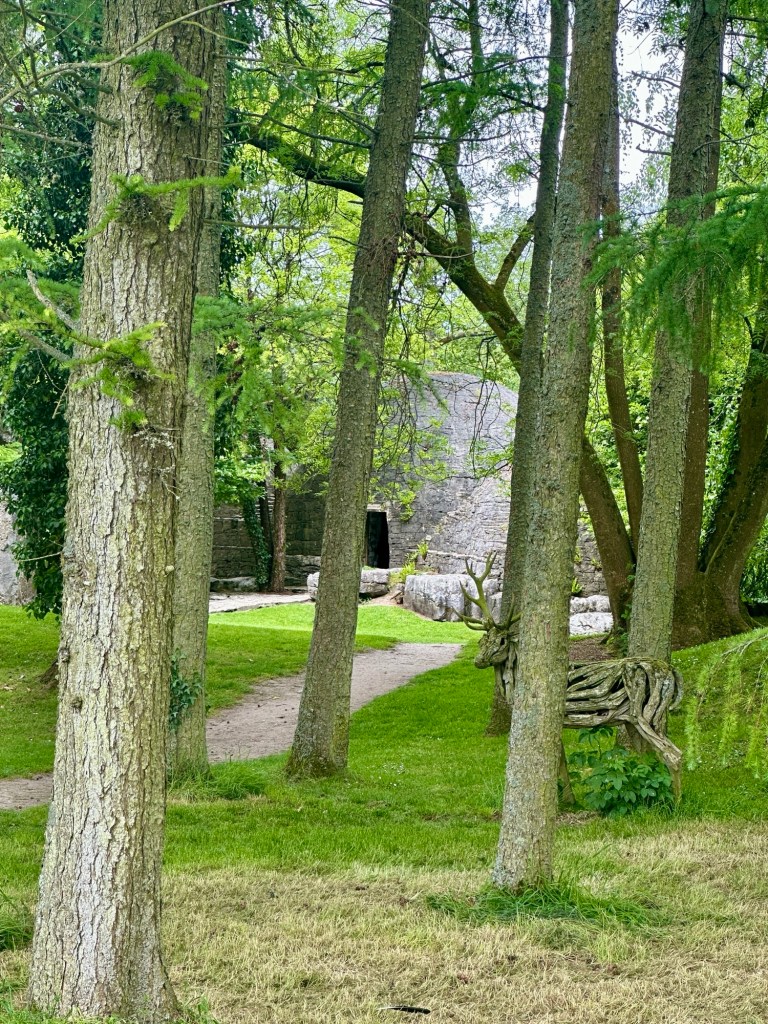
CIE Tours dropped us off at the Grand Canal Hotel around 2 p.m., and from there we were on our own for the rest of the afternoon and evening. The Grand Canal is a great choice — comfortable, modern, and ideally located within walking distance of downtown Dublin and Trinity College.
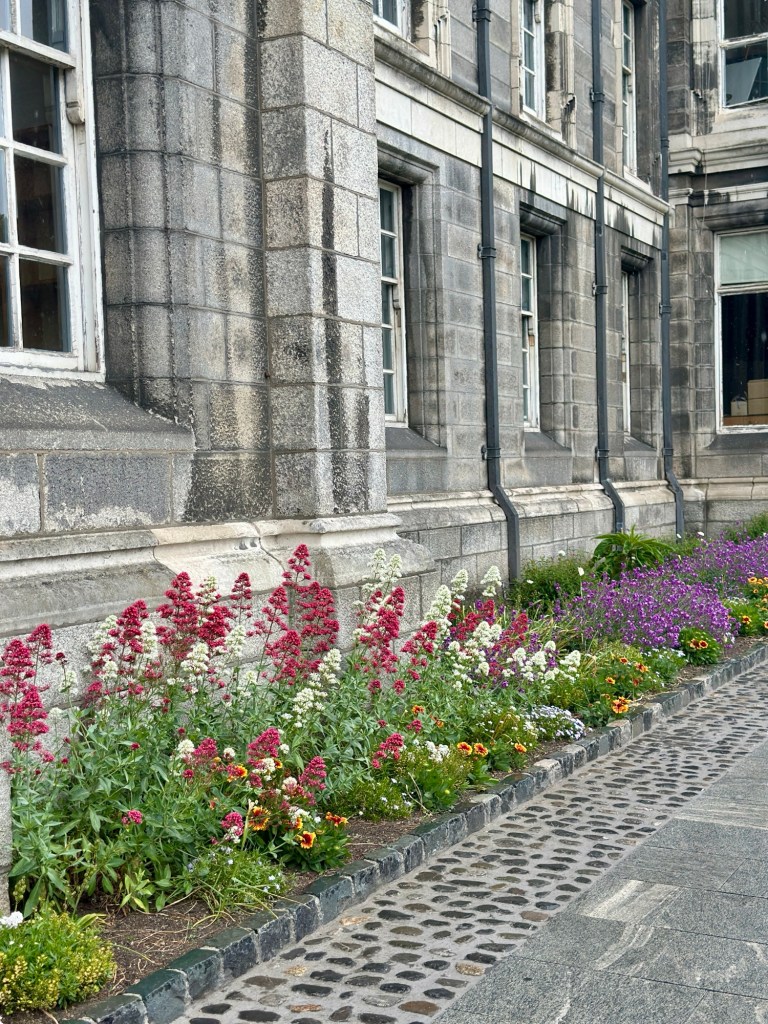
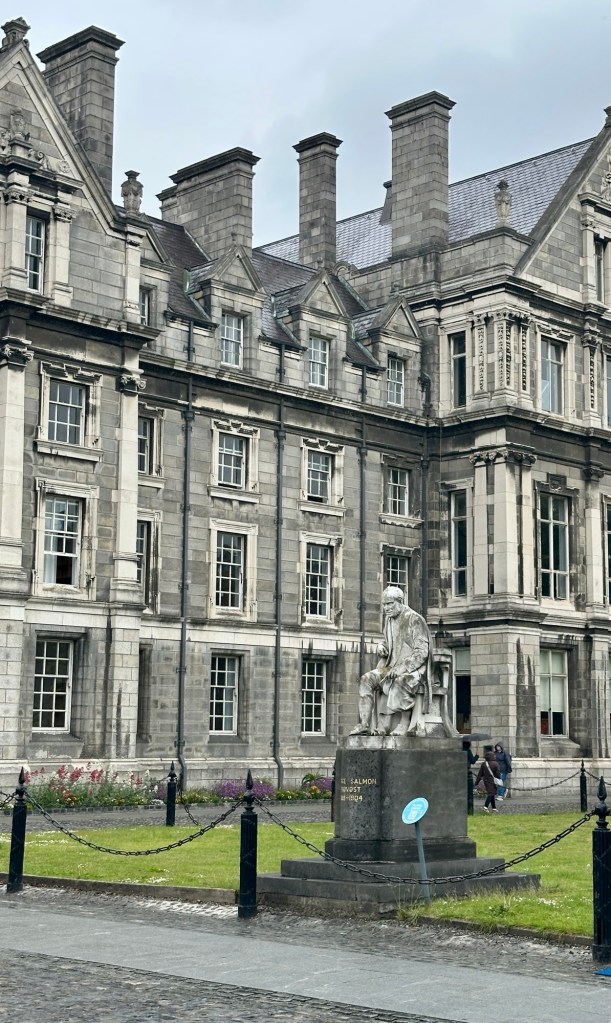
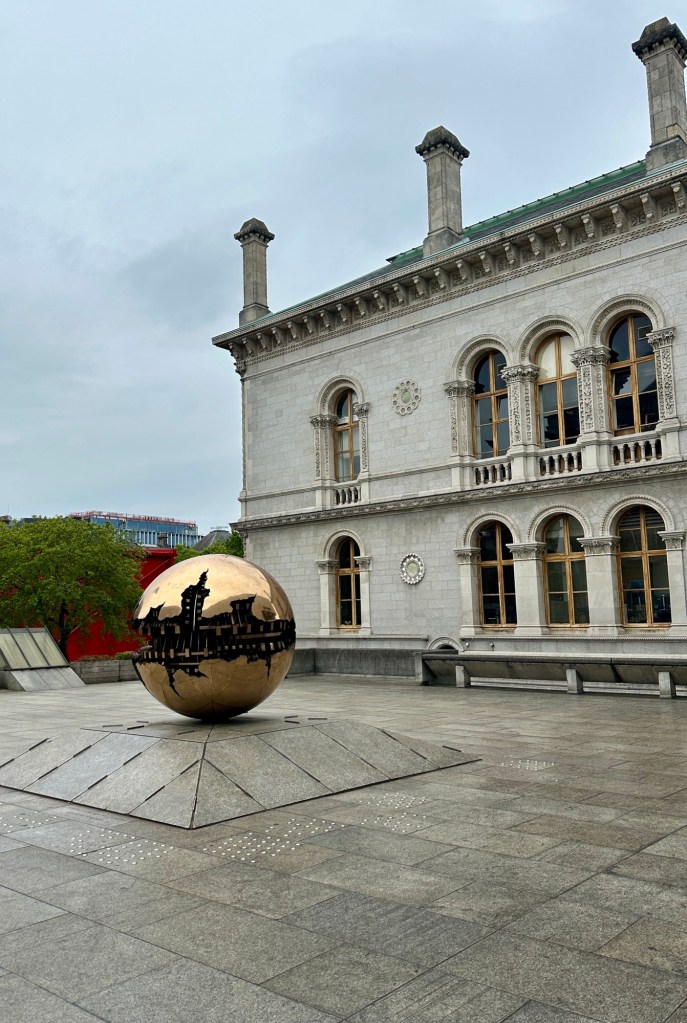
We took advantage of the free time to wander the grounds of Trinity College. Unfortunately, all the tours to see the Book of Kells were sold out, but even so, the campus itself is beautiful and steeped in history. If you’re planning a visit to Dublin, be sure to book your tickets for the Book of Kells in advance — it’s one of the city’s most famous and sought-after experiences, featuring the stunning illuminated manuscript created by Celtic monks over 1,200 years ago.
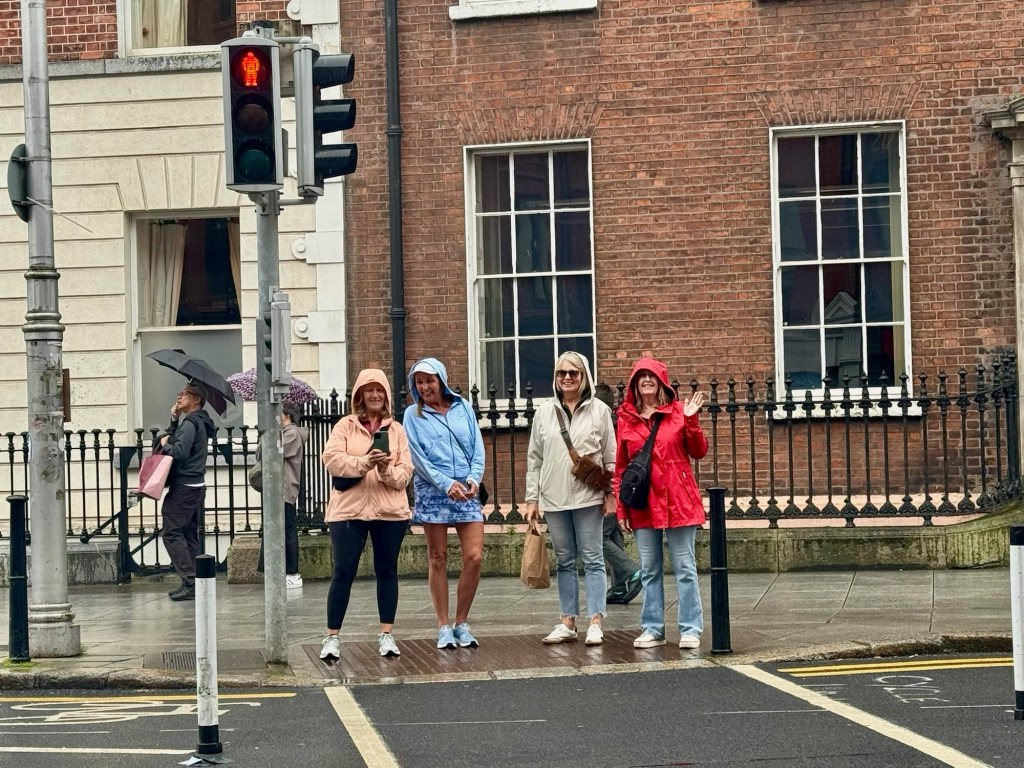
We had been blessed with perfect weather all week, but no trip to Ireland is complete without a little Irish rain — which finally made an appearance on our last day. We didn’t mind one bit. We tucked into cozy pubs when the showers rolled through, warmed up with a pint or two, and simply enjoyed our final evening surrounded by Irish hospitality, music, and laughter. It was the perfect ending to an unforgettable journey.
Ireland Together ~ The Joy of Group Travel
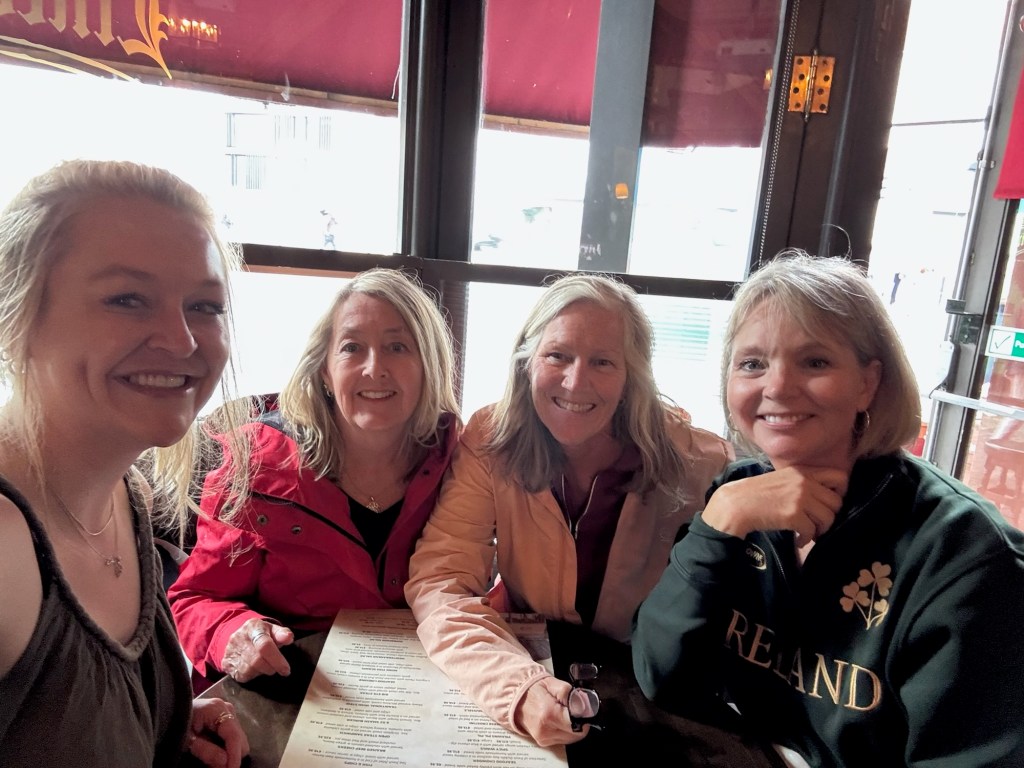
We really enjoyed discovering Ireland with a group — the laughter on the coach, shared moments, and the easy camaraderie that builds day by day. Traveling with CIE Tours made the experience effortless, allowing us to simply enjoy the beauty, history, and charm of Ireland without worrying about logistics.
A big part of that joy was thanks to our driver, Michael, who truly made the trip unforgettable. He filled our days with stories, humor, and Irish charm, always looking out for us, and even giving us a good-natured scolding when we were running late. We absolutely adored him — his care, wit, and warmth brought our journey to life in a way that felt personal and genuine.
What began as our ladies’ group of ten quickly became a circle of thirty friends. Between the stories, songs, and shared meals, we found that Ireland’s real magic isn’t just in the scenery — it’s in the people you experience it with. By the end of the journey, it wasn’t just a tour of Ireland; it was a reminder of how meaningful travel becomes when it’s shared.
Written by Marci Fouts, founder of Sunning By The Sea Travel and lover of all things Ireland. Marci believes travel is best when it’s shared — where laughter, friendship, and new experiences turn a trip into a lifelong memory.
 Explore with Me
Leave a comment