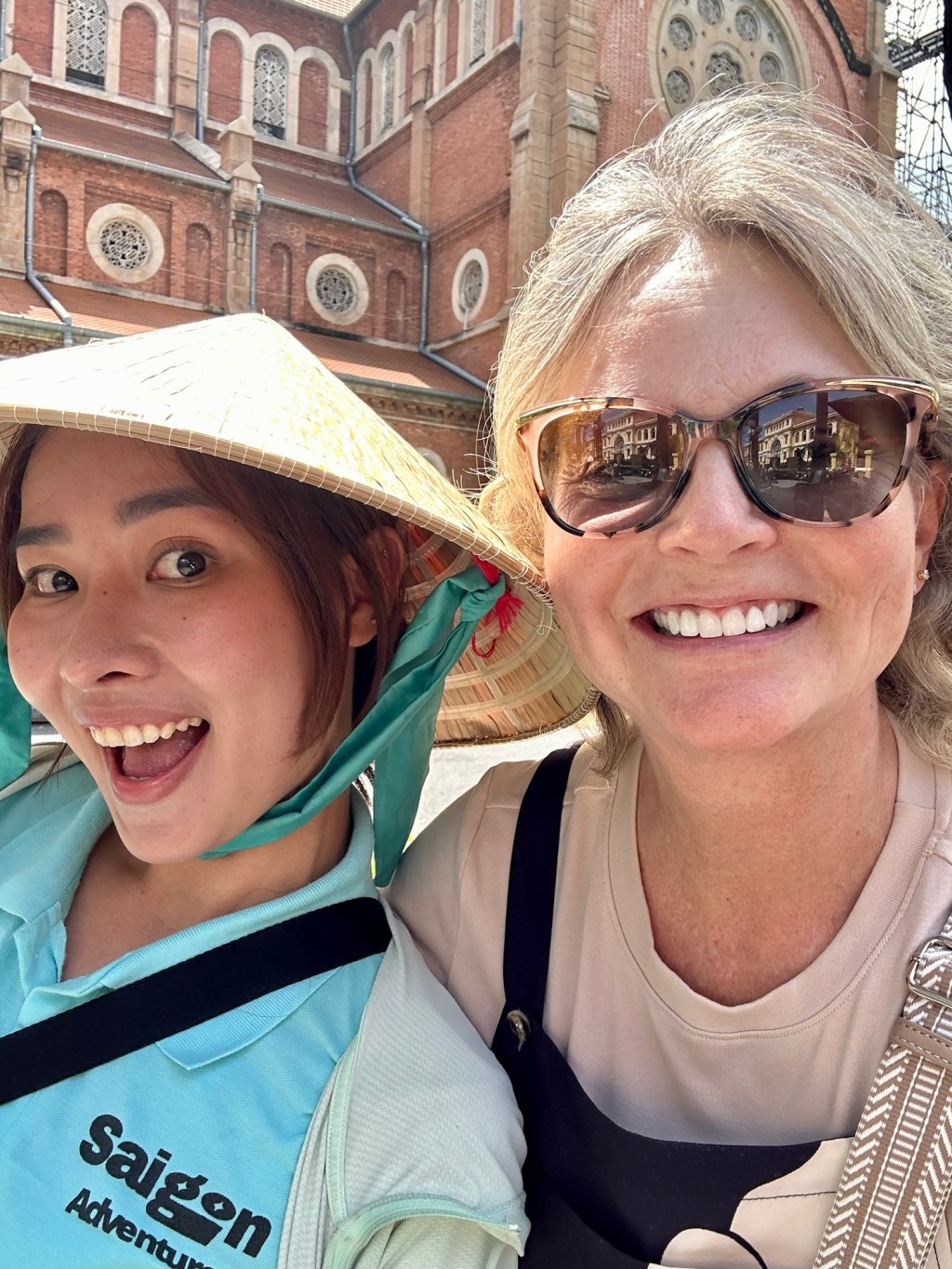
We spent three days in Saigon before boarding our Avalon Waterways Mekong River cruise and made the most of every moment, packing alot into a short stay. Located in southern Vietnam, the city is officially known as Ho Chi Minh City, though many locals still prefer—and commonly use—its original name, Saigon. This blend of past and present is part of what gives the city its unique energy and character. We stayed at the elegant Park Hyatt Saigon, a luxurious five-star property situated in District 1, the city’s historic and financial heart. This central, upscale neighborhood proved to be an ideal base for exploring Saigon’s culture, cuisine, and history.
Day 1: Exploration by Foot
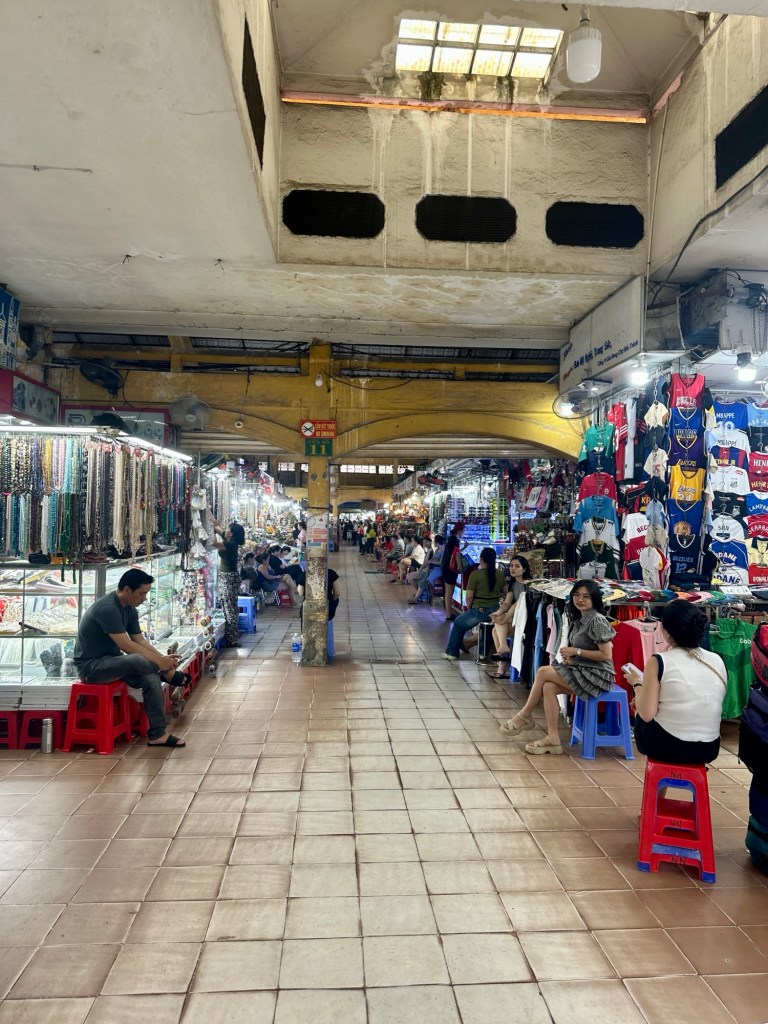
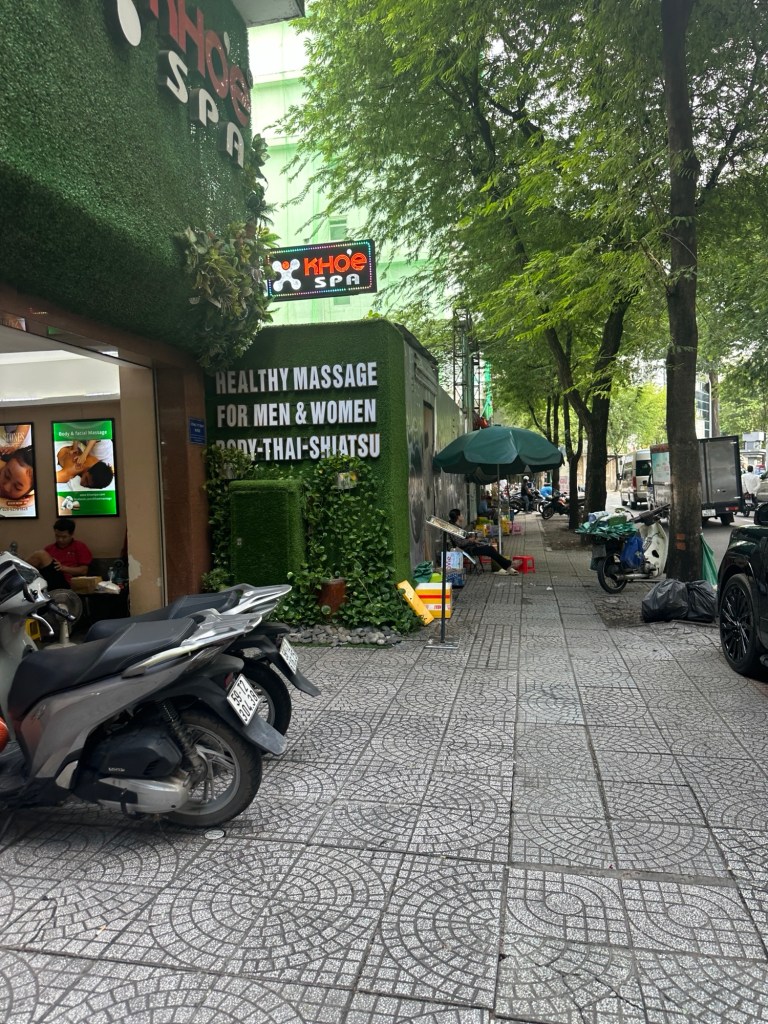
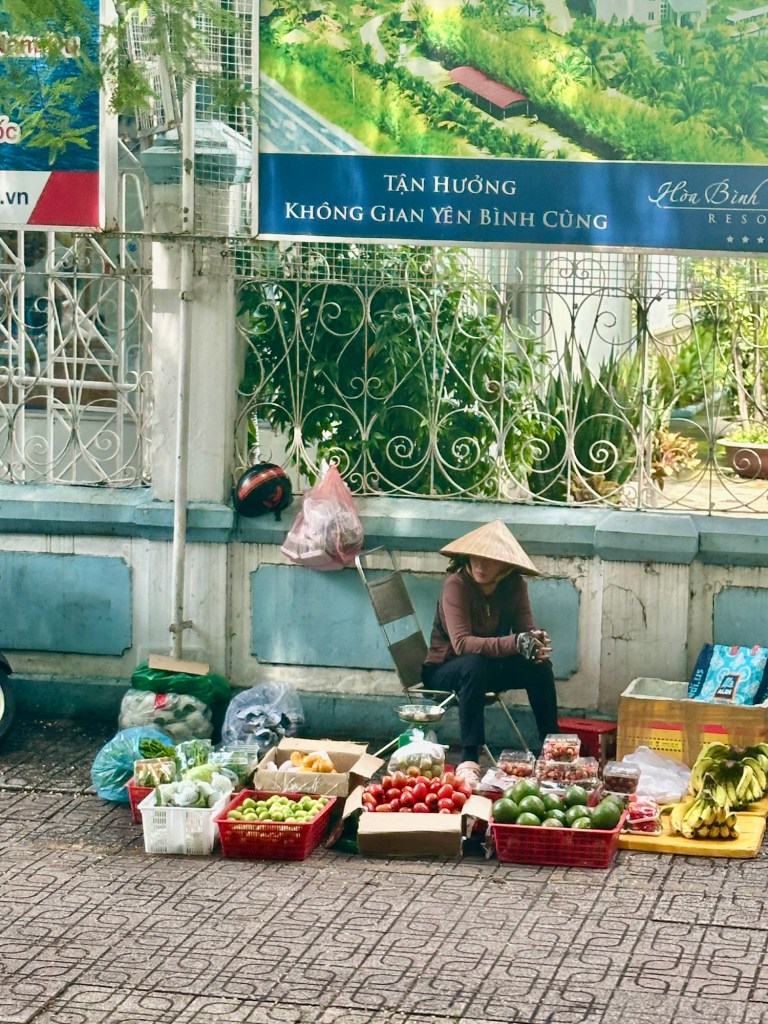
Our first day was spent exploring Saigon on our own. We didn’t wander far from the hotel—maybe a 20-minute radius—but this city is so dense with energy and life that we experienced a lot within just a few blocks. One of our first stops was Cua Bac Market, an indoor market housed inside a massive building that seems to span an entire city block. Inside, rows of tightly packed stalls sell everything from name-brand shoes, bags, and shirts to classic tourist-trap souvenirs.
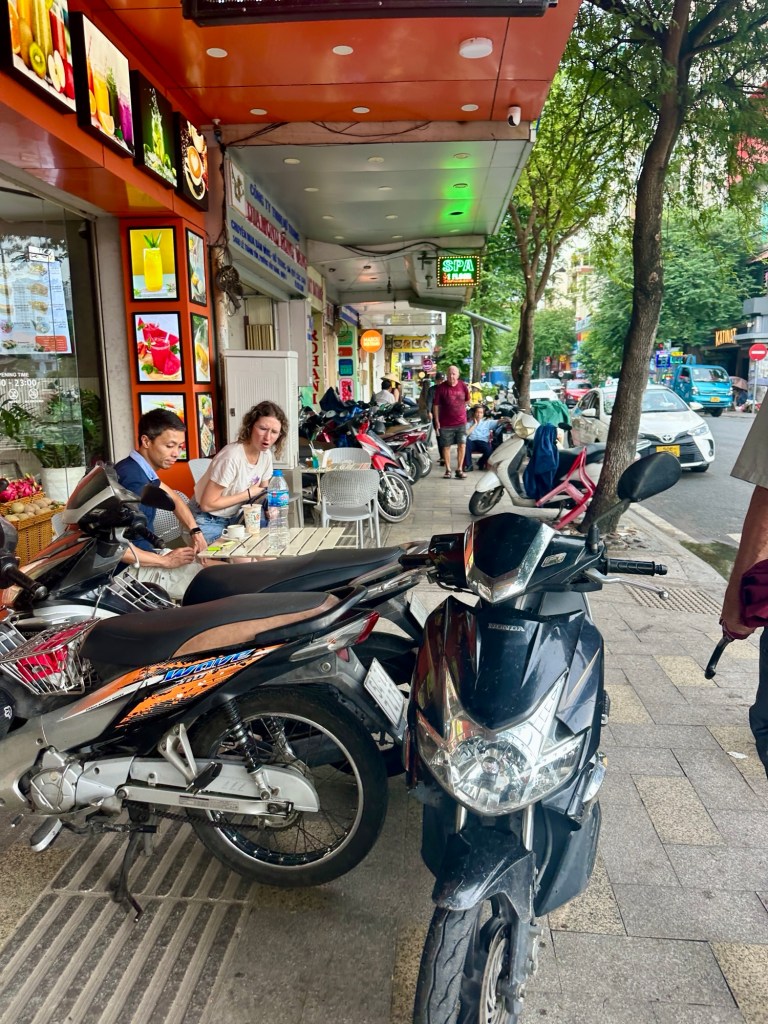
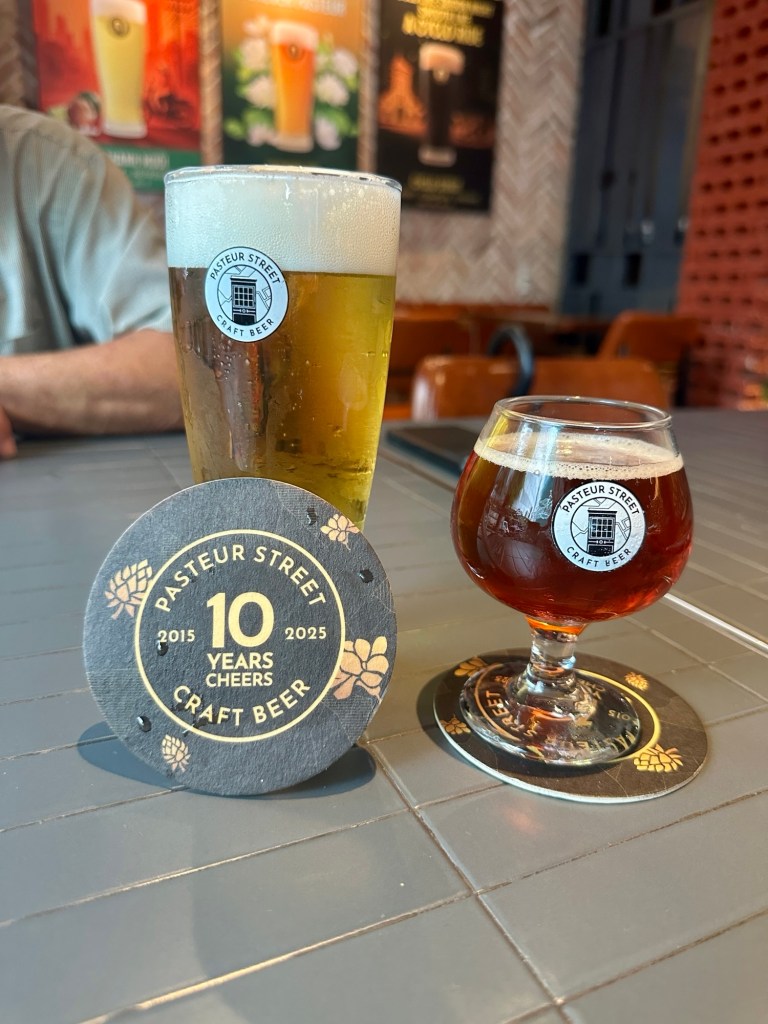
Although the street-cart food was incredibly tempting, we had been warned about the local water because our digestion would not be used to it—no drinking it, no ice, and caution with foods washed in it—so we decided to play it safe. Instead, we stumbled upon an unexpected find: Pasteur Street Brewing Company, a craft brewery founded by an American expatriate. It was a welcome and familiar stop, offering a relaxed atmosphere and a refreshing break from the heat and sensory overload of the streets.
As always, the first day of a long journey is the hardest when it comes to jet lag. Despite feeling exhausted, we forced ourselves to stay awake until a normal bedtime, hoping to reset our internal clocks and be ready to fully embrace the days ahead.
Day 2: Walking Tour & Scooter Ride
One thing that becomes evident very quickly is the affection many southern Vietnamese still hold for Americans. Everyone we encountered was friendly and welcoming, but it was the children who stood out the most—waving enthusiastically and calling out “người Mỹ, người Mỹ” (“American, American”) as we passed by. These small, spontaneous moments were surprisingly touching and left a lasting impression.
Vietnam was under French colonial rule for nearly a century, beginning in the mid-1800s and lasting until 1954, and the French influence is still visible today—particularly in the city’s architecture, cafés, and wide boulevards. While that European imprint remains strong, there doesn’t seem to be the same warmth or affection associated with the French presence as there is with Americans.
Avalon Waterways provides the opportunity to explore a destination prior to embarking on your cruise as part of their pre-cruise package. That morning, we joined a guided tour that began with a walking overview of key attractions in Saigon, followed by visits to the historic Rex Hotel and the powerful War Remnants Museum—both offering very different but equally important perspectives on the city’s past and present.
Walking Tour
Our guided walking tour lasted about an hour and led us past several sites tied to the final days of the Vietnam War. One of the most striking stops was the yellow apartment building at 22 Gia Long Street, one of the last helicopter evacuation points during the Fall of Saigon. Our guide explained that it housed a covert CIA operation that remained active until the very end, frantically destroying documents—especially records identifying South Vietnamese citizens who had helped the U.S. government and would have faced severe punishment once the North took control.
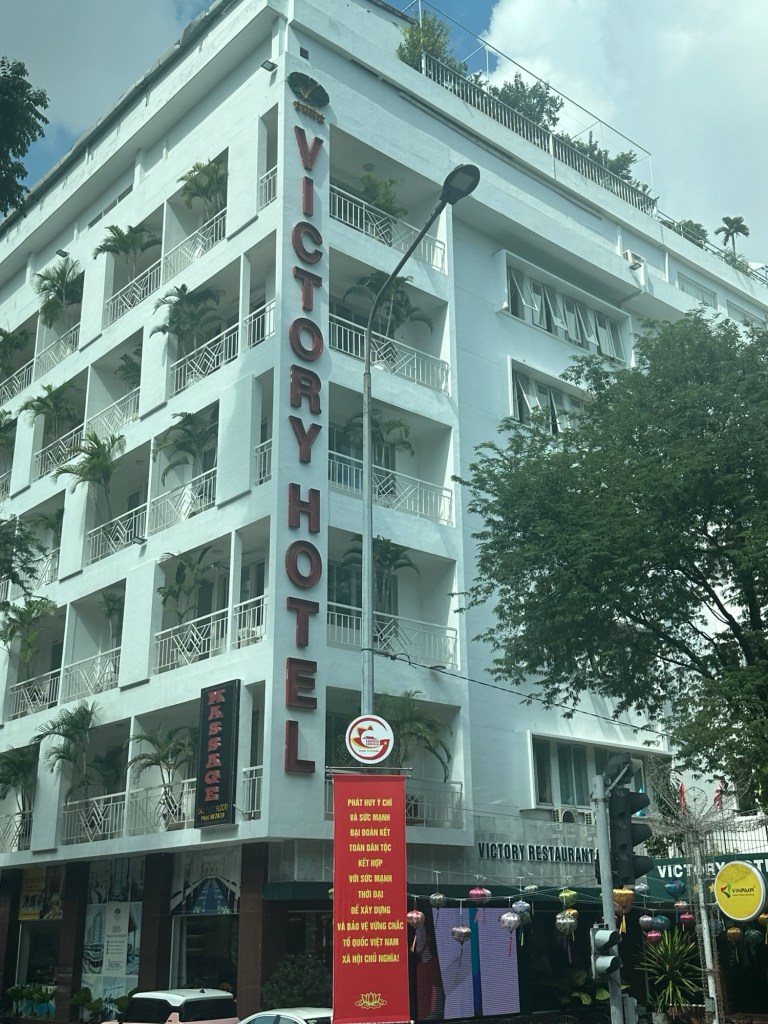
We also passed the Victory Hotel, another former CIA hub, before ending at the historic Rex Hotel. Known as “the press hotel,” its rooftop bar was once a nightly gathering place for journalists and intelligence agents exchanging news and rumors from the war. Sitting there today with a drink in hand, it felt surreal to look out over a modern, thriving city while standing in a place so deeply tied to its turbulent past.

War Remnants Museum
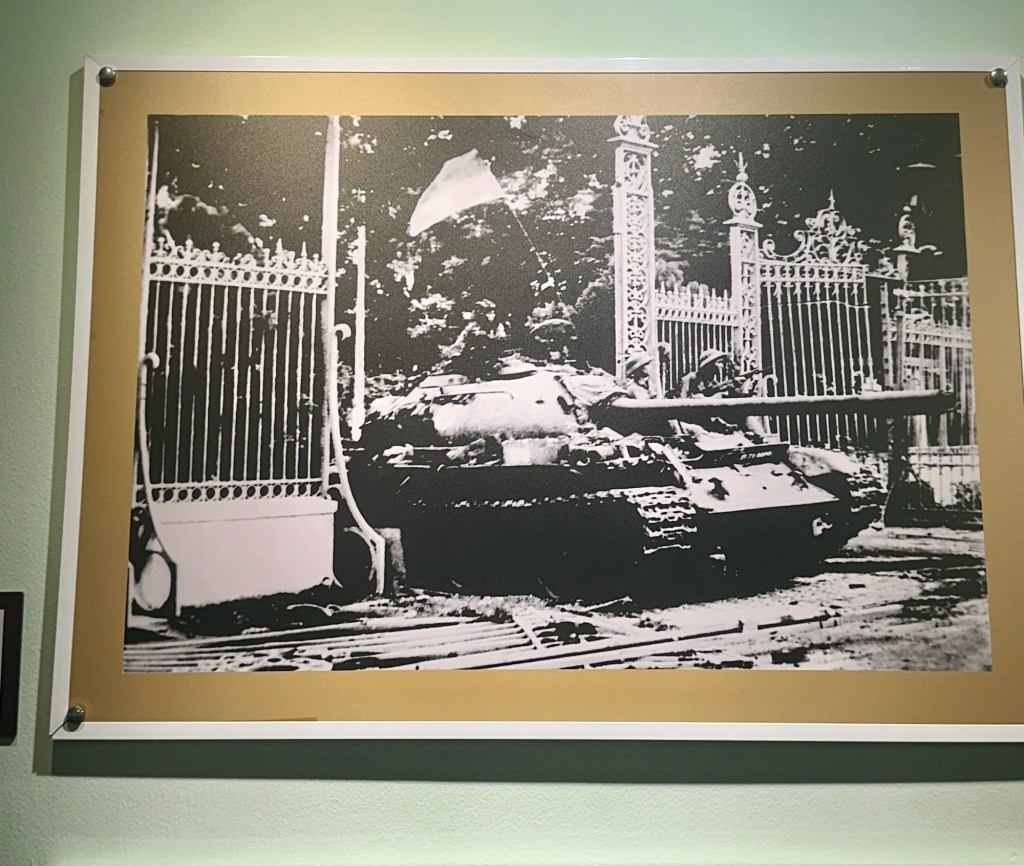
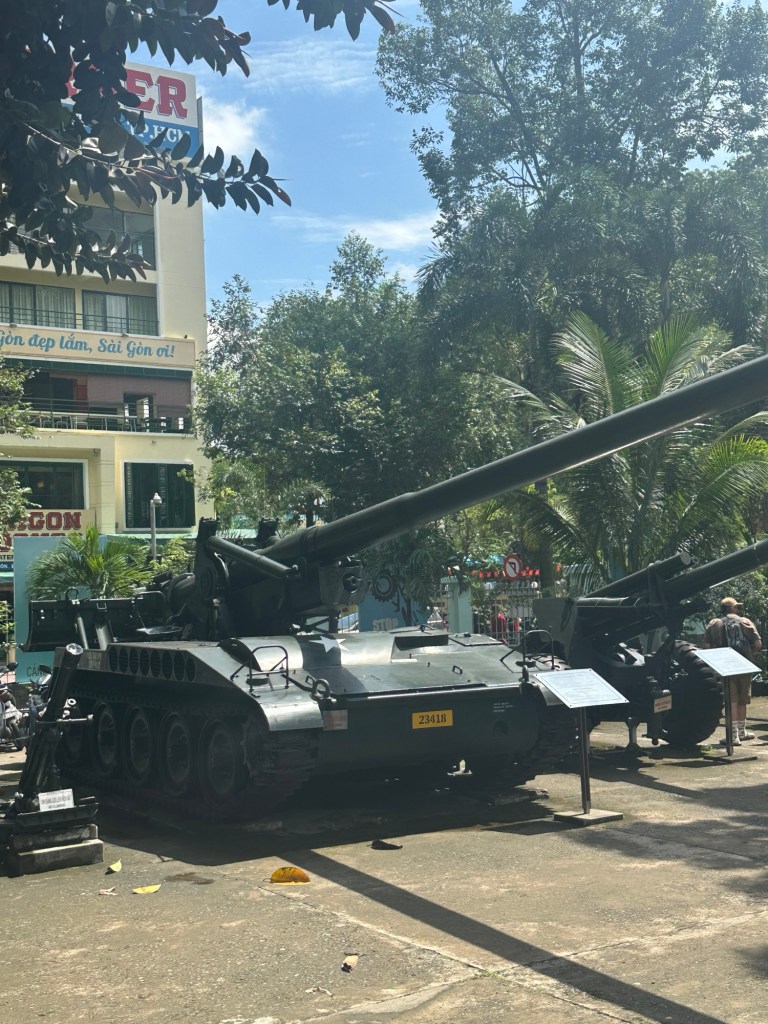
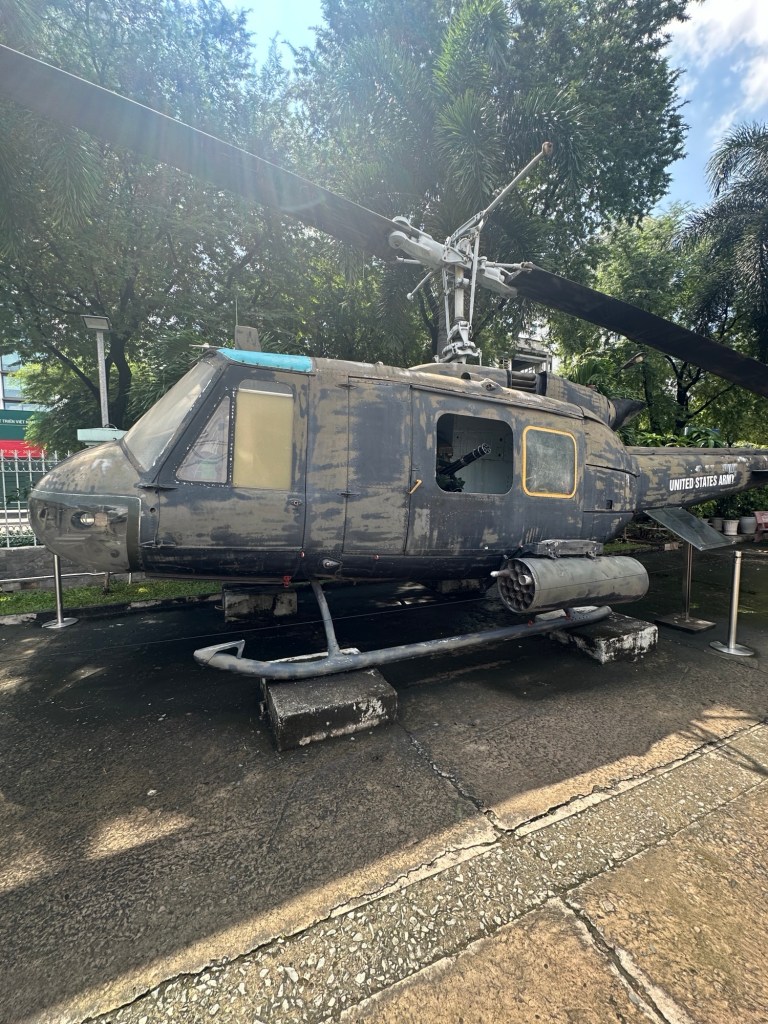
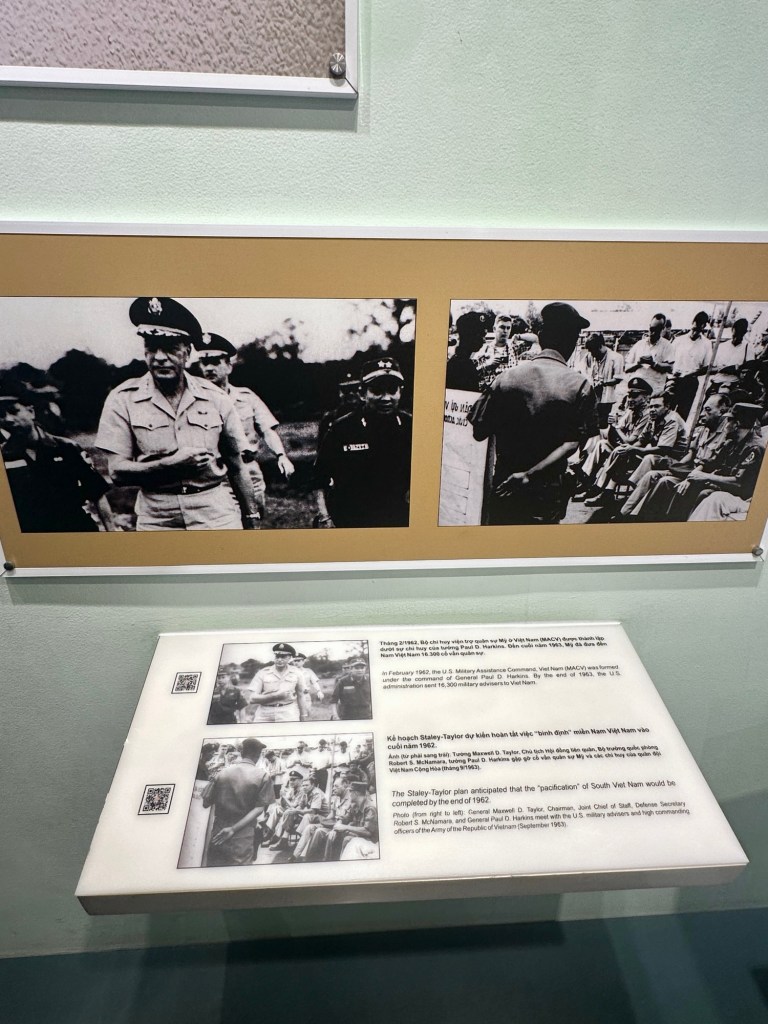
We were taken by motor coach to the War Remnants Museum, a powerful and sobering stop on our tour. The museum is presented from the perspective of the Vietnamese government, offering a very different lens on the war than the one most Americans grew up with. Originally opened as the Museum of Imperialism and American War Crimes, it tells the story of the conflict through the experience of those who lived it on the ground.
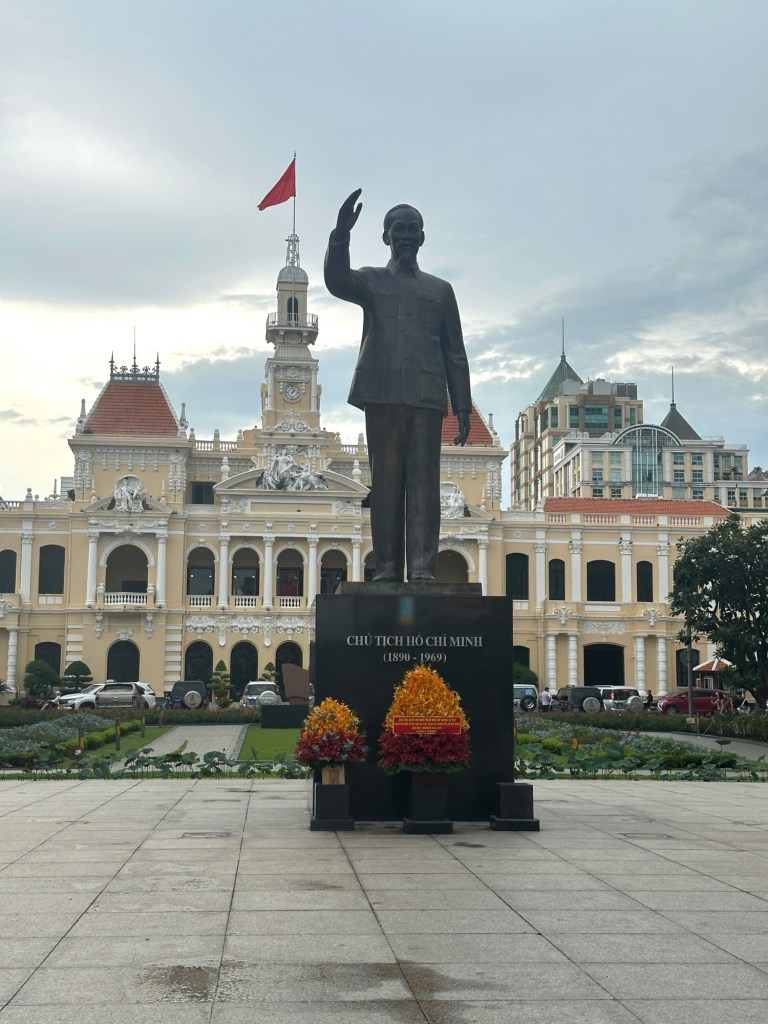
The exhibits begin with nearly a century of French colonial rule before transitioning into what the museum frames as American occupation. For years, the United States referred to its involvement as a “conflict” rather than a declared war, a period often described as the “shadow war.” Within this context, Ho Chi Minh is portrayed as a national hero—someone who fought to free Vietnam from foreign control and ultimately reunify the country.
Some of the most difficult and moving sections focus on the long-lasting consequences of the war, particularly the devastating effects of Agent Orange. The museum highlights not only the immediate destruction but also the generational health impacts that continue to affect Vietnamese families today. It’s an emotional visit, but an important one—offering insight into how deeply this history still shapes the country and its people.
Scooter Ride with Students
That afternoon, we traded four wheels for two and explored the city by scooter with two university students eager to practice their English. Our guides, Hannah and Alvin—recent graduates with a focus on tourism—were warm, confident, and clearly proud to share their city with us.
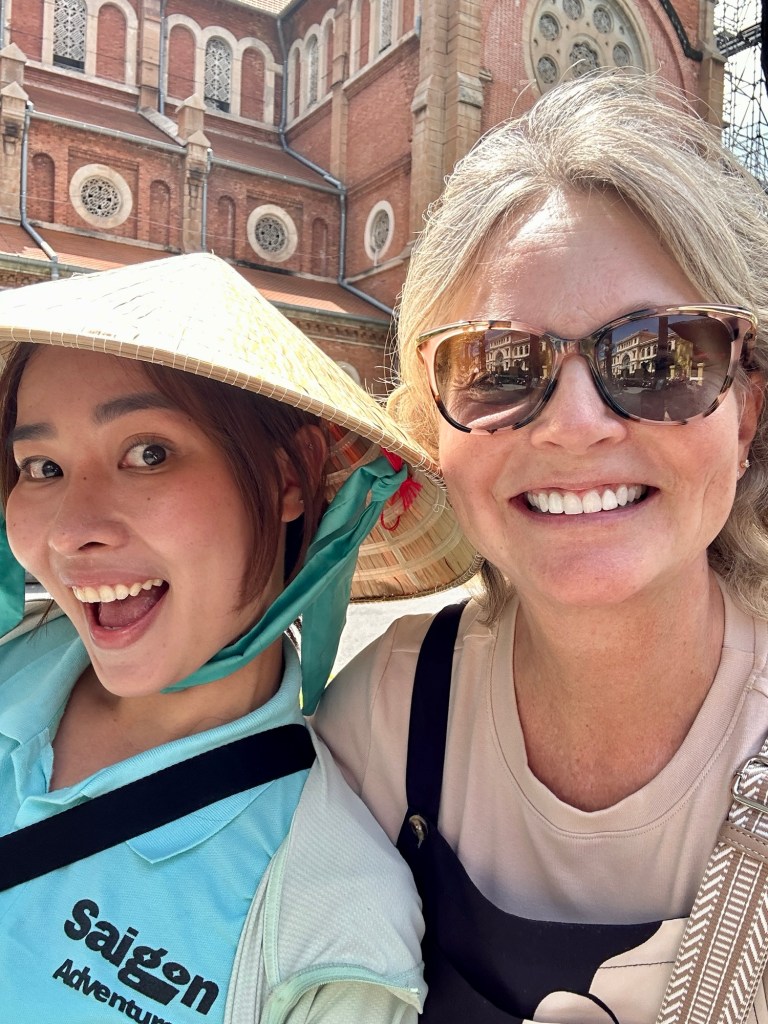
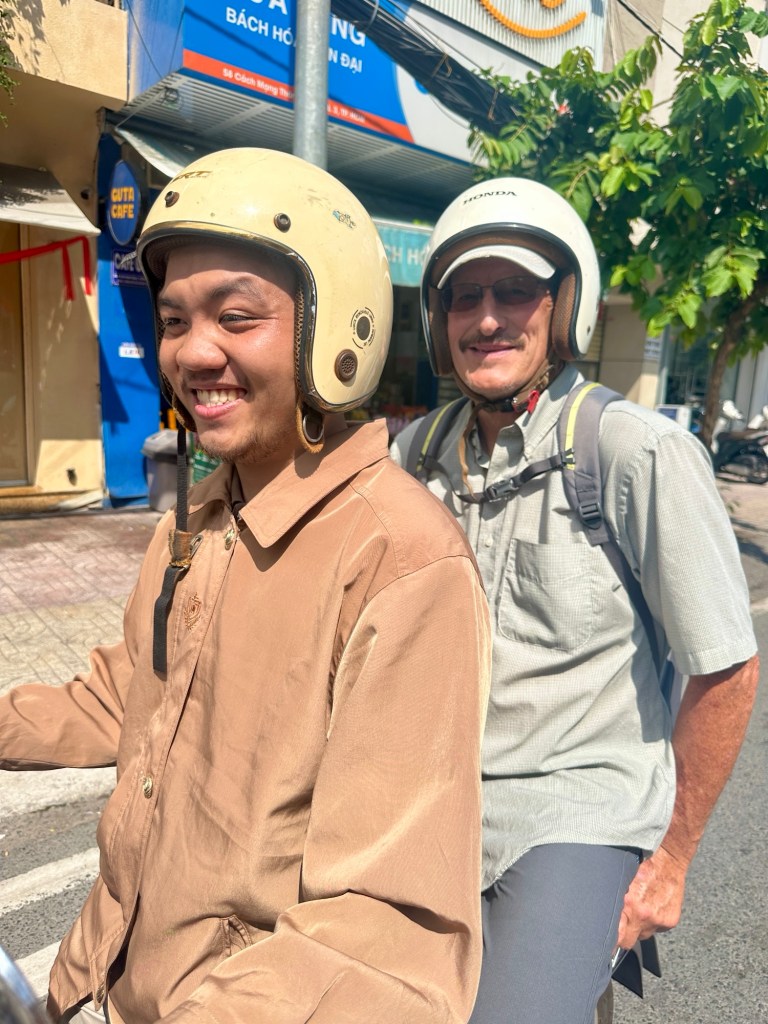
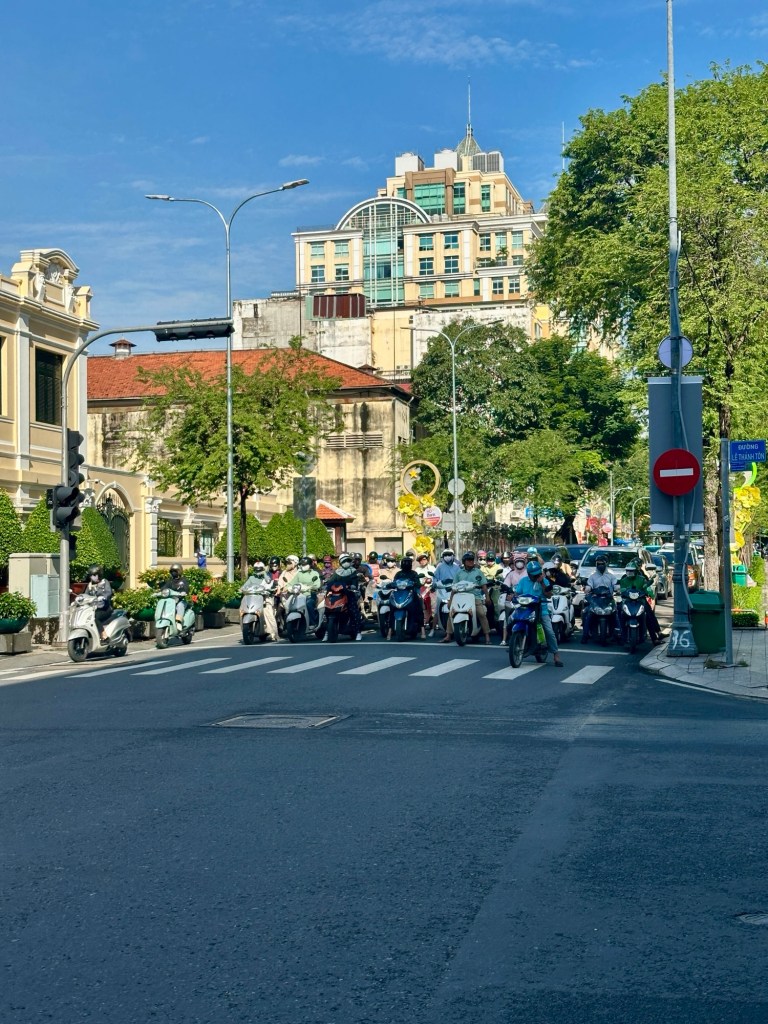
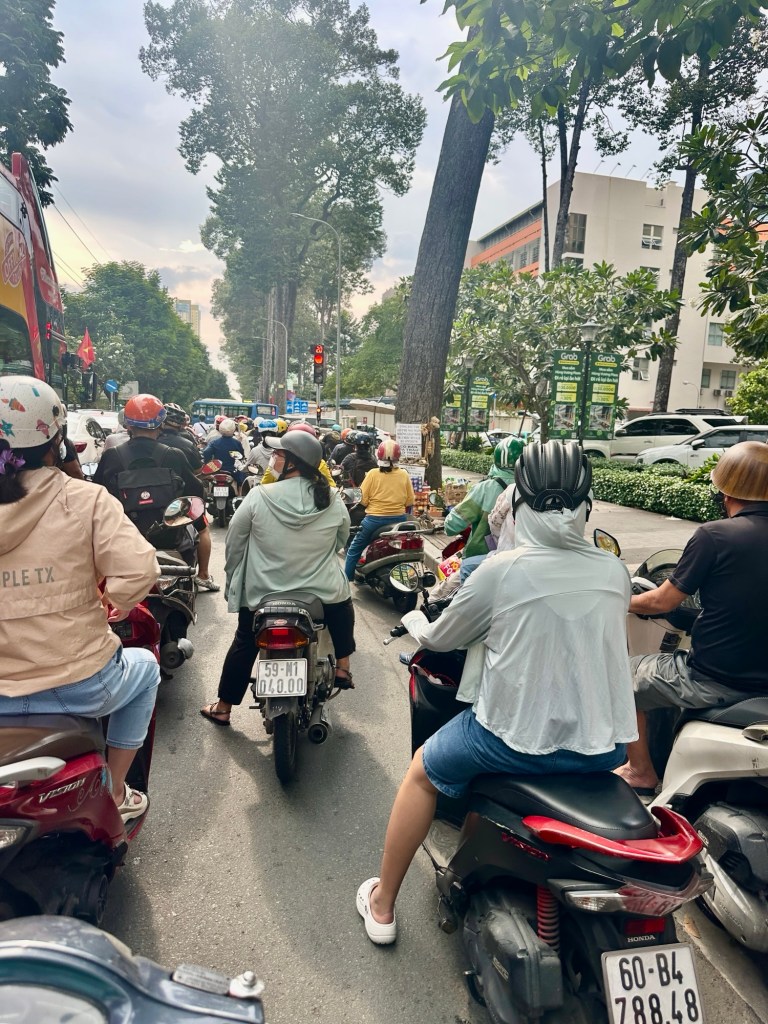
Vietnam is home to nearly 100 million people and an estimated 10 million motorbikes. What initially appears to be pure chaos is actually a carefully choreographed system. We climbed onto the backs of the scooters and merged into traffic, quickly learning the golden rule: don’t stop. Everything depends on momentum. Motorbikes come from every direction, but each rider subtly adjusts speed to weave, cross, and merge. As long as no one suddenly stops, it works. The experience is exhilarating, slightly terrifying but we had the ultimate trust in our drivers.

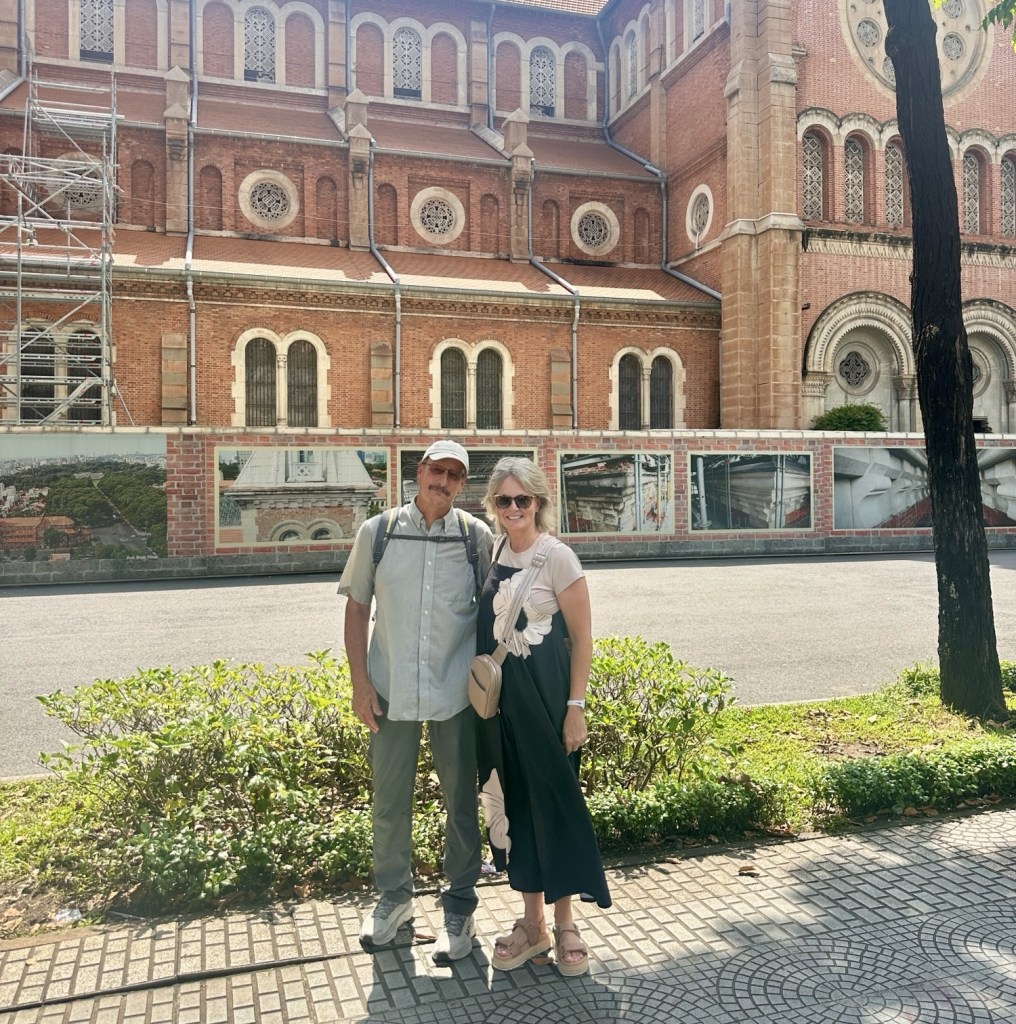
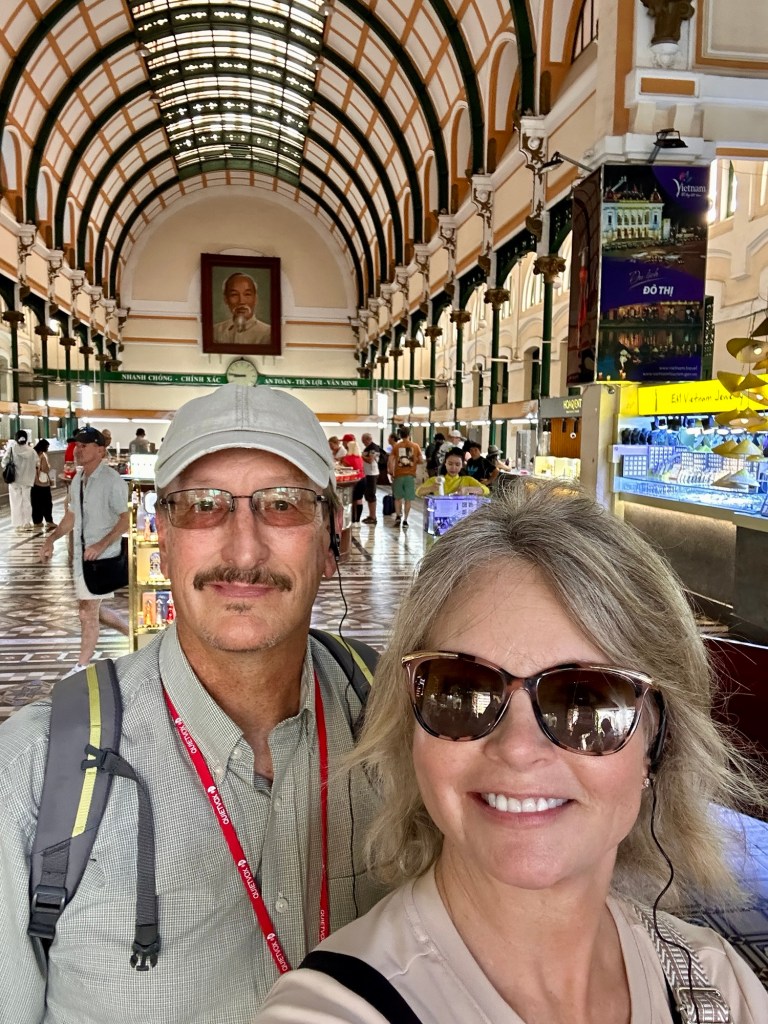
Our first stop was the iconic Saigon Central Post Office, a grand colonial-era building directly across from Notre-Dame Cathedral Basilica of Saigon. Designed in the late 1800s by a French architect associated with Gustave Eiffel, the building was originally intended to be a train station. Local lore says the Catholic Church objected to a busy rail hub so close to the cathedral, and the structure was repurposed instead. Today, it remains a working post office, complete with soaring ceilings, vintage maps, and small souvenir stalls inside.
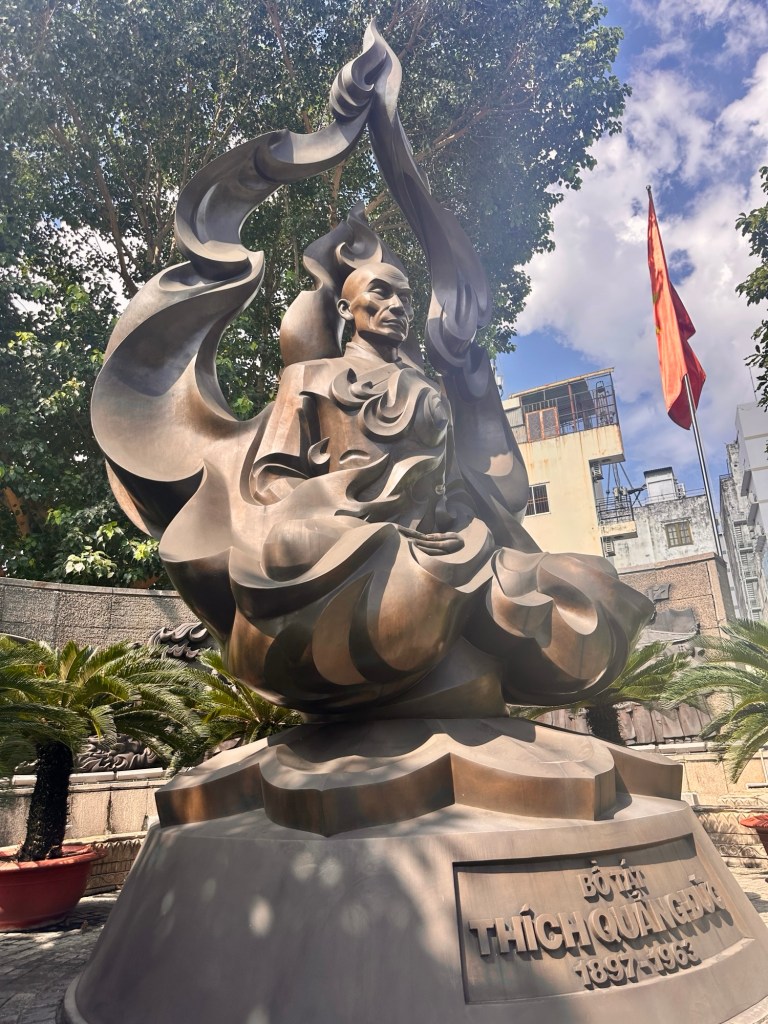
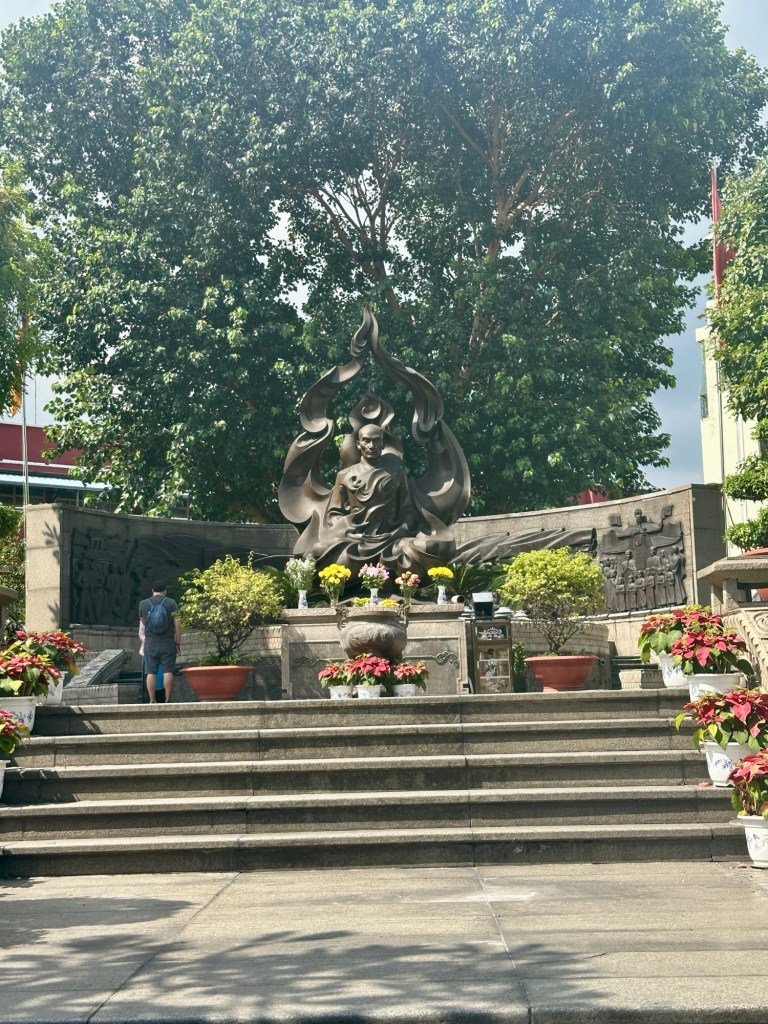
From there, we rode to the Thích Quảng Đức Memorial, a quiet yet deeply moving site marking where a Buddhist monk self-immolated in 1963 to protest religious persecution by the South Vietnamese government. Our guides shared the story with reverence, giving us space to absorb the weight of the moment. It’s one of those places that brings history sharply into focus and stays with you long after you leave.
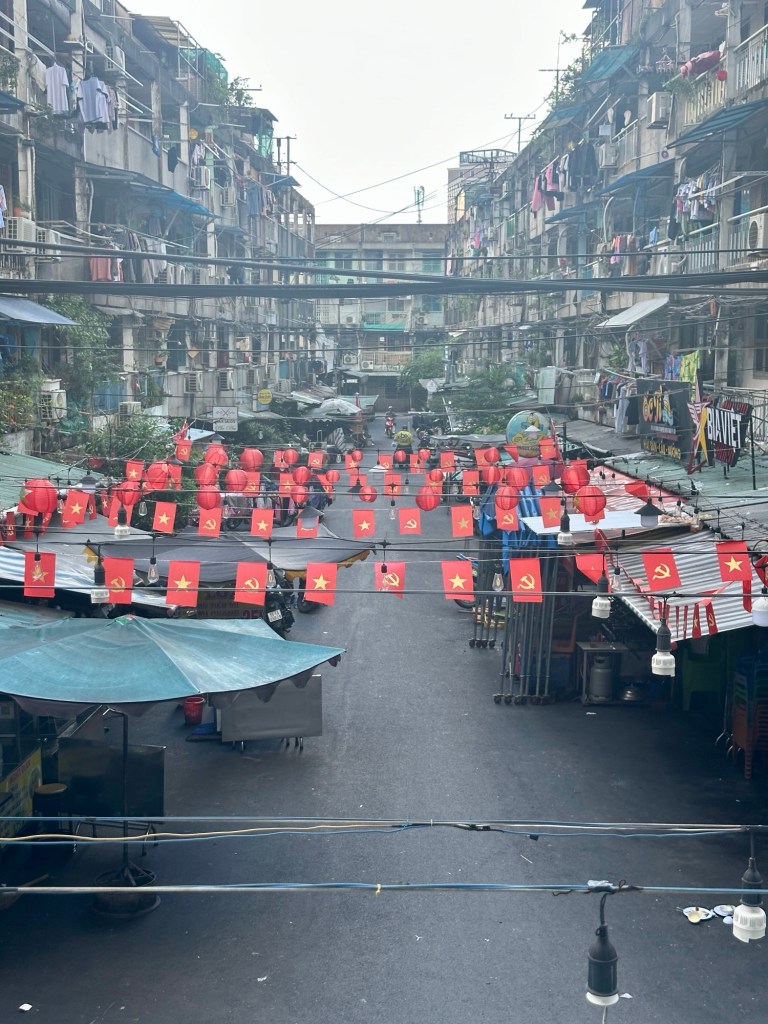
Next, we headed into District 3, a residential neighborhood far removed from the polished storefronts of District 1. This is where many everyday Saigon residents live. As we slowly navigated narrow streets, our guides pointed out what they jokingly call “black spaghetti”—dense tangles of electrical, phone, and internet cables strung between buildings, trees, and poles. It’s messy, improvised, and entirely functional.
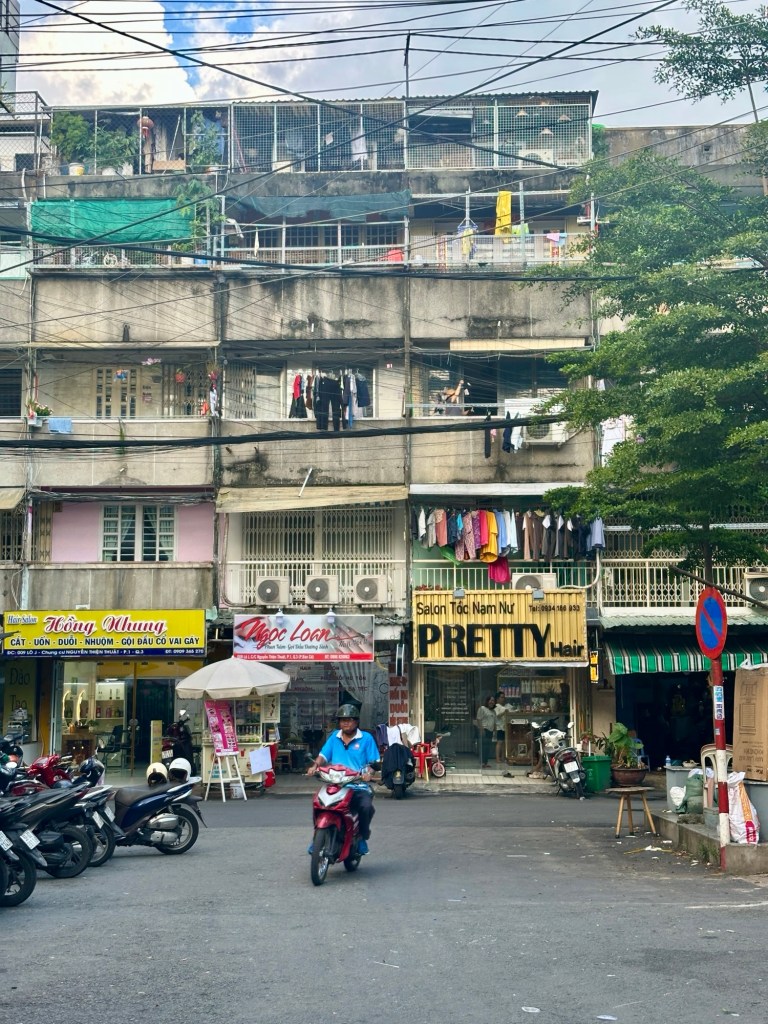
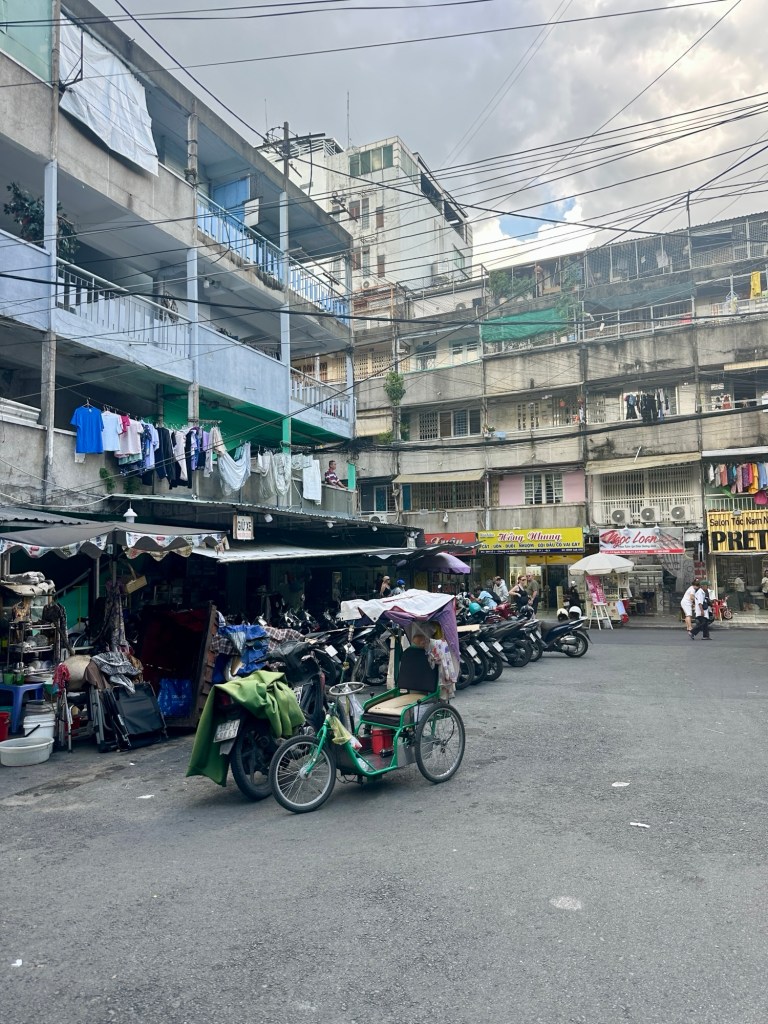
They also explained how apartments are allocated under the communist system through a lottery. If you’re lucky, you might receive a street-facing unit, allowing you to open a small business in the front and live behind it. If not, your apartment could be buried deep inside a building, down a dark, damp corridor with little natural light. Seeing this firsthand gave us a clearer understanding of daily life beyond the tourist districts.

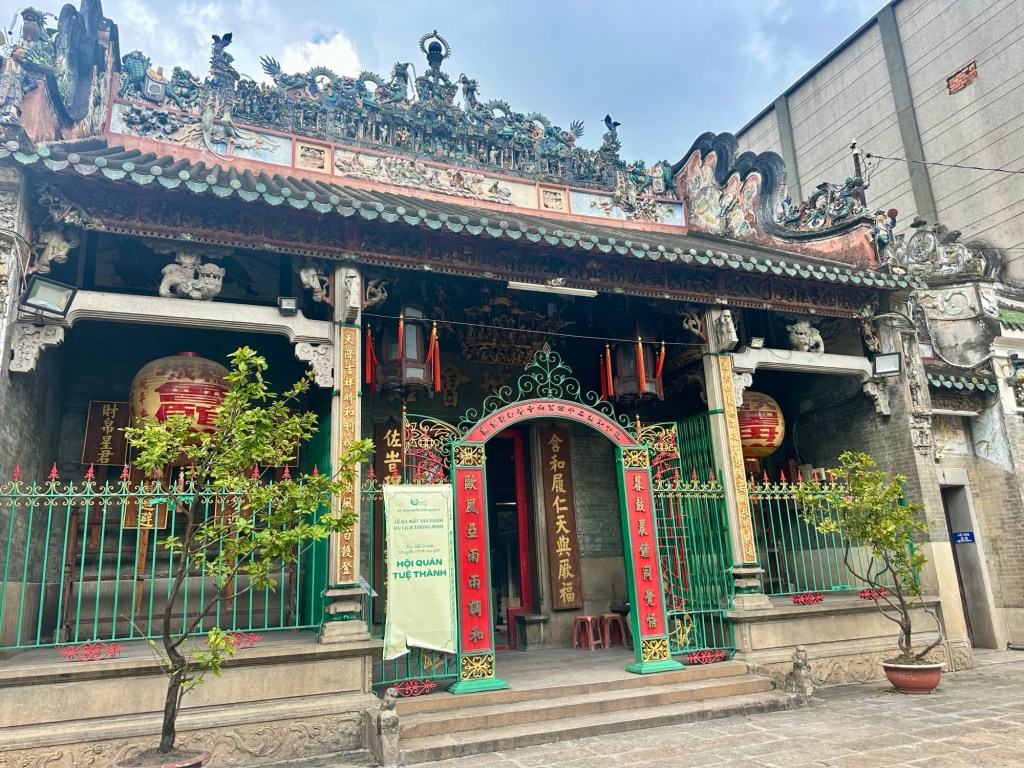
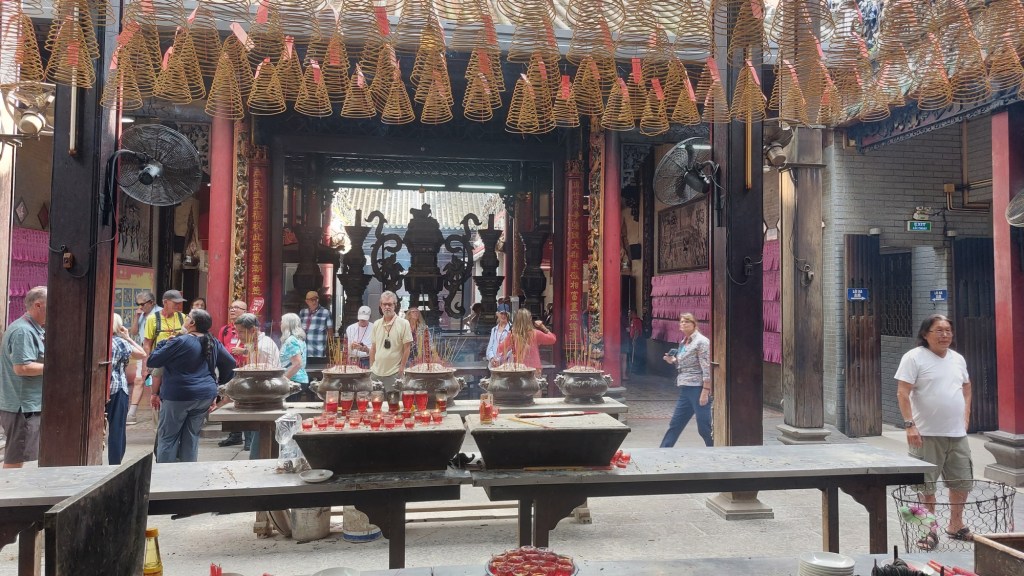
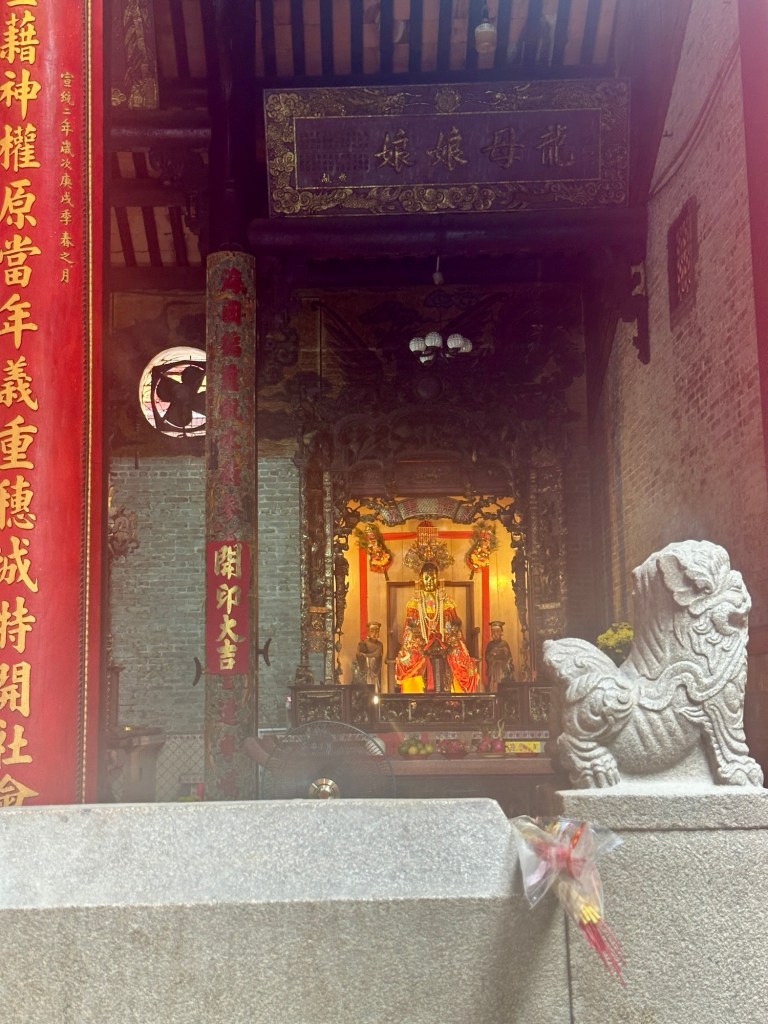
We continued on to Chợ Lớn, Saigon’s bustling Chinatown, and visited the historic Thiên Hậu Temple, built in the 1760s and dedicated to the Goddess of the Sea. Inside, incense filled the air as locals prayed for safe journeys and good fortune—a peaceful contrast to the traffic roaring just outside the temple walls.

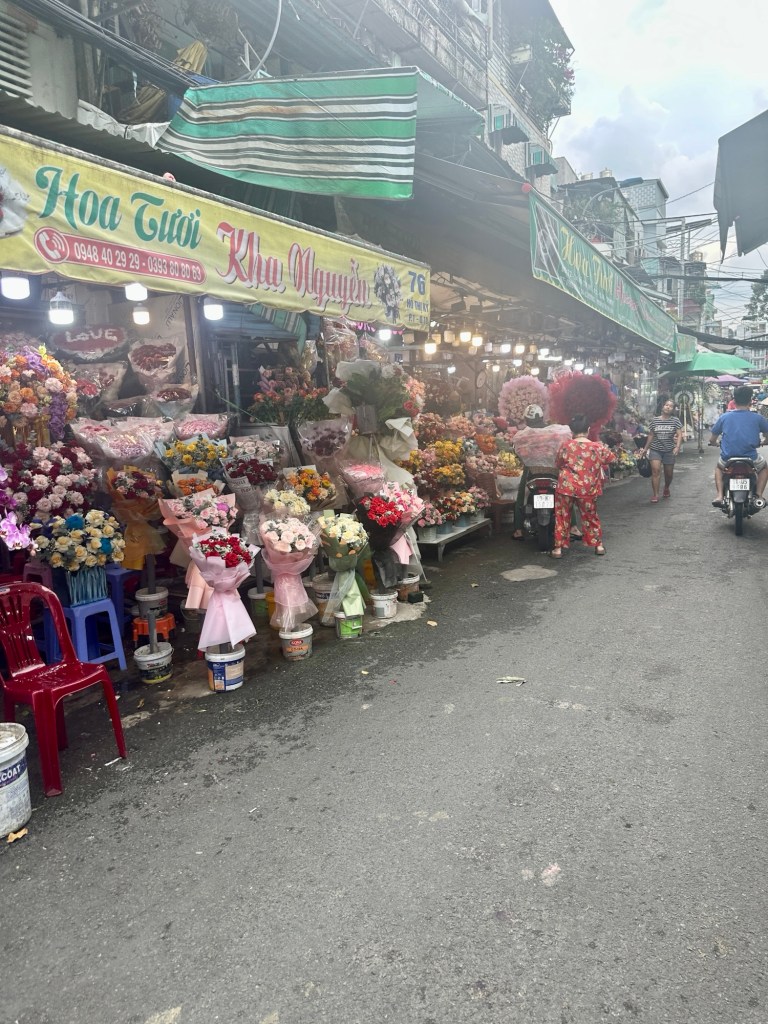
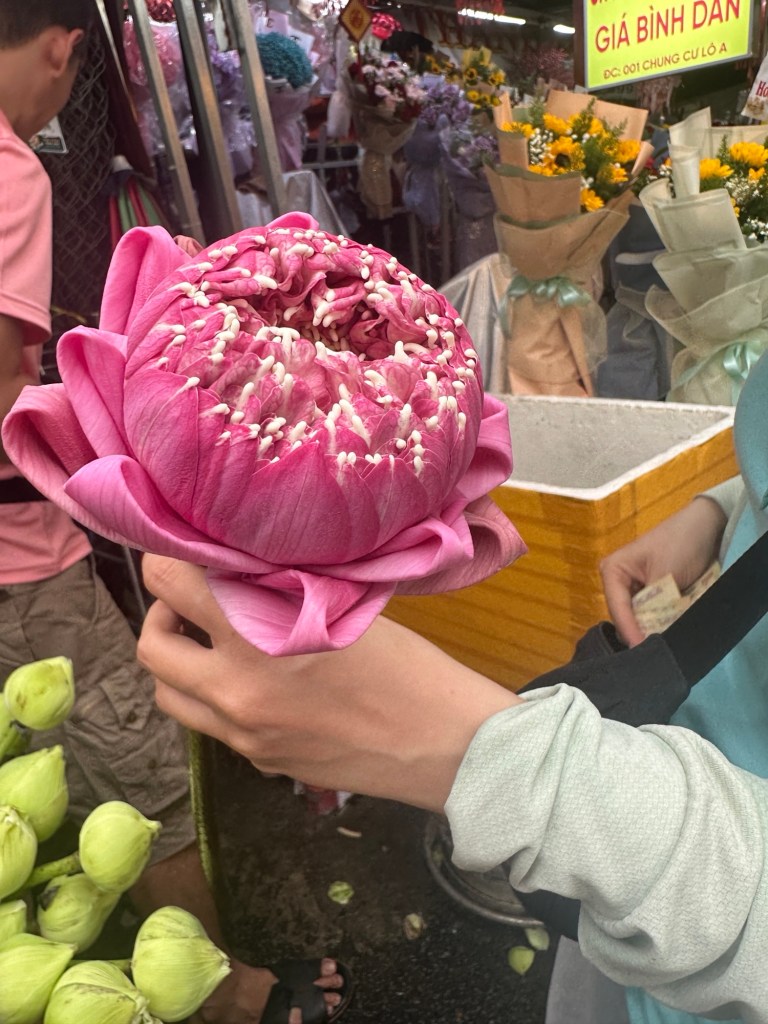
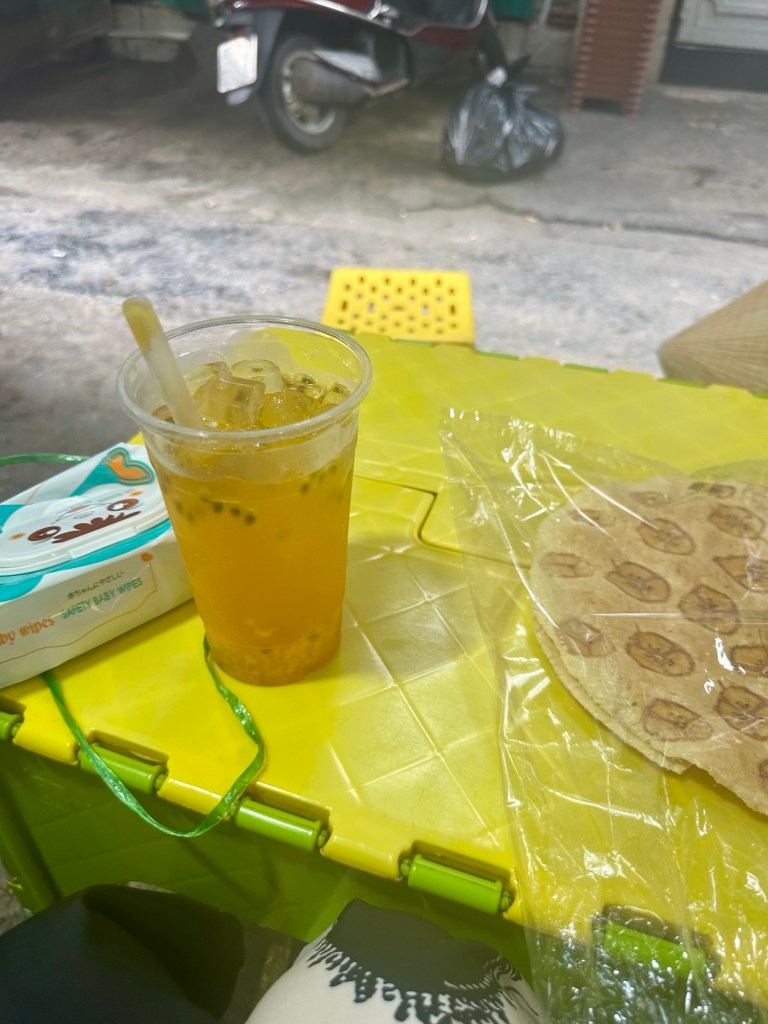
Our final stop was the Ho Thi Ky Flower Market, a lively street market bursting with color. Vendors sold fresh flowers by the armful alongside street snacks like grilled meats and crisp rice paper treats. We paused at a local food stall to sip fresh coconut water and snack on banana rice paper, taking a brief break from the sensory overload—in the best possible way. The market was fragrant, loud, chaotic, and utterly alive.
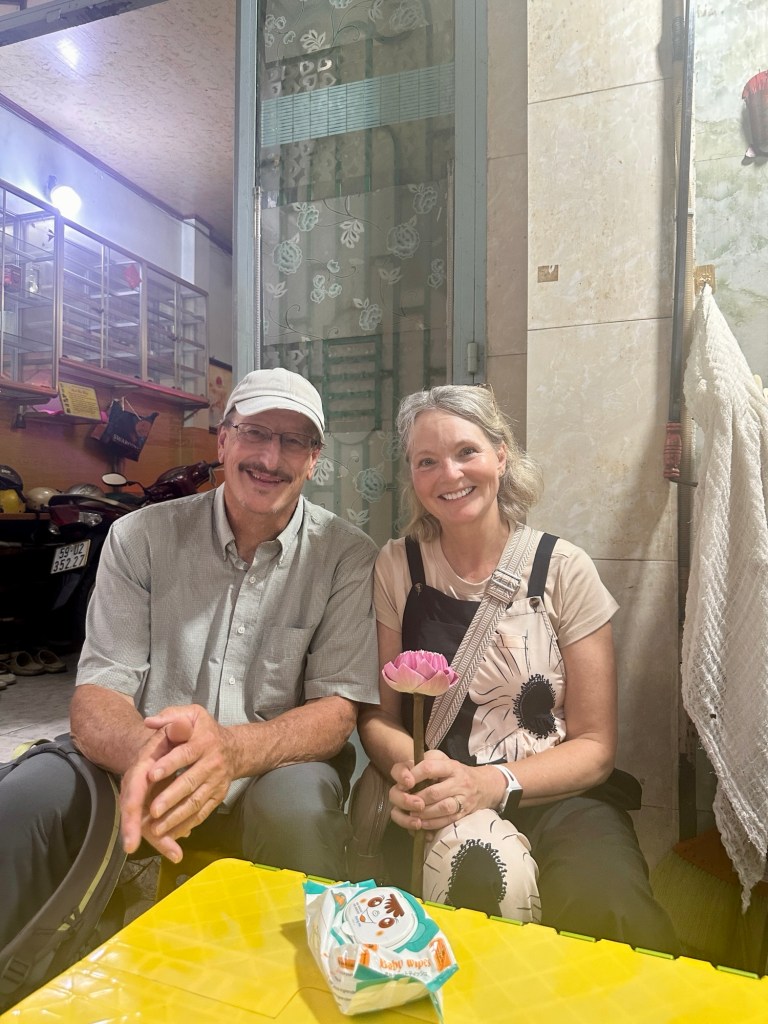
By the time we returned to the hotel, we felt like we’d seen a side of Saigon that would have been impossible to experience any other way. Riding through the city on the back of a scooter, guided by locals eager to share their world, became one of the most memorable experiences of our entire trip.
Day 3 Cu Chi Tunnels
Our third day in Saigon took us beyond the city limits on an excursion included as part of our Avalon Waterways pre-cruise package: a guided visit to the Cu Chi Tunnels.
The journey itself was part of the experience. The motor coach ride took about 90 minutes each way, gradually trading Saigon’s dense urban landscape for rice fields, small villages, and everyday scenes of rural life. It offered a glimpse into the countryside and helped set the stage for what we were about to see.
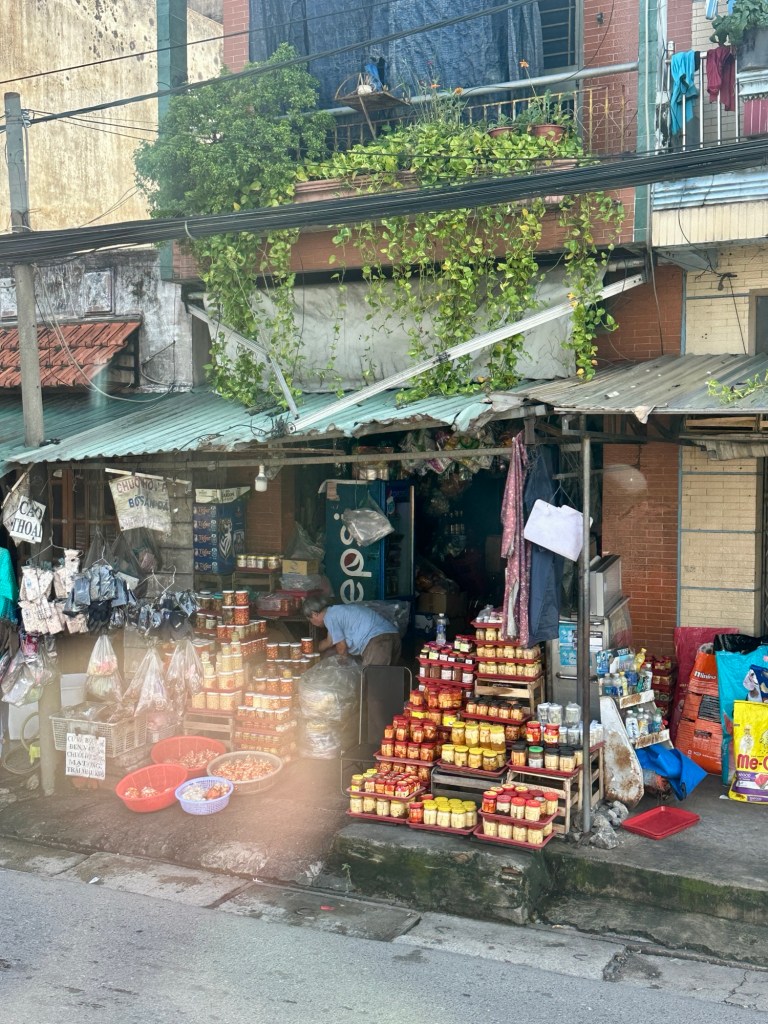
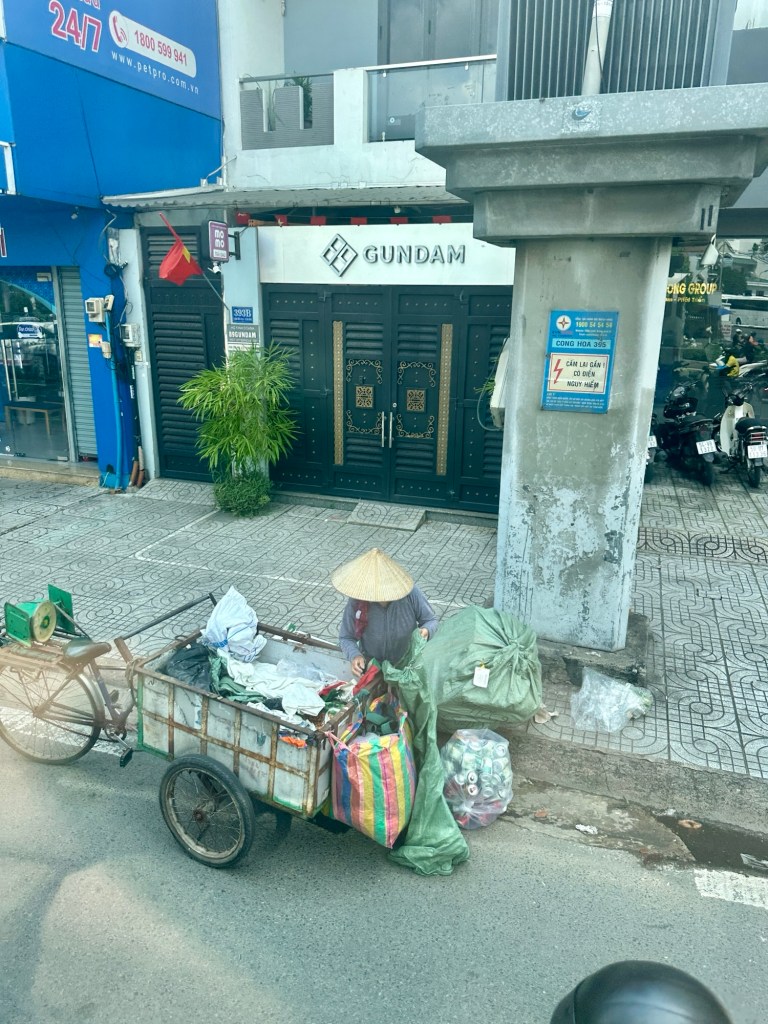
The Cu Chi Tunnels are an extraordinary underground network stretching more than 120 miles, once used by the Viet Cong as hiding places, supply routes, living quarters, and even entire underground villages. Walking through the site, it was difficult to imagine how such an extensive system could exist so close to Saigon—and remain largely undetected.
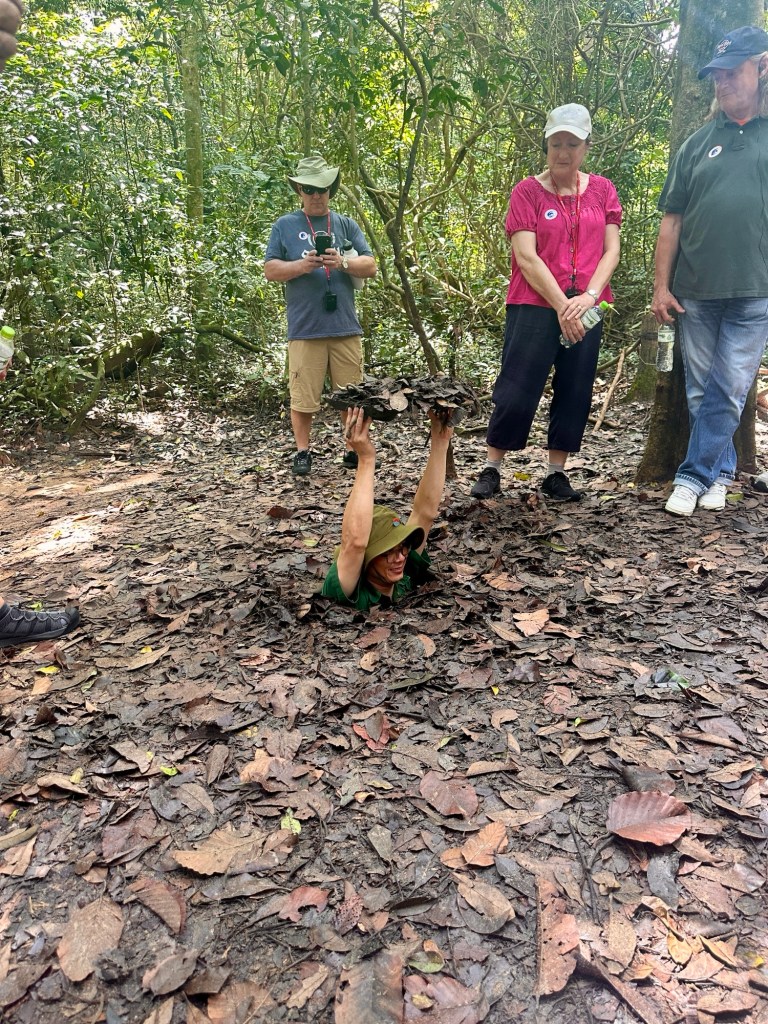
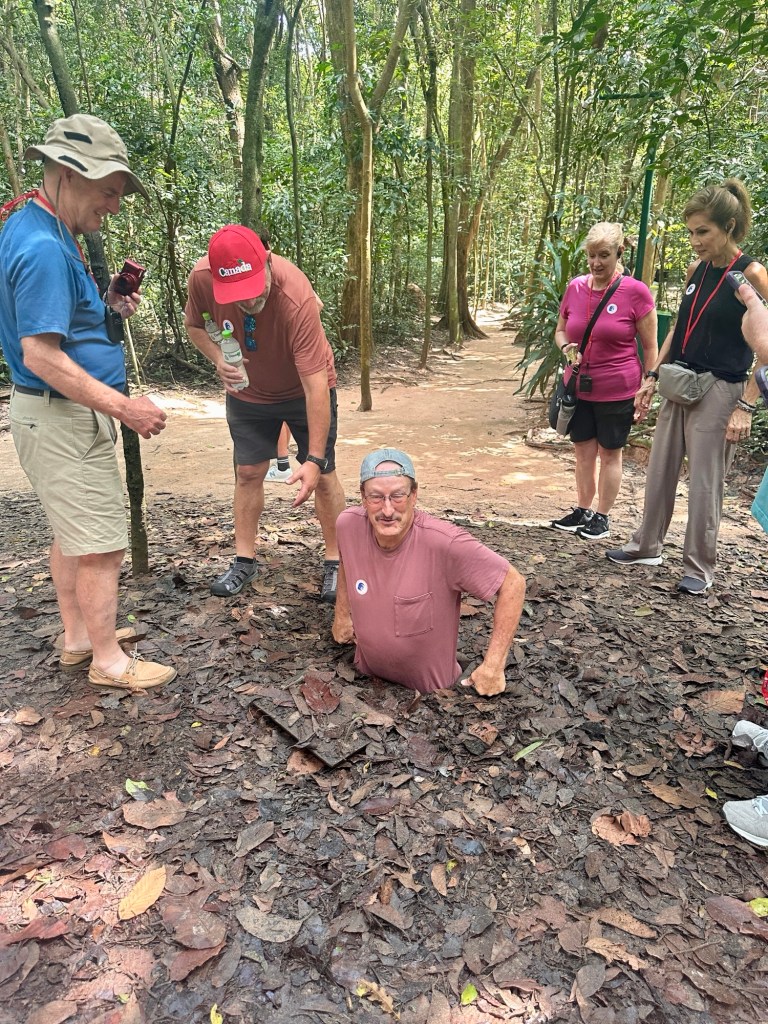
One of the most striking demonstrations was watching our guide show how a Viet Cong soldier could disappear almost instantly into a tunnel entrance barely large enough for a person to fit through. In seconds, the opening was concealed, leaving no visible trace. It was a powerful reminder of how the tunnels functioned not just as shelter, but as a strategic advantage.
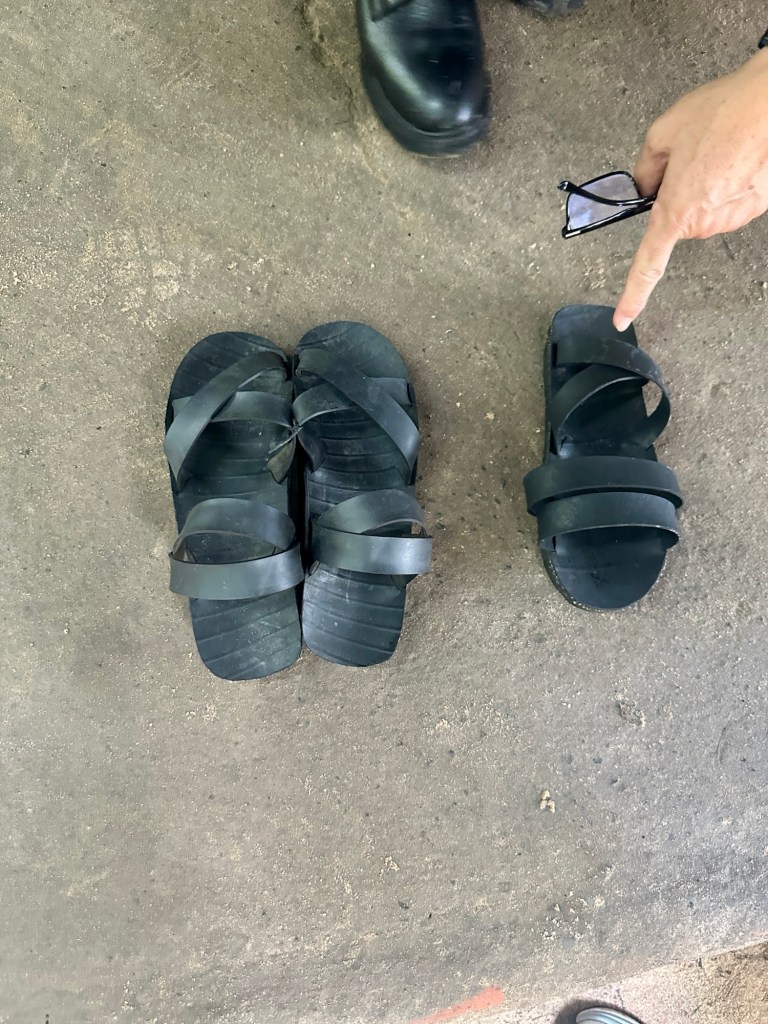
Along the way, we learned about daily life underground. We sampled boiled tuber root, a staple food for those living in the tunnels, and saw how basic materials were ingeniously repurposed. Old tires, for example, were turned into sandals—sometimes worn backward to confuse enemy forces by making footprints appear to lead in the opposite direction. These small but clever tactics played a significant role in survival and deception.

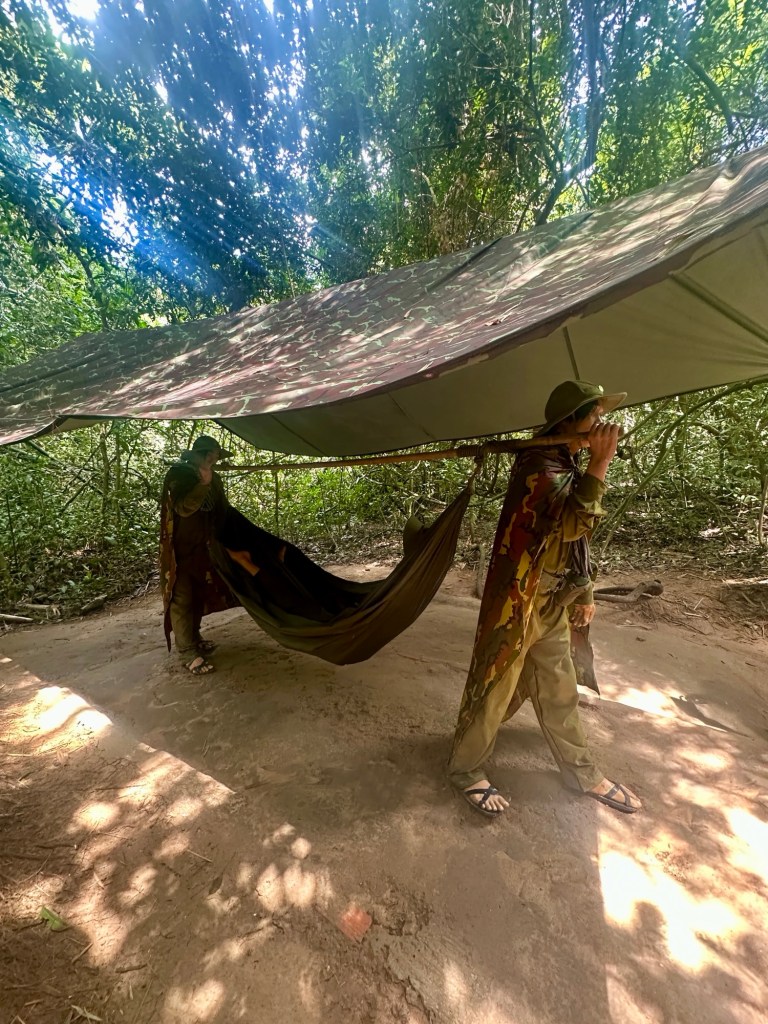
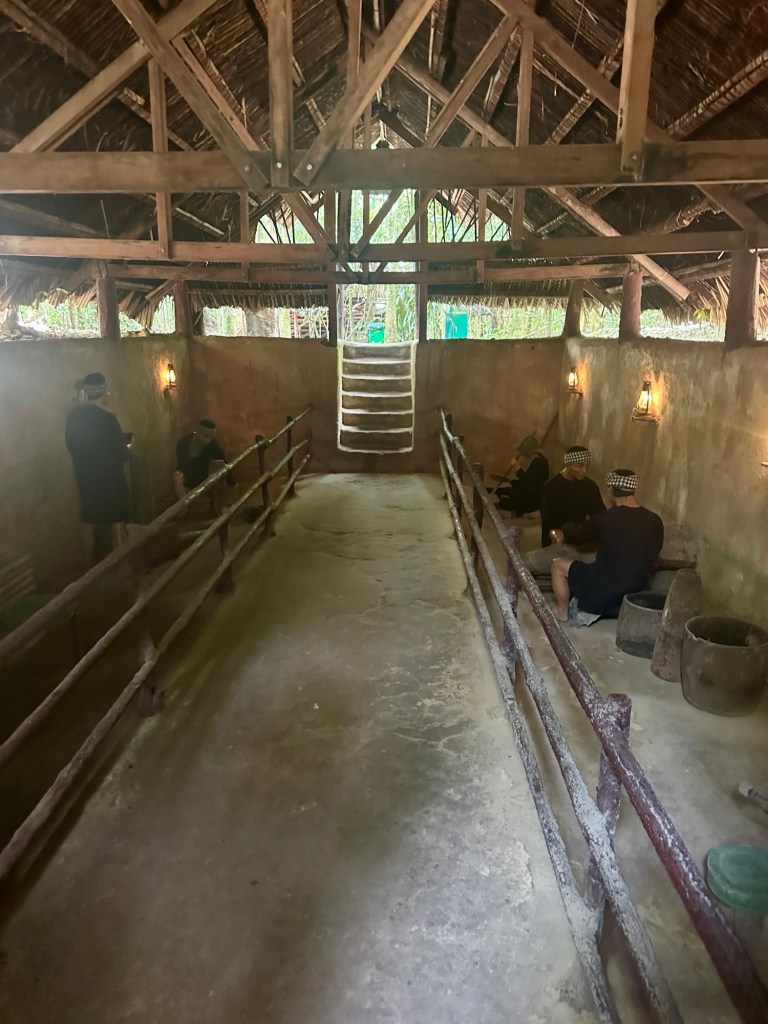
Standing there, it became clear how these tunnels—so close to Saigon—allowed northern forces to move undetected and ultimately contributed to the fall of the city. The visit was humbling and eye-opening, adding important context to everything we had already learned about Vietnam’s history.
By the time we returned to Saigon later that afternoon, we felt we had gained a deeper understanding of the resilience, ingenuity, and determination that shaped this country—an especially meaningful perspective to have just before beginning our journey along the Mekong.
We ended our final evening in Saigon with dinner at The Runam Bistro, followed by a leisurely walk along the river near the restaurant. As the city lights reflected on the water and the pace softened just a bit, it felt like the perfect way to say goodbye. After three full days of history, movement, and sensory overload, the quiet rhythm of the riverside offered a moment to pause and reflect. It was a fitting farewell to Saigon—before preparing to depart the next day and begin our journey along the Mekong.
Written by Marci Fouts, owner of SBTS Travel. As a travel specialist and avid explorer, Marci believes the best trips are the ones that connect people to place, culture, and story—one meaningful journey at a time.
 Explore with Me
Leave a comment