And Exploring Siem Reap
Cambodia had long been on our travel wish list, and visiting its ancient temples was a highlight of our journey through Southeast Asia. We explored the region as part of the Avalon Waterways Fascinating Vietnam, Cambodia & the Mekong River cruise, sailing between Vietnam and Cambodia along the Mekong River. After the cruise, we extended our stay with Avalon’s post-cruise program to experience the legendary temples near Siem Reap—and loved it so much that we added an extra day on our own to explore even further.
Day 1: Temples Banteay Srei & Ta Prohm
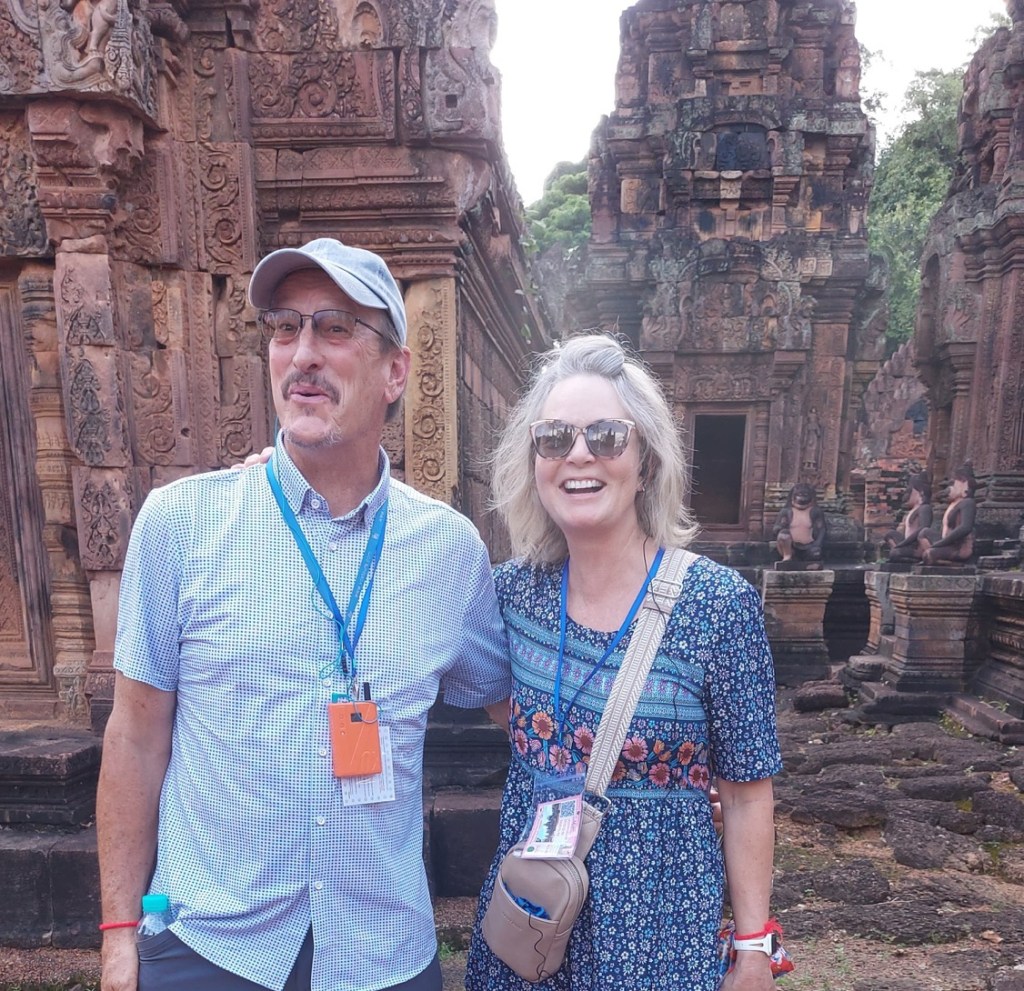
Banteay Srei was the first temple we visited, and it immediately set a memorable tone for our time in Cambodia. As we approached along the long stone pathway, traditional Cambodian musicians sat cross-legged beneath a small wooden hut, softly playing traditional instruments. Their music drifted through the trees and created a calm, almost ceremonial atmosphere before we even reached the entrance.
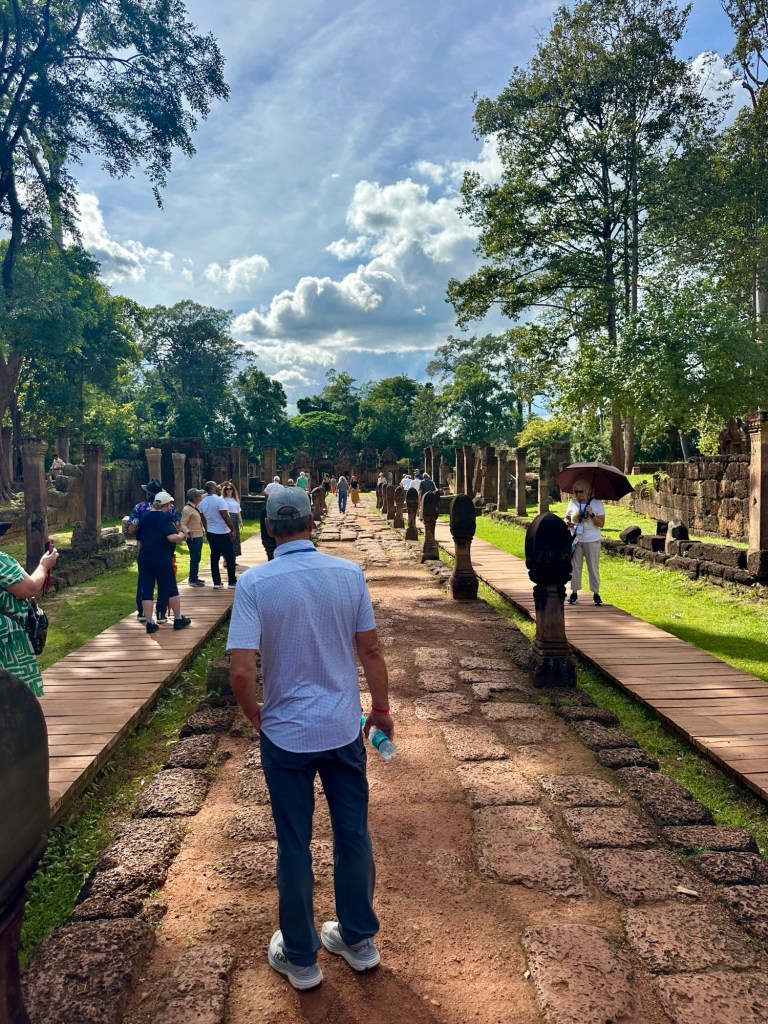

Passing through the archway at the end of the walkway, the temple revealed itself in stunning detail. Built from distinctive pink-red sandstone, Banteay Srei is known for carvings so intricate and well preserved that they appear almost freshly carved. The fine detail is striking, with delicate patterns and figures covering nearly every surface.
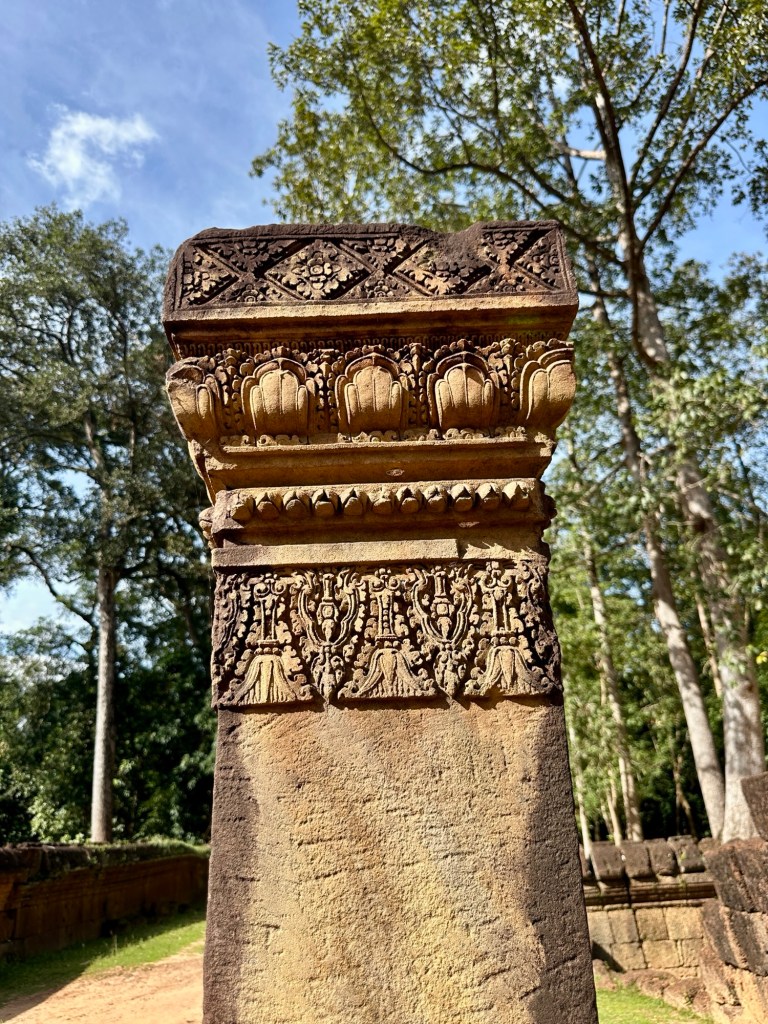
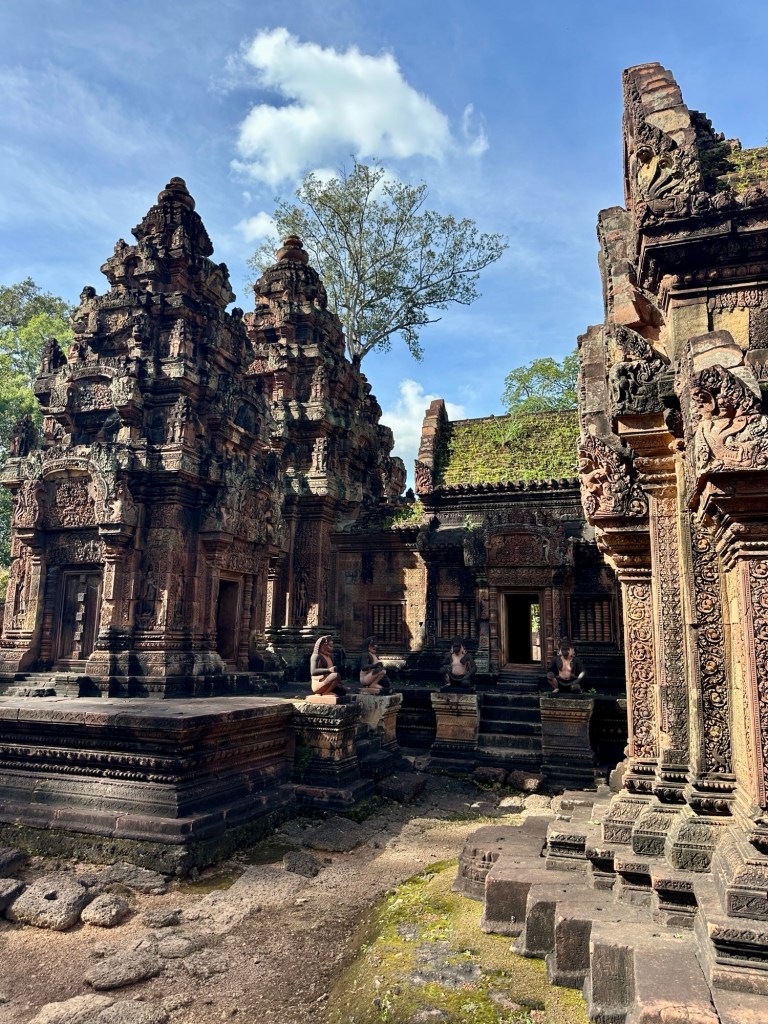

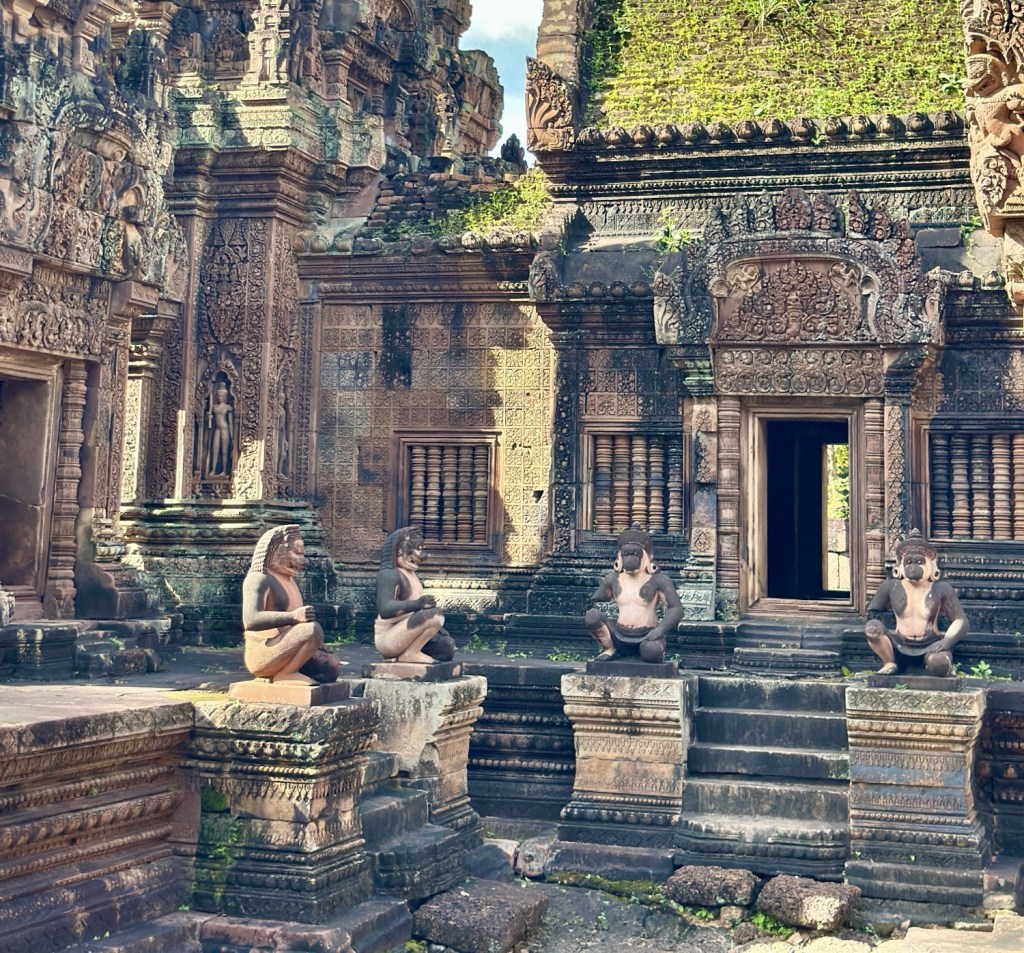
Originally built as a Hindu temple dedicated to Shiva, the carvings depict mythological scenes and symbolic figures with remarkable precision. We were especially drawn to the playful stone monkeys scattered throughout the temple—small, charming details that added personality and warmth to the space.
The second temple of the day felt almost otherworldly. Ta Prohm is instantly recognizable to many thanks to its appearance in the 2001 film Tomb Raider starring Angelina Jolie, but seeing it in person was something else entirely.
Built in 1186 AD as a Buddhist monastery, Ta Prohm once supported more than 12,000 people. Today, it has been left largely as it was found, with massive tree roots spilling over walls, collapsing doorways, and gripping the stone in a dramatic embrace. The jungle doesn’t simply surround the temple—it overtakes it.
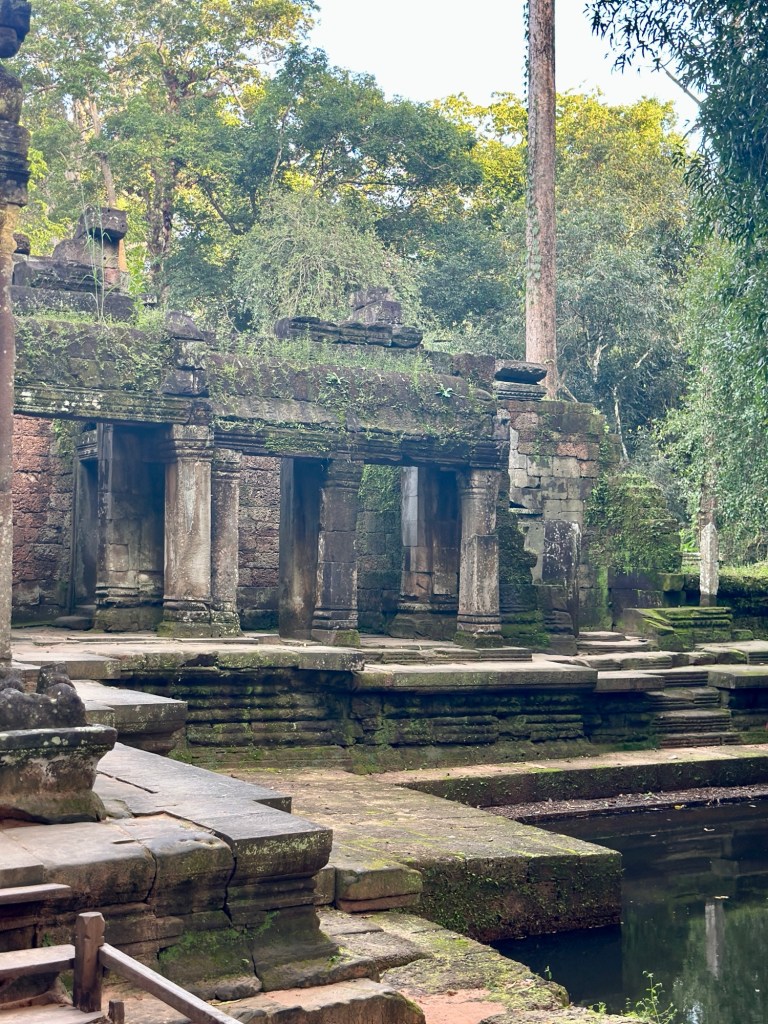
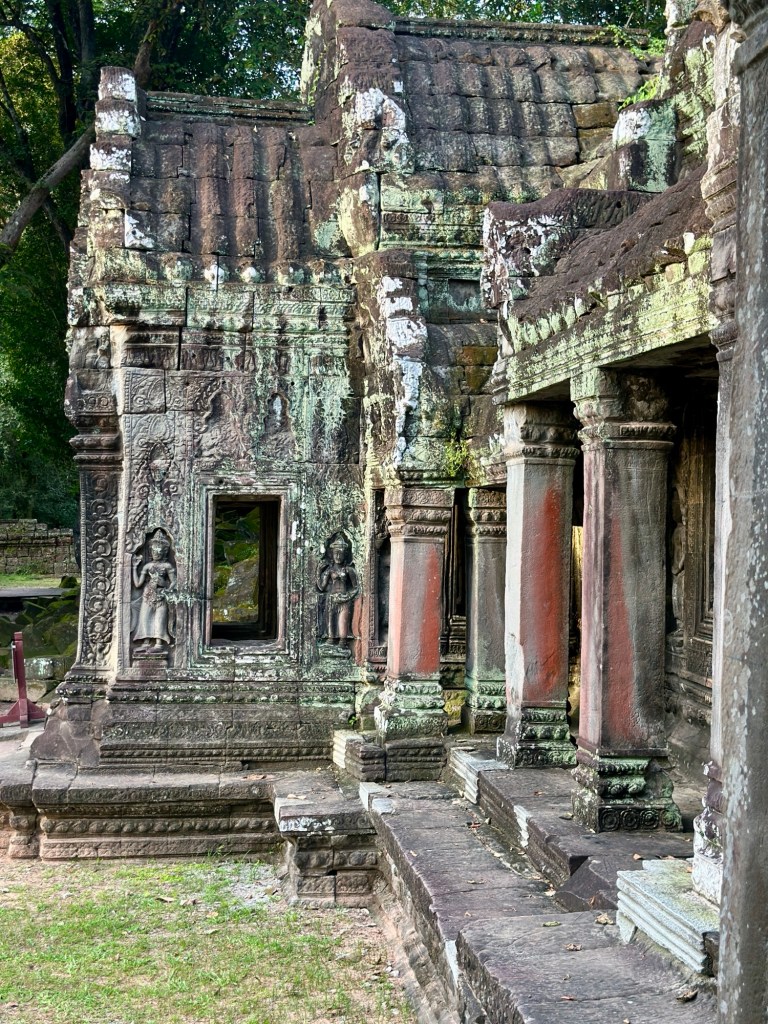
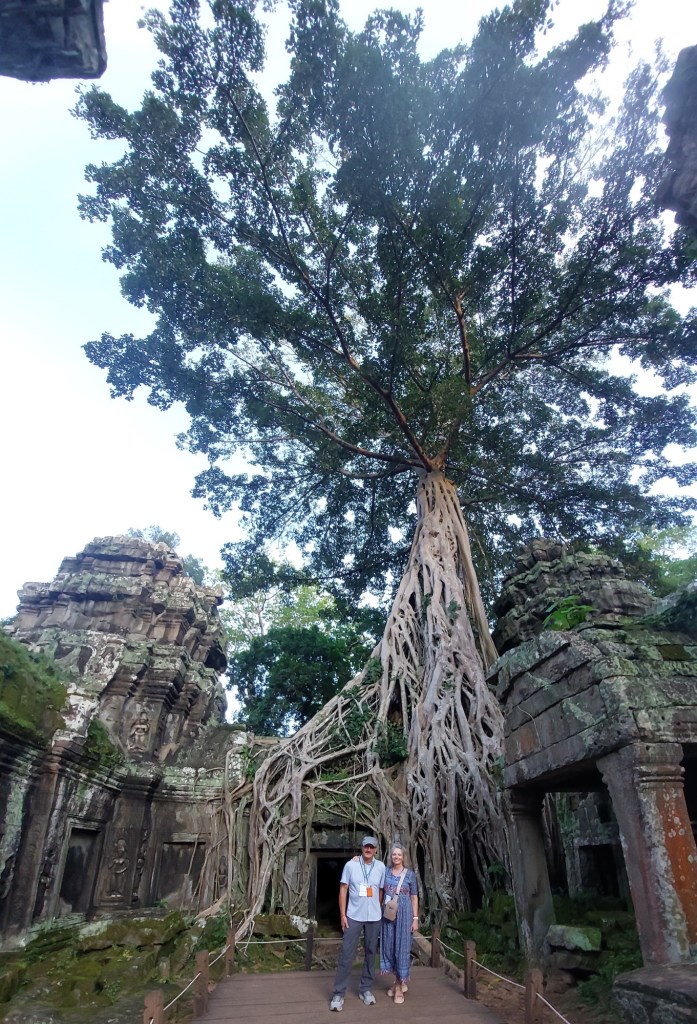
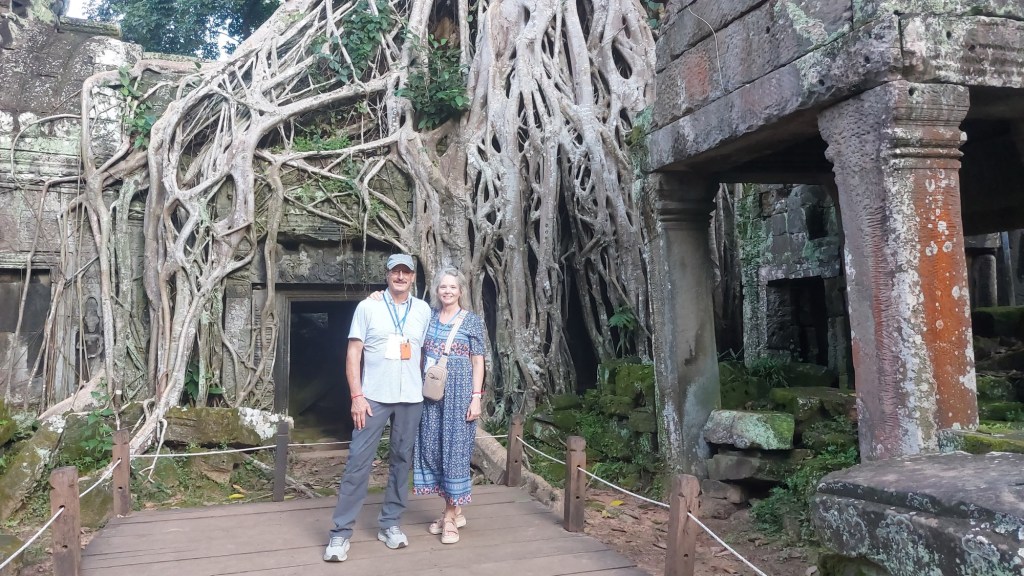
We arrived near sunset, when the crowds had thinned and the atmosphere softened. There were sections where it was just us and the birds in the trees, their calls echoing through the corridors as fading light filtered through the canopy above. Walking through Ta Prohm at that hour didn’t feel like visiting ruins; it felt like stepping into a place suspended between history and nature, and we felt we had gone back in time.
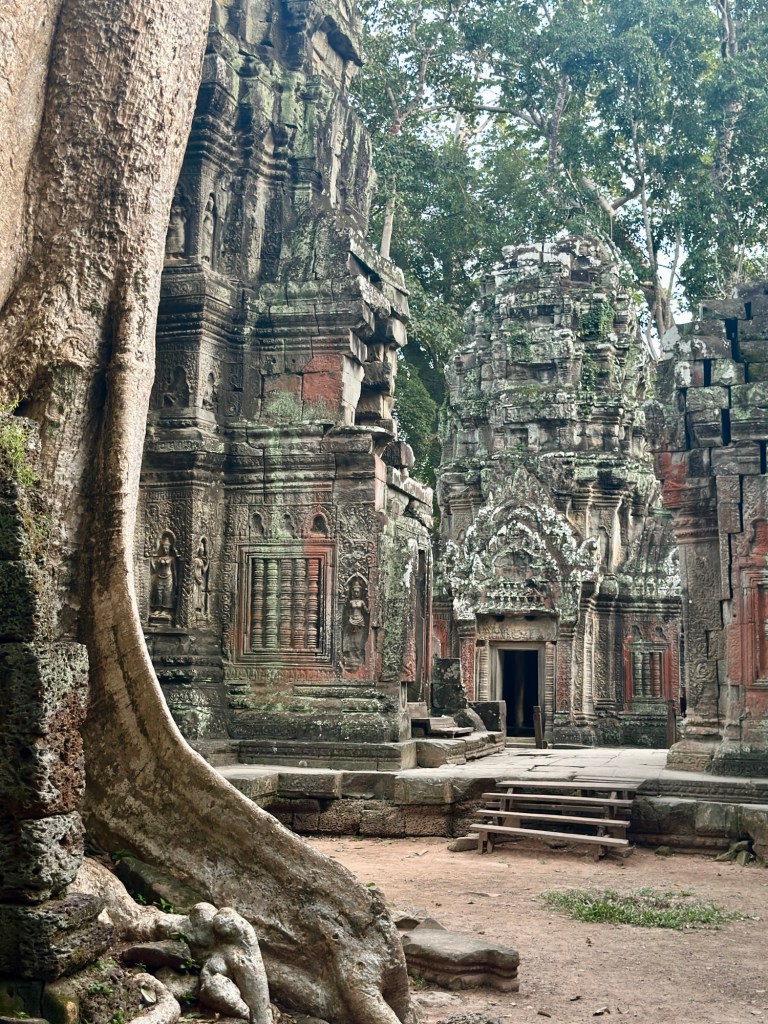
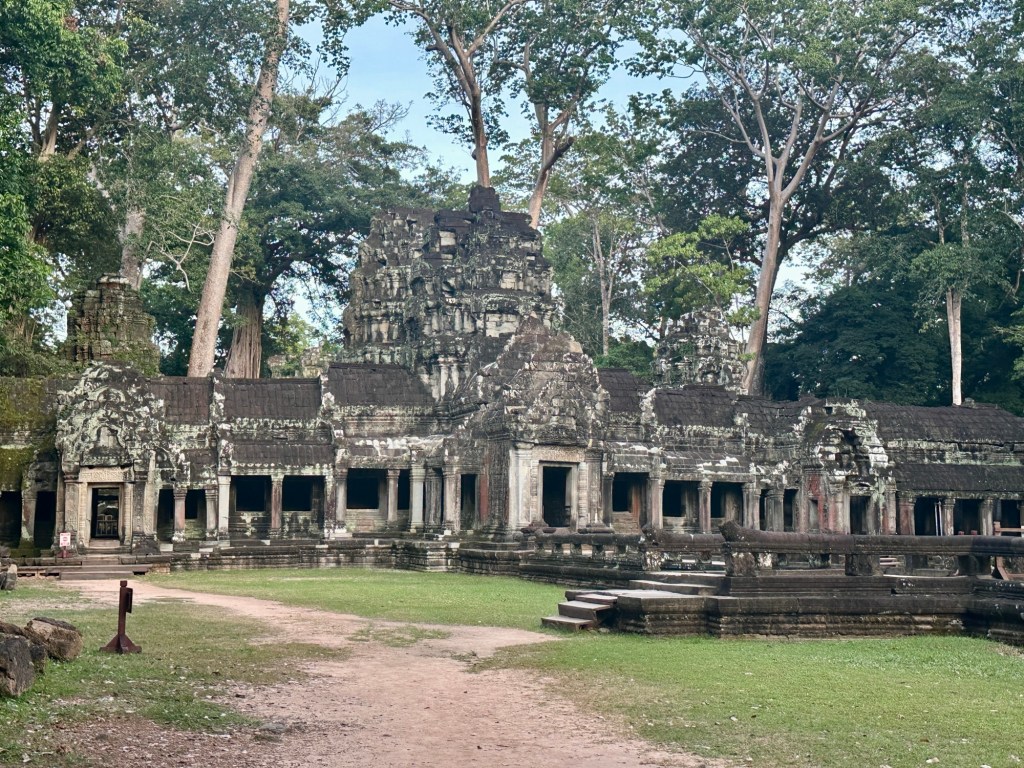
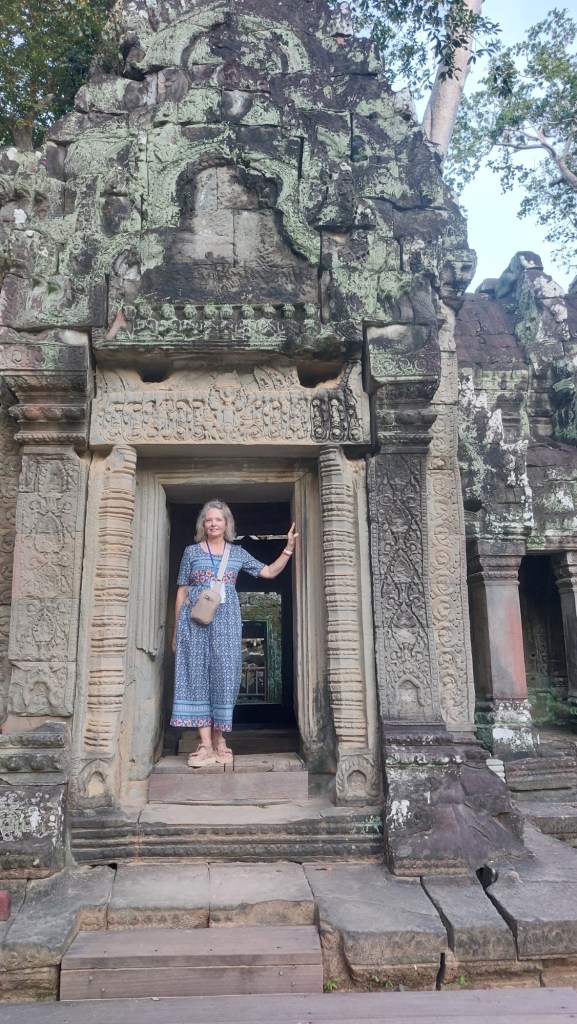
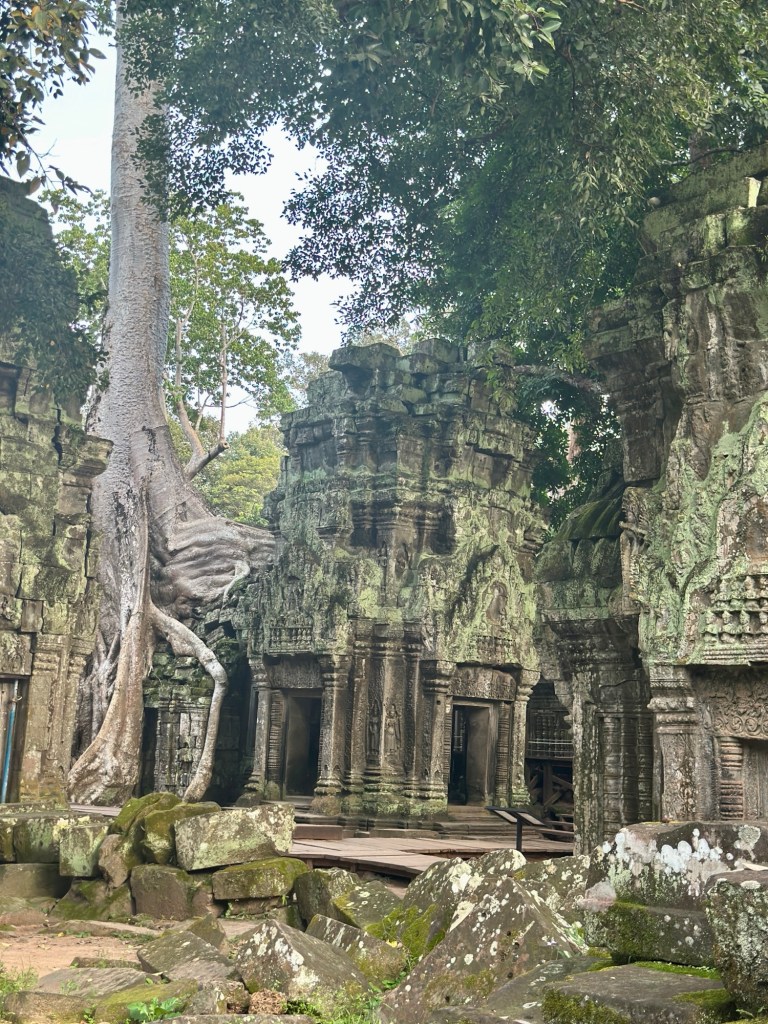
Of all the temples we visited, Ta Prohm felt the most magical—less like a historical site and more like something out of legend.
Day 2: Angkor Wat & Banyon Temple
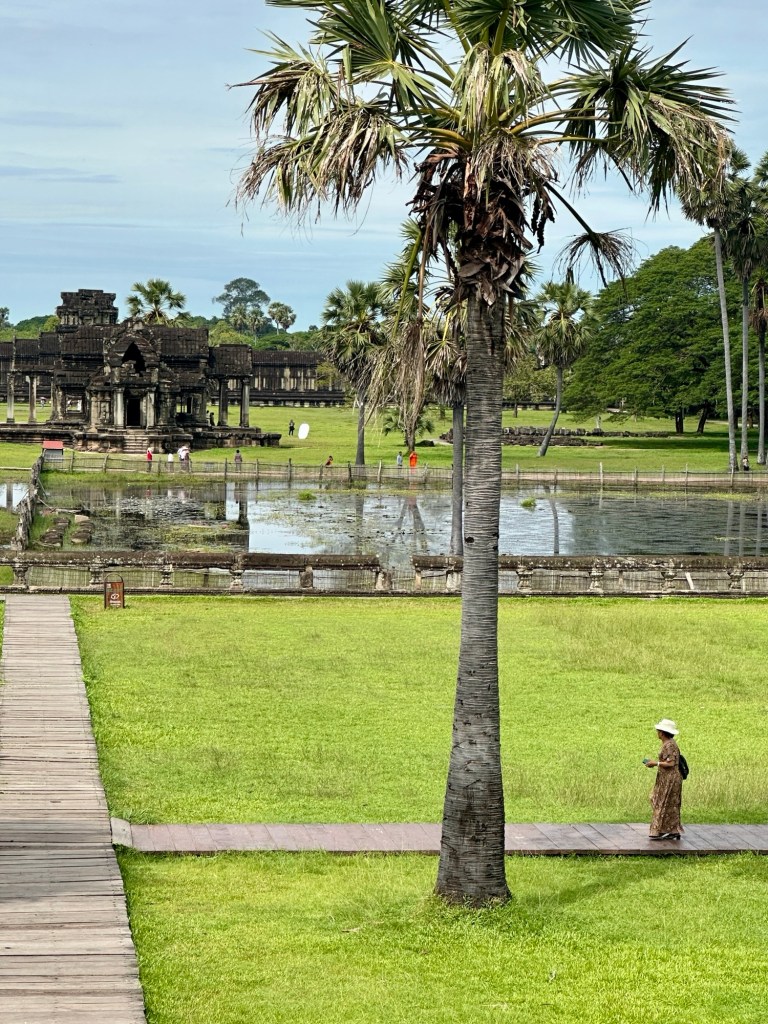
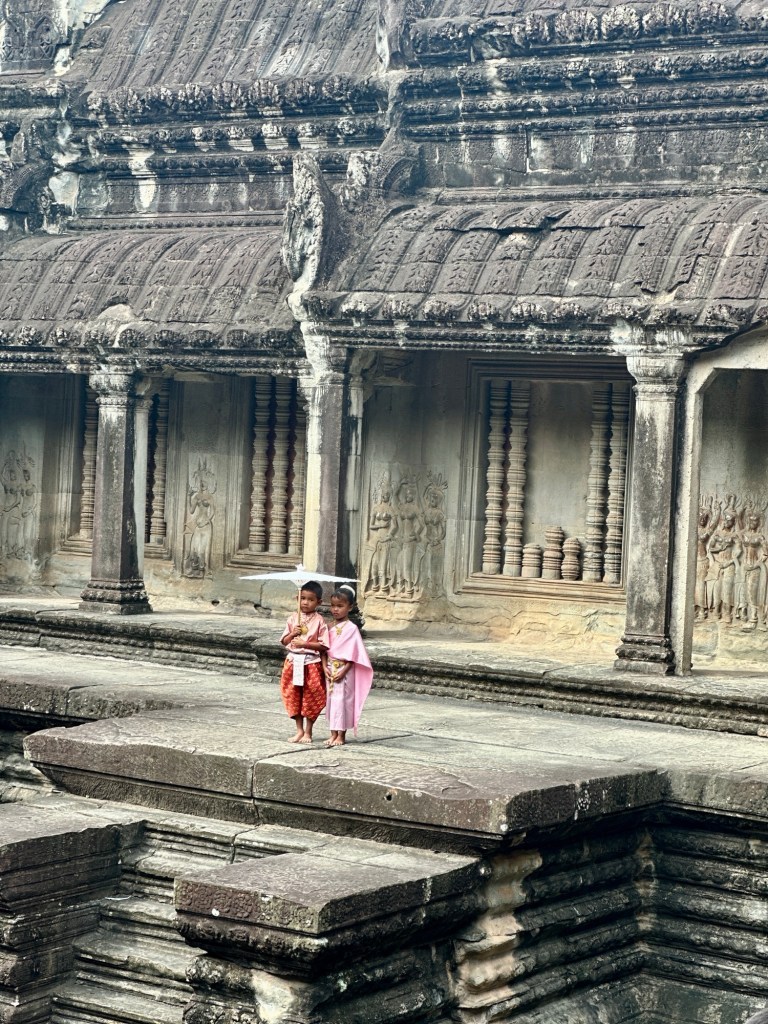
On our second day, we began with Angkor Wat, spending several unhurried hours exploring the vast temple complex. Even after seeing photos for years, nothing prepares you for the scale of Angkor Wat. Surrounded by its massive moat and stretching endlessly in every direction, it feels almost beyond comprehension. Standing within the structure, it was hard not to wonder about the ancient civilization that built and sustained such an extraordinary place.
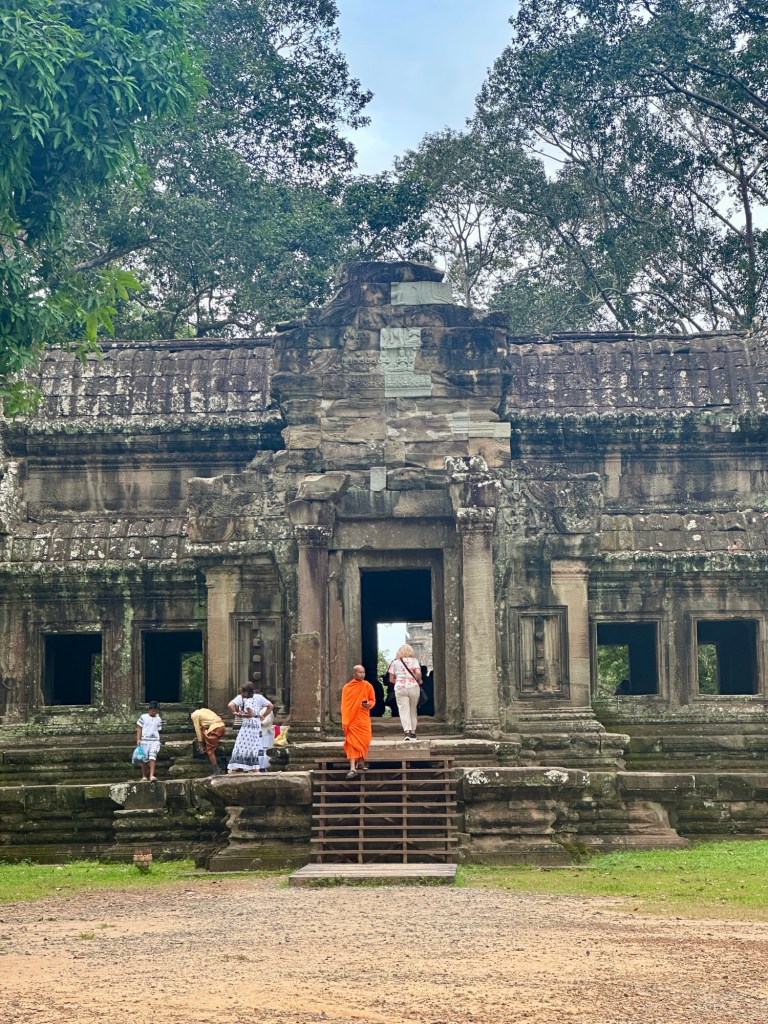
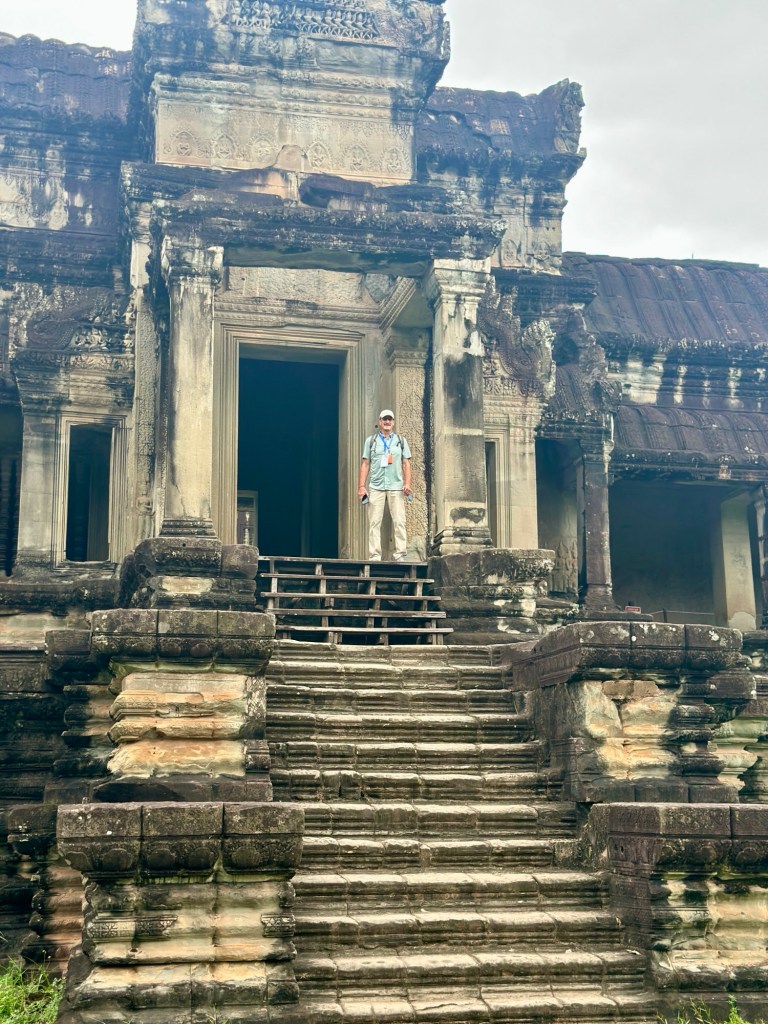
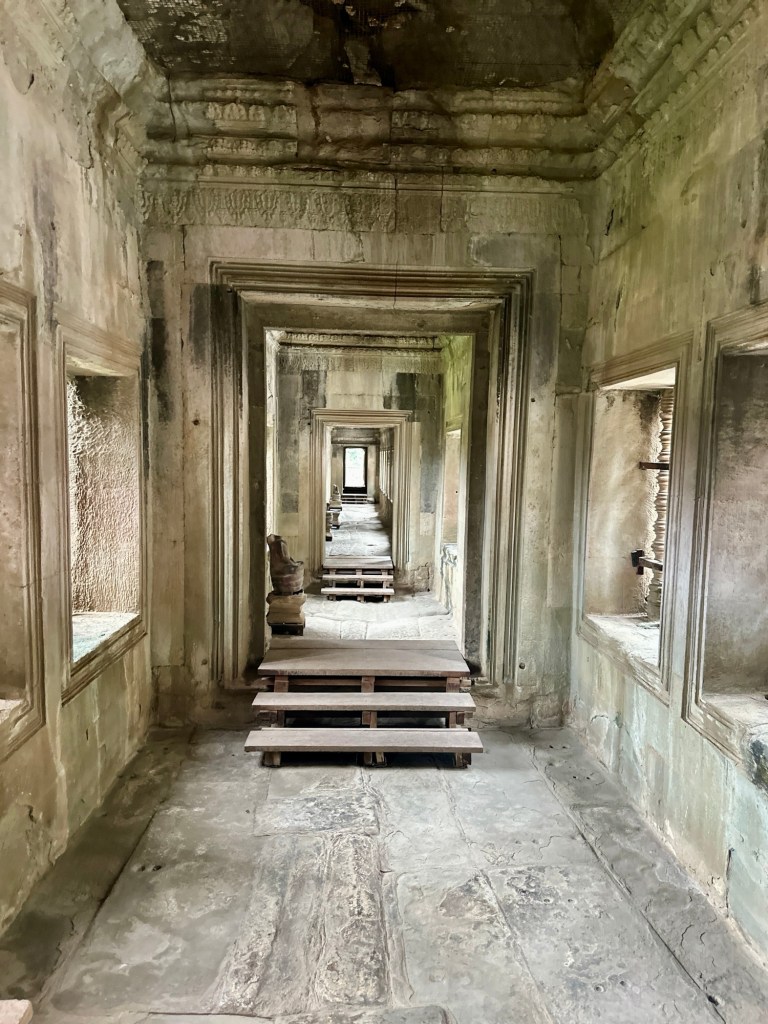
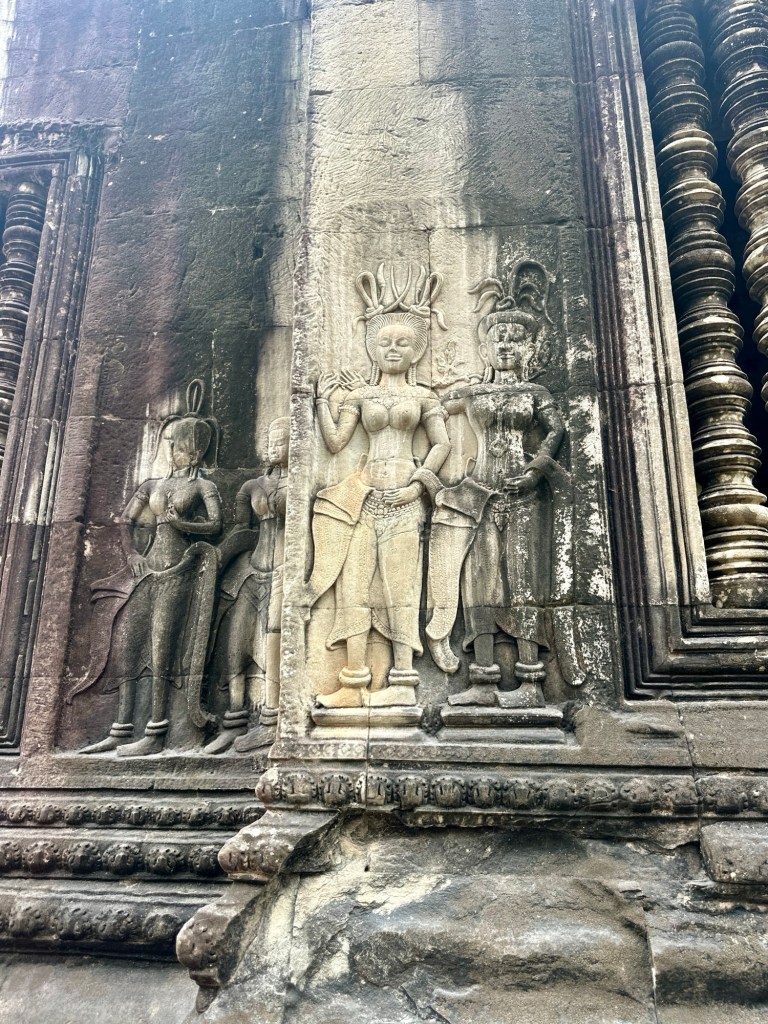
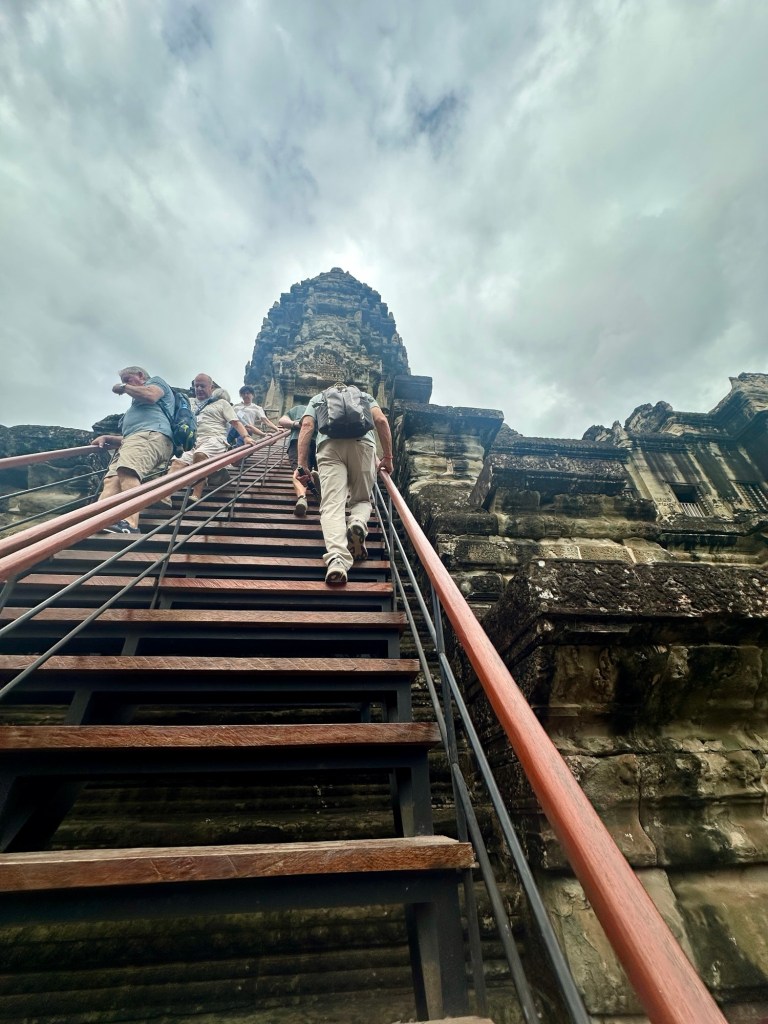
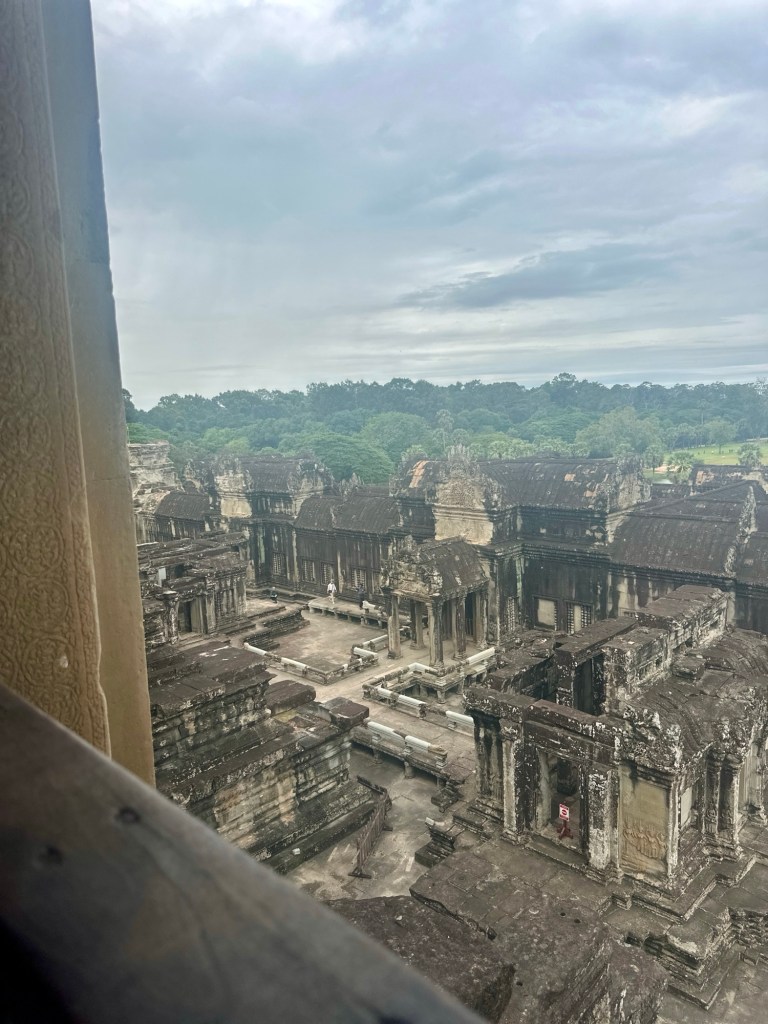
Although a bit precarious, we climbed the steep stone stairs to the upper levels of the temple, rewarded with sweeping views and a deeper appreciation for the temple’s design and symbolism.
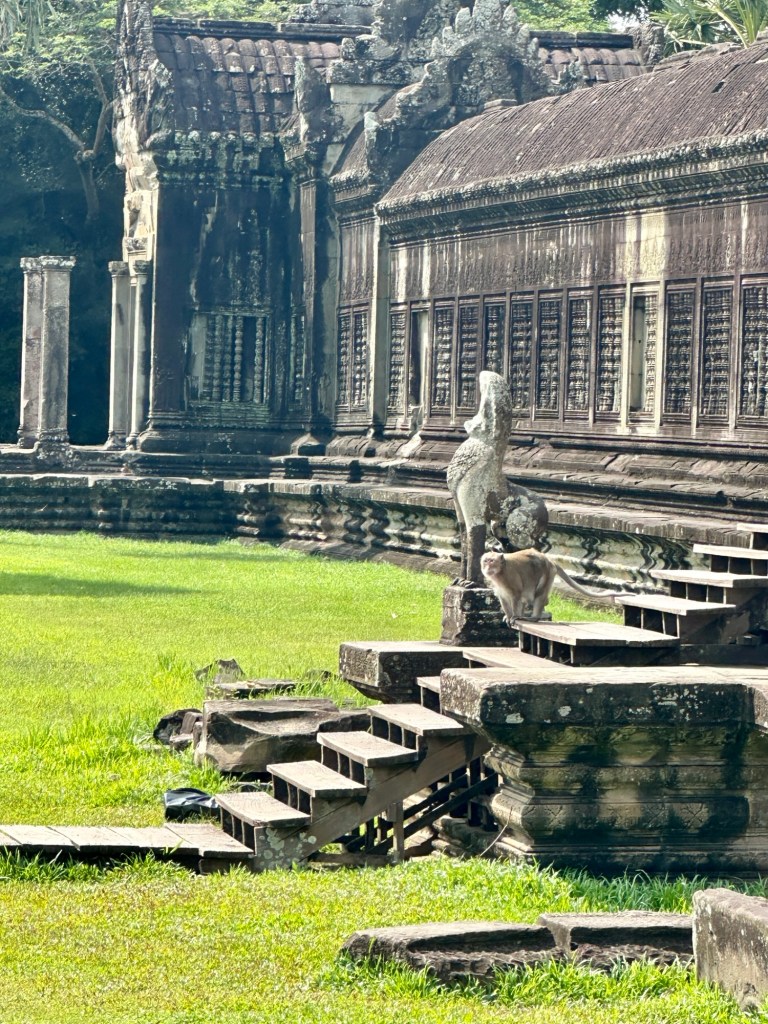
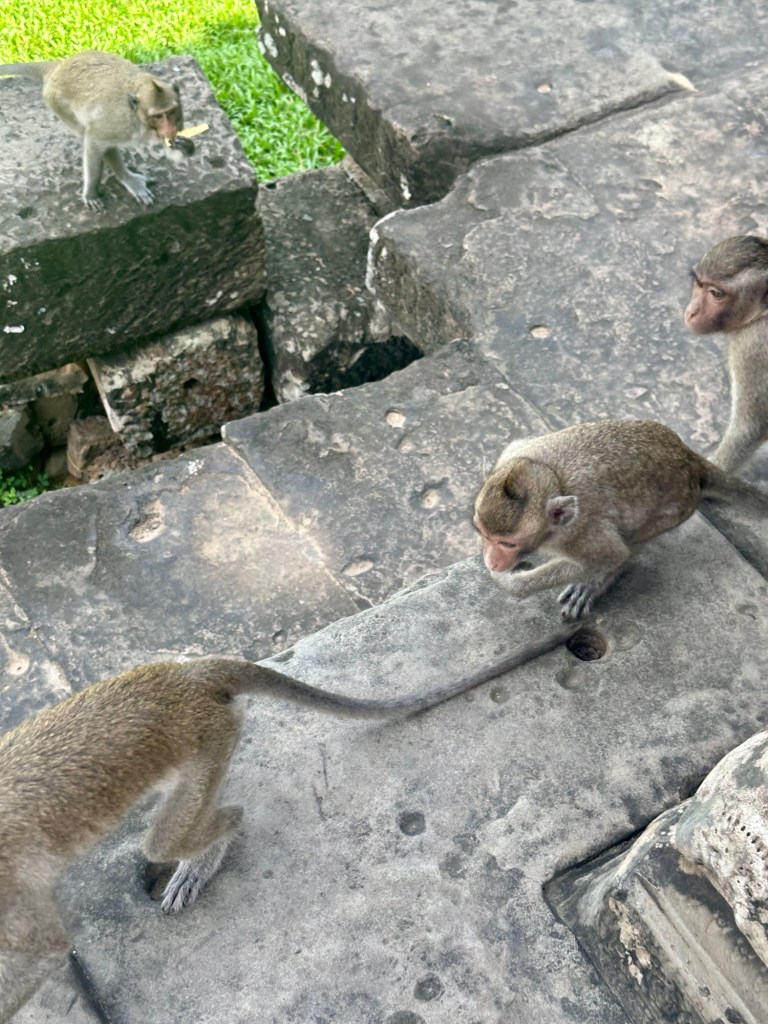
Upon our exit, we encountered our first live monkeys, who freely roam the grounds and seem perfectly at home among the ruins.
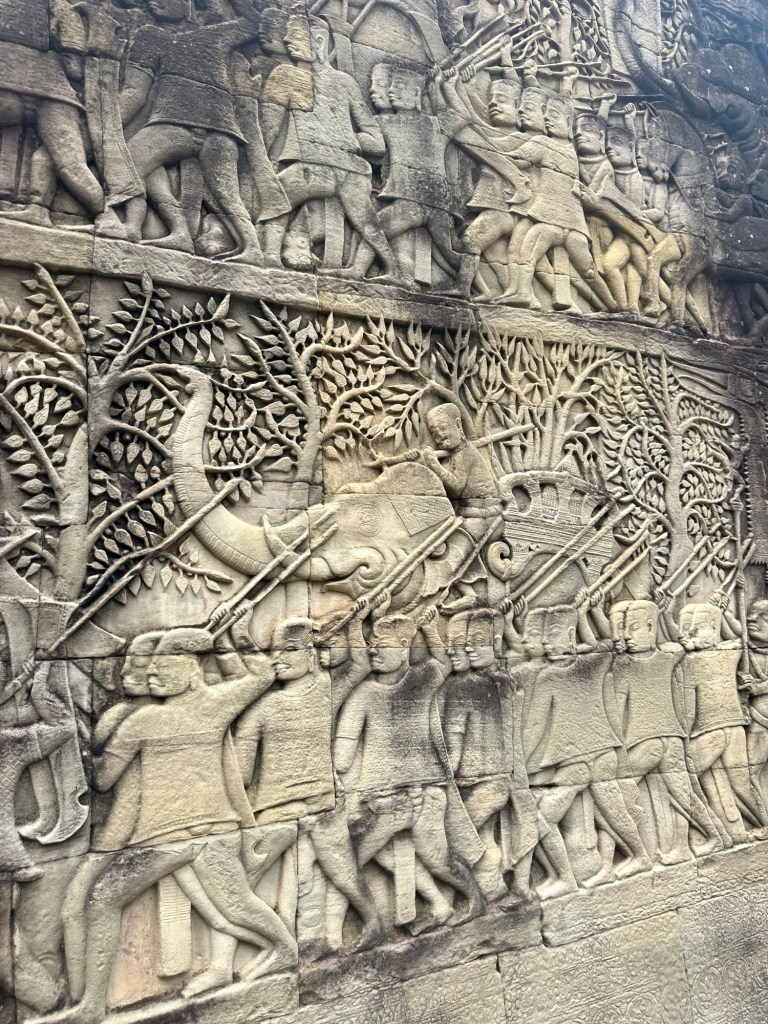
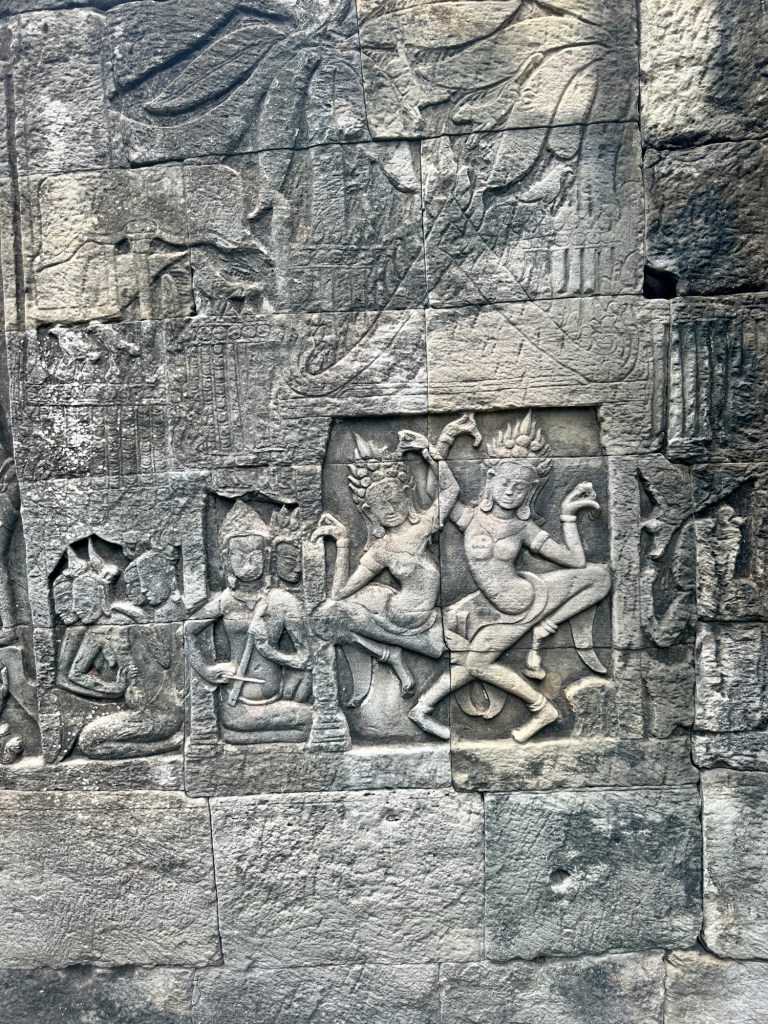
Our final temple visit was Bayon Temple, located within the walled city of Angkor Thom. Here, we spent most of our time slowly walking along the carved stone walls, studying the intricate bas-reliefs that tell vivid stories of everyday life centuries ago. Scenes of elephant battles, apsara dancers, fishing boats, and daily rituals are etched directly into the stone, offering remarkable insight into how people lived, worked, and celebrated. It felt less like observing history from afar and more like watching it unfold in stone.
Avalon Farewell Dinner
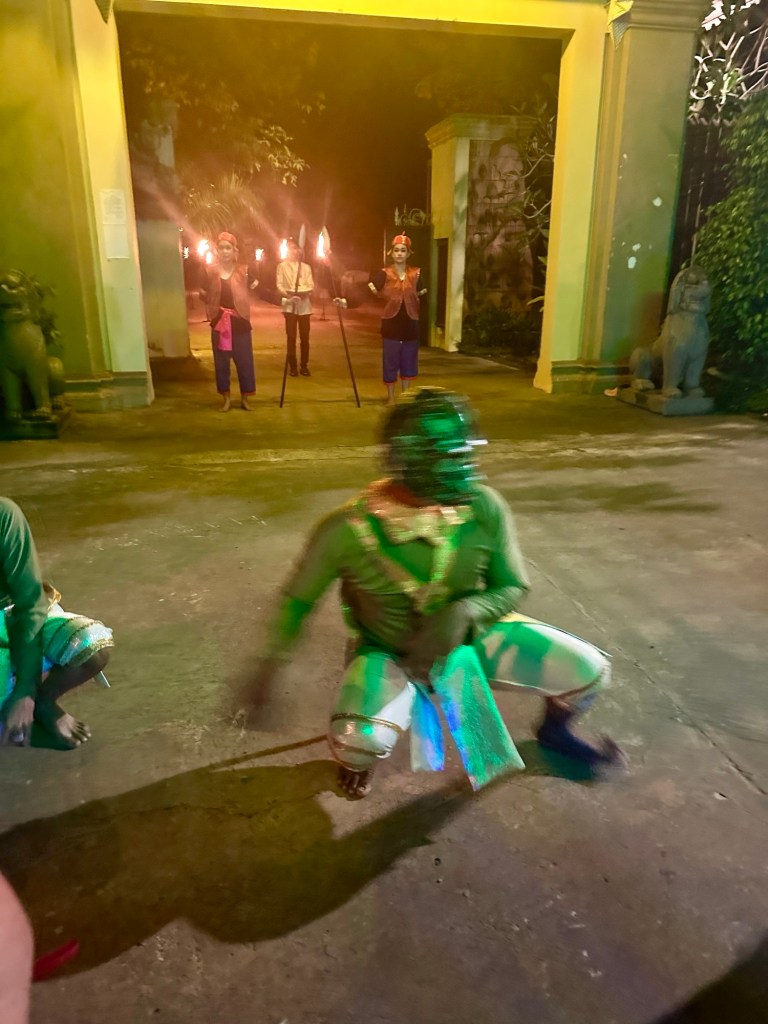
That evening, we gathered for our final farewell dinner with our Avalon group at a dinner and dance performance at the Royal Khmer Theater. It felt like a meaningful way to close this chapter of the journey—one last shared experience before everyone began heading their separate ways.
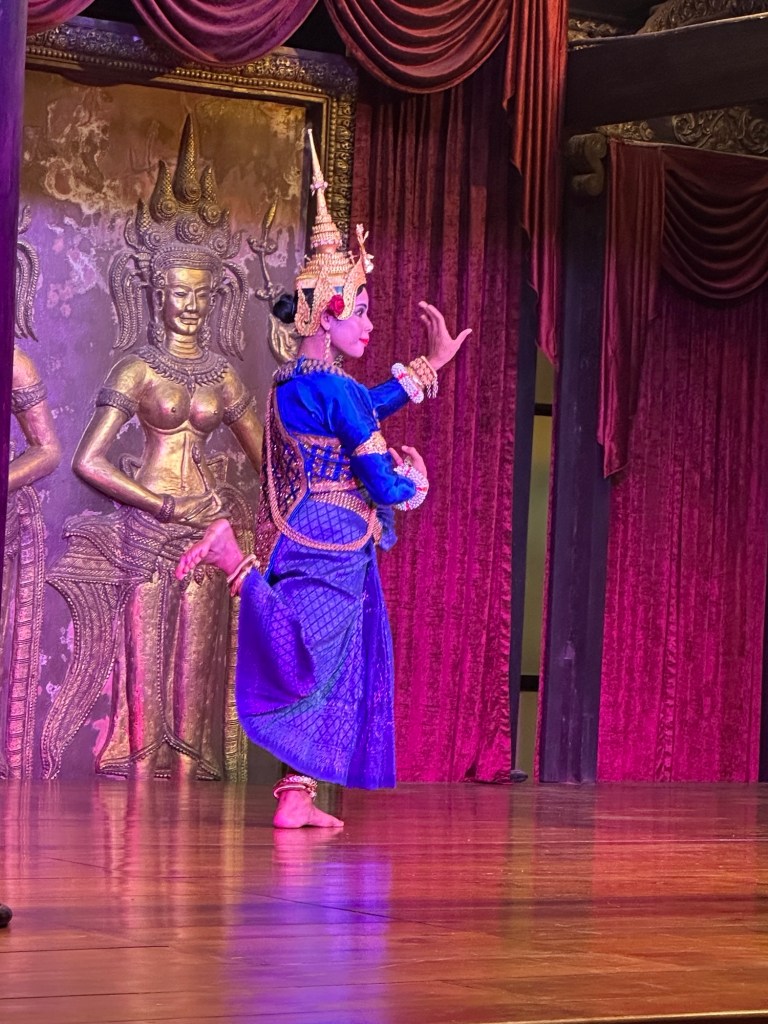
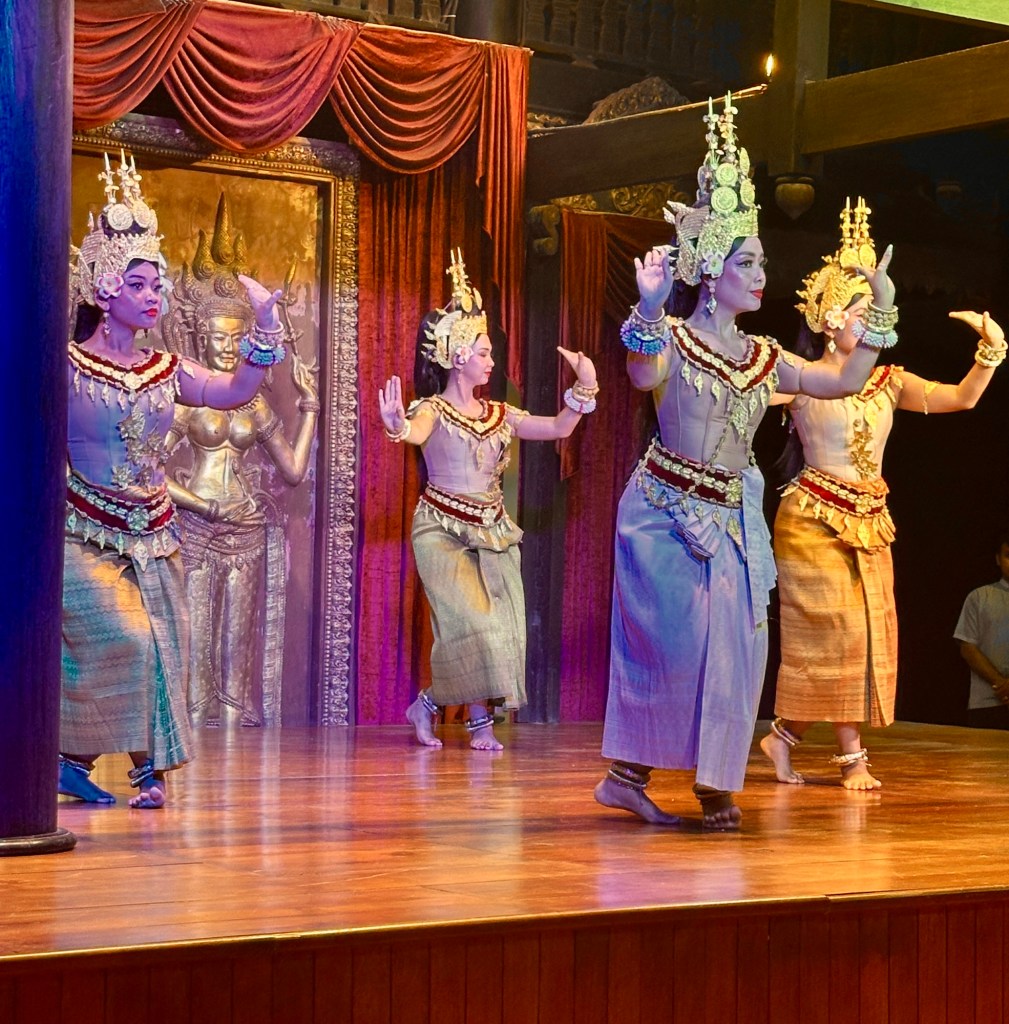
The performance showcased traditional Khmer dance, an art form passed down through generations without written instruction. Much of what exists today was reconstructed by studying temple —figures frozen in stone that inspired the choreography, gestures, and even the elaborate costumes. Each movement was slow, deliberate, and symbolic, with hand positions and facial expressions telling stories drawn from mythology and daily life.
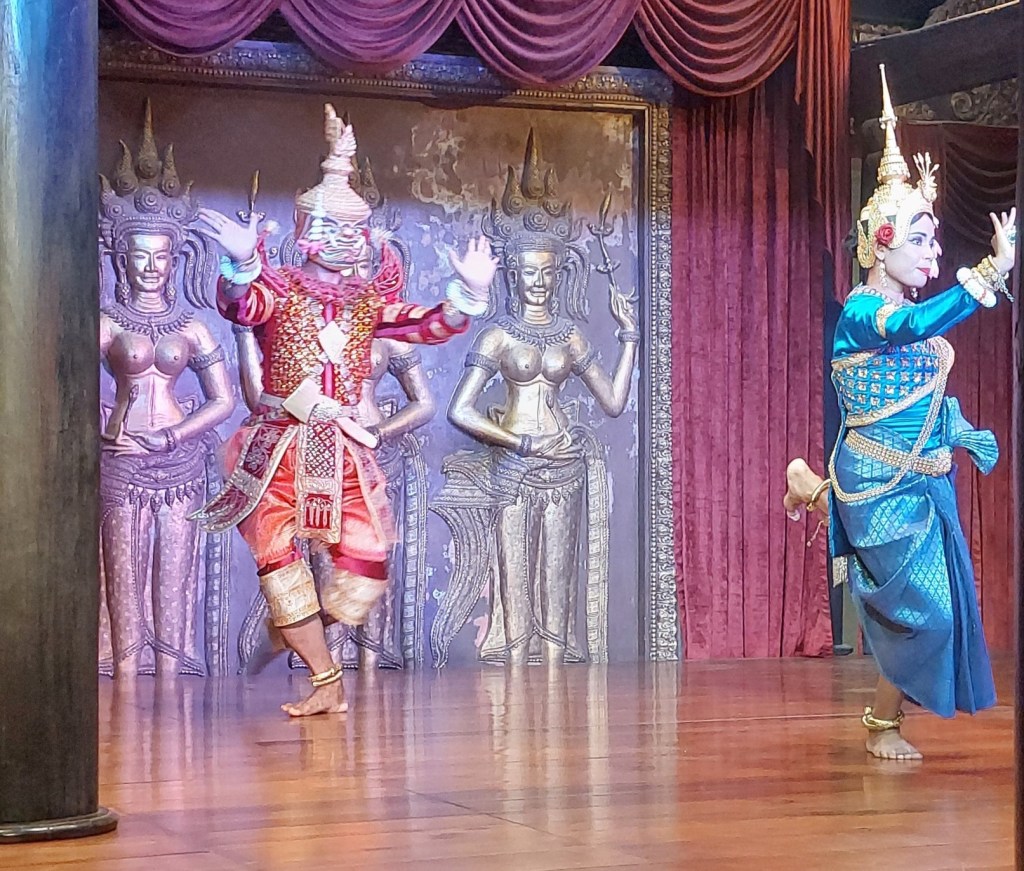
Dinner featured classic Cambodian dishes served family-style—simple, flavorful, and comforting. Rice was the foundation, accompanied by grilled meats, vegetables, and fragrant curries, offering a final taste of the region we had come to appreciate so much.

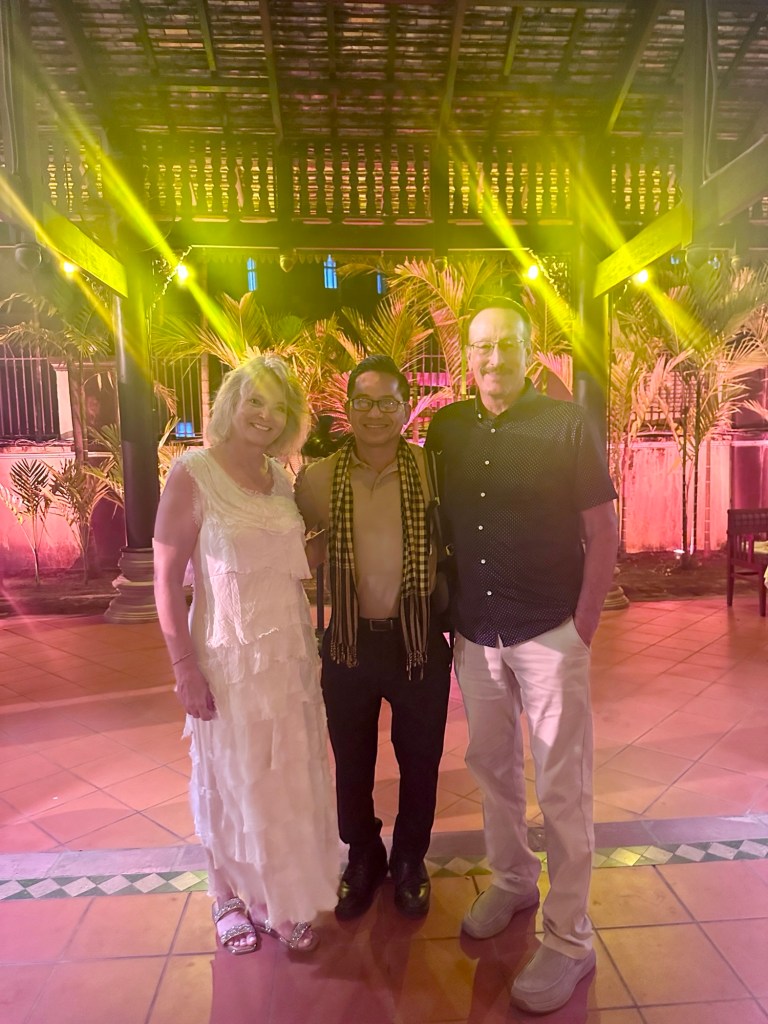
As the evening came to a close, we said our goodbyes to fellow travelers and our wonderful tour guide, who, over the course of the cruise, had become our friend. There’s something about sharing days of discovery, early mornings, long bus rides, and unforgettable experiences that creates an easy bond. It was bittersweet to part ways, but also a reminder of why travel is so meaningful – it’s all about the people you meet along the way.
To learn more about our full Mekong River Cruise Experience, check out this blog.
Day 3: Exploring Siem Reap by Tuk Tuk
Our last day in Siem Reap was entirely our own. The river cruise had ended the day before, our fellow travelers had all departed, and our next adventure in Thailand wouldn’t begin until tomorrow. With no schedule to follow, we decided to explore at a slower, more spontaneous pace.
We hired a tuk-tuk driver, Mr. Sok, to take us around the city. Our first stop was the Royal Residence, where the King resides during his summer visits. It felt like a natural complement to the Royal Palace we had toured earlier in Phnom Penh. Along the way, Mr. Sok proved to be a wonderfully talkative guide, sharing stories about his life—and proudly telling us that he had once been a driver for Angelina Jolie during the filming of Tomb Raider.
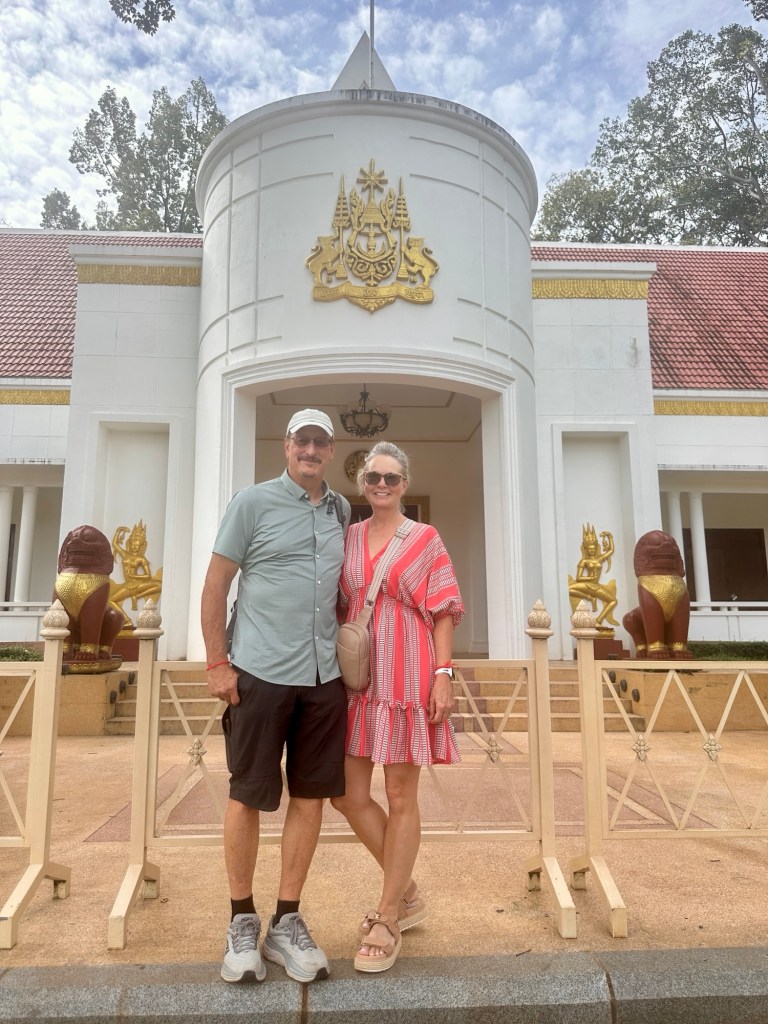
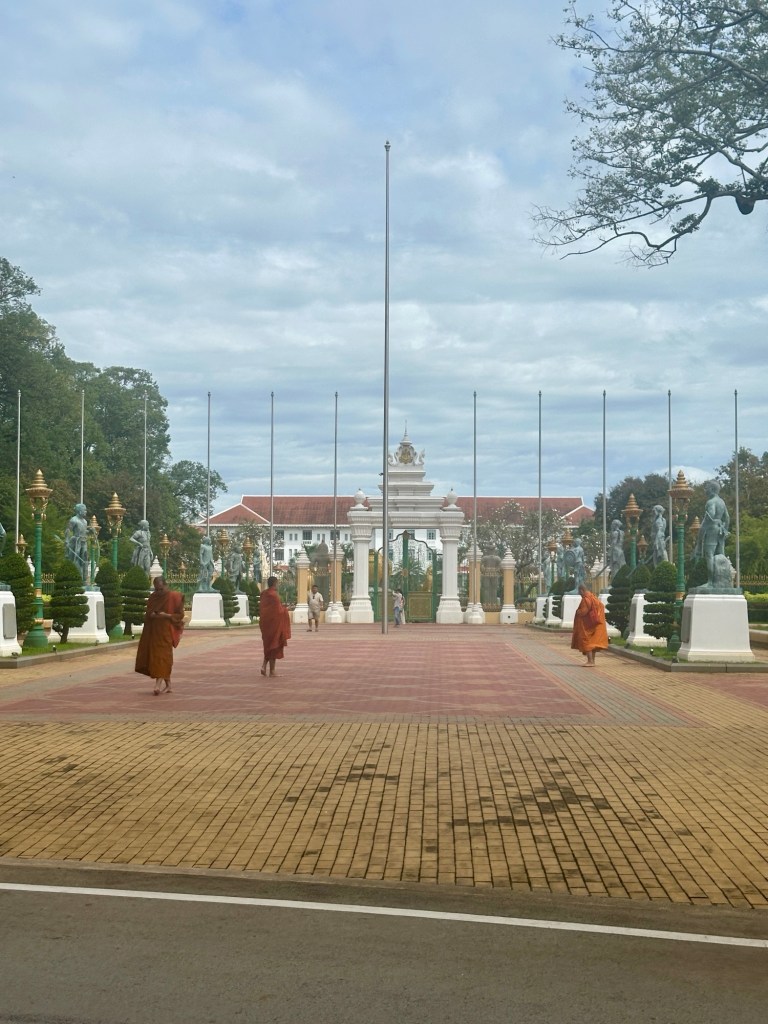
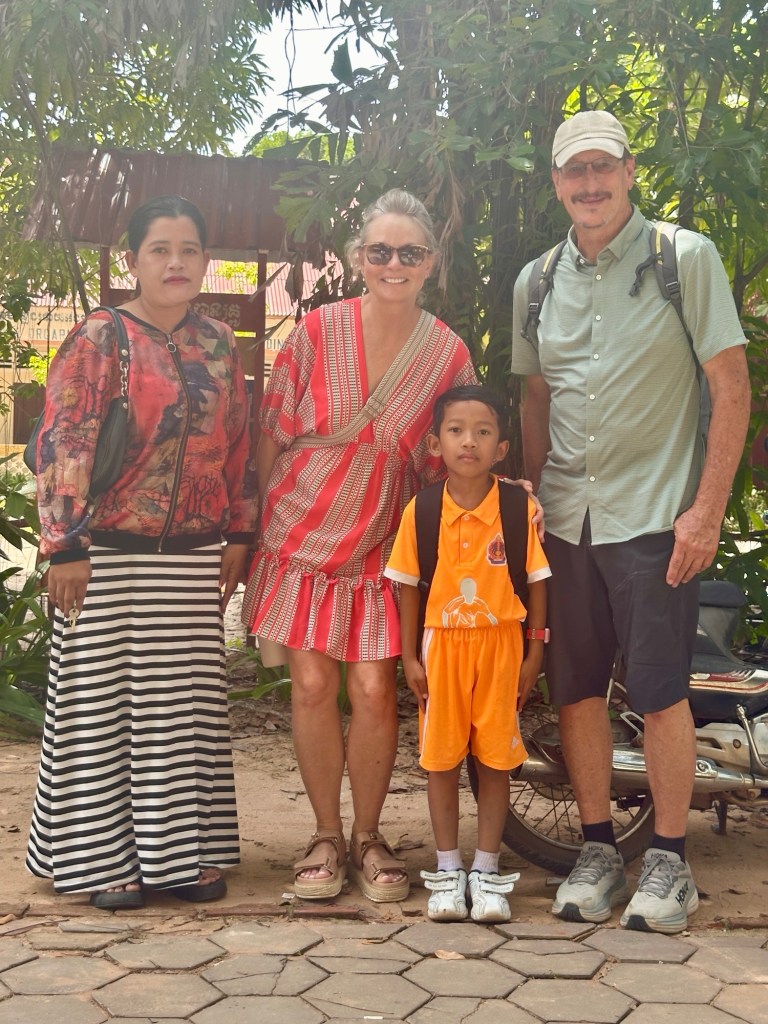
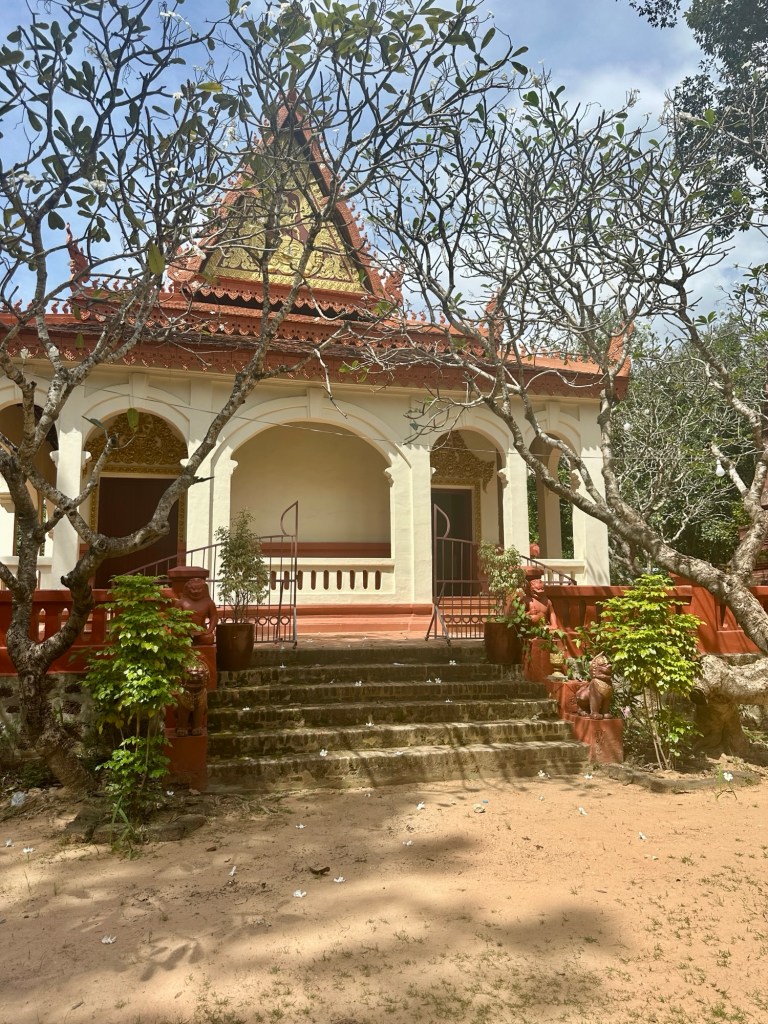
What followed was completely unplanned and became one of the most meaningful moments of the day. Mr. Sok took us to a local Buddhist temple where he had learned English as a child. He explained that many children in Cambodia cannot afford formal schooling and instead learn English from monks at the temple from a very young age. Nearby, he showed us a school built with support from the United States—something he spoke about with genuine pride. It was a humbling glimpse into daily life and education beyond the tourist experience.

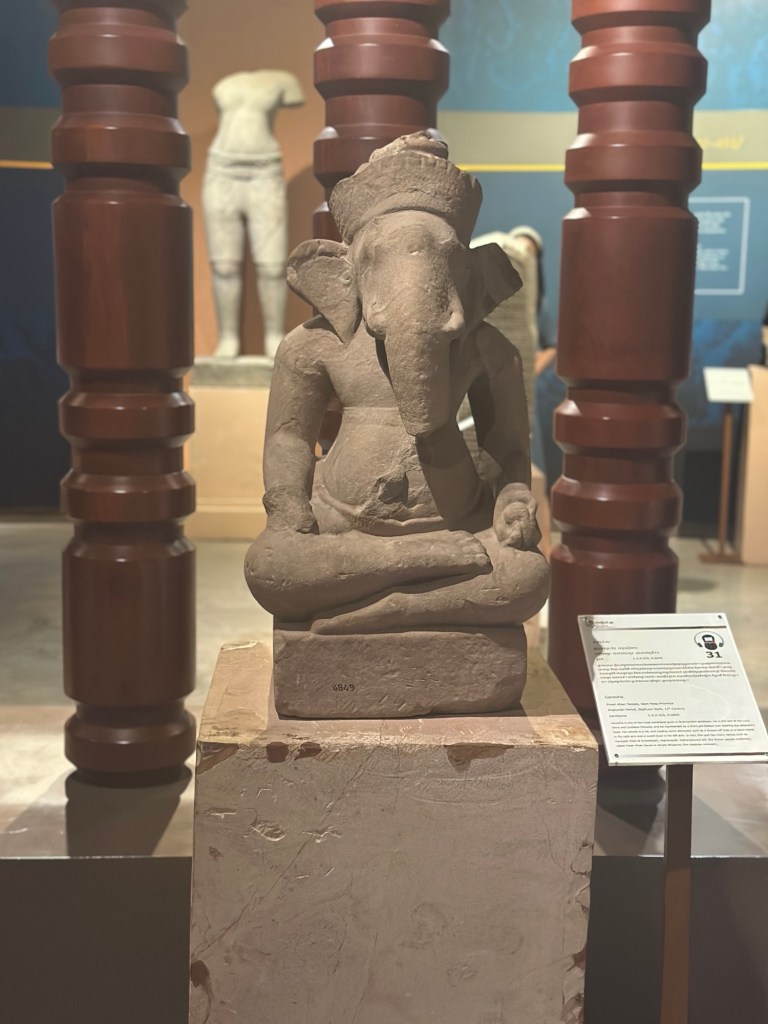
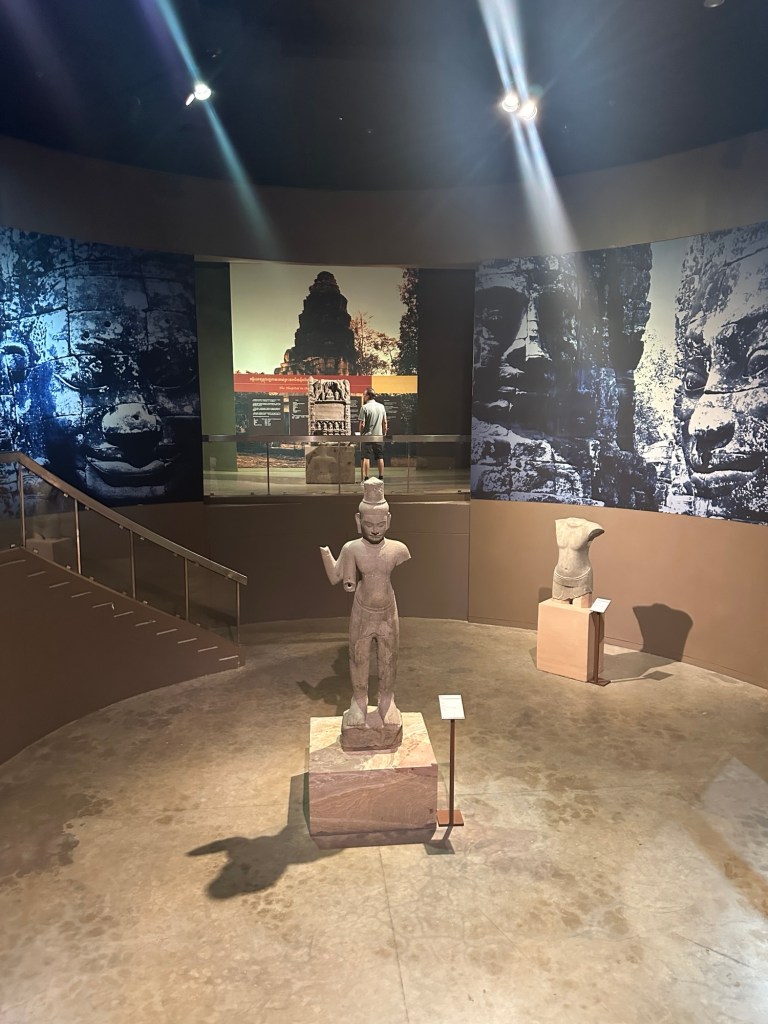
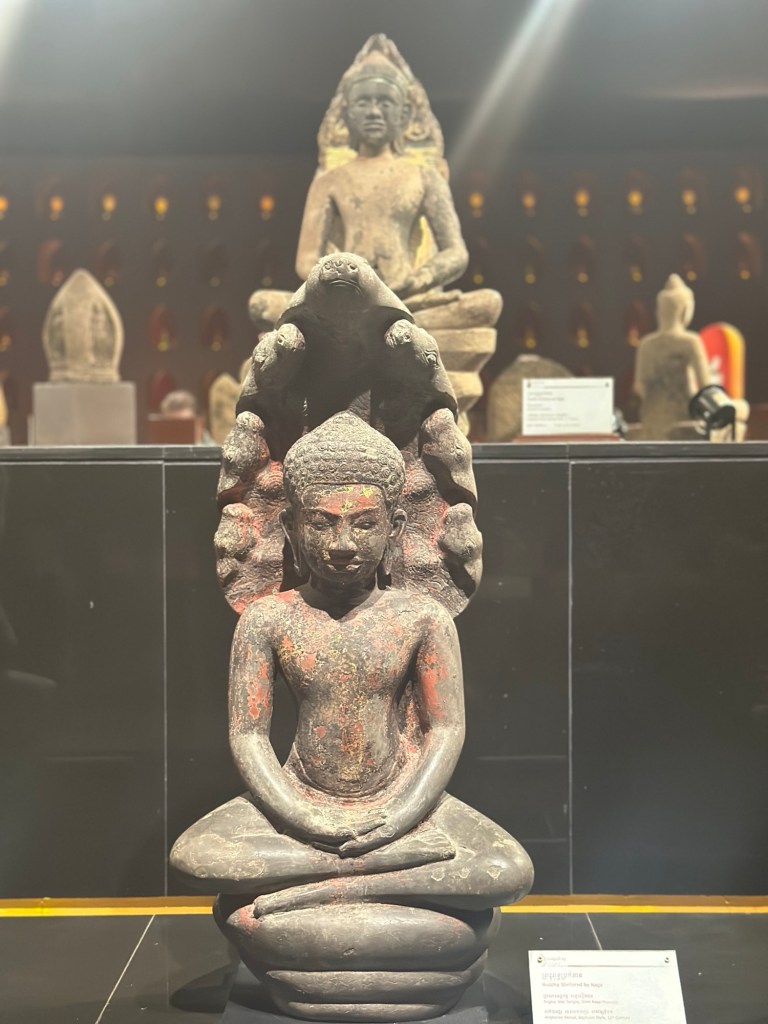
Later, we visited the Angkor National Museum, which traces the roots of Khmer culture and history. The exhibits explained how early Cambodian civilization was heavily influenced by Hinduism, with Buddhism arriving later. Many of the statues depict Hindu deities such as Brahma, Vishnu, and Shiva, followed by later representations of the Buddha. The museum also provided helpful context about the great kings and powerful kingdoms behind Angkor Wat and Angkor Thom, tying together much of what we had seen throughout the last few days.

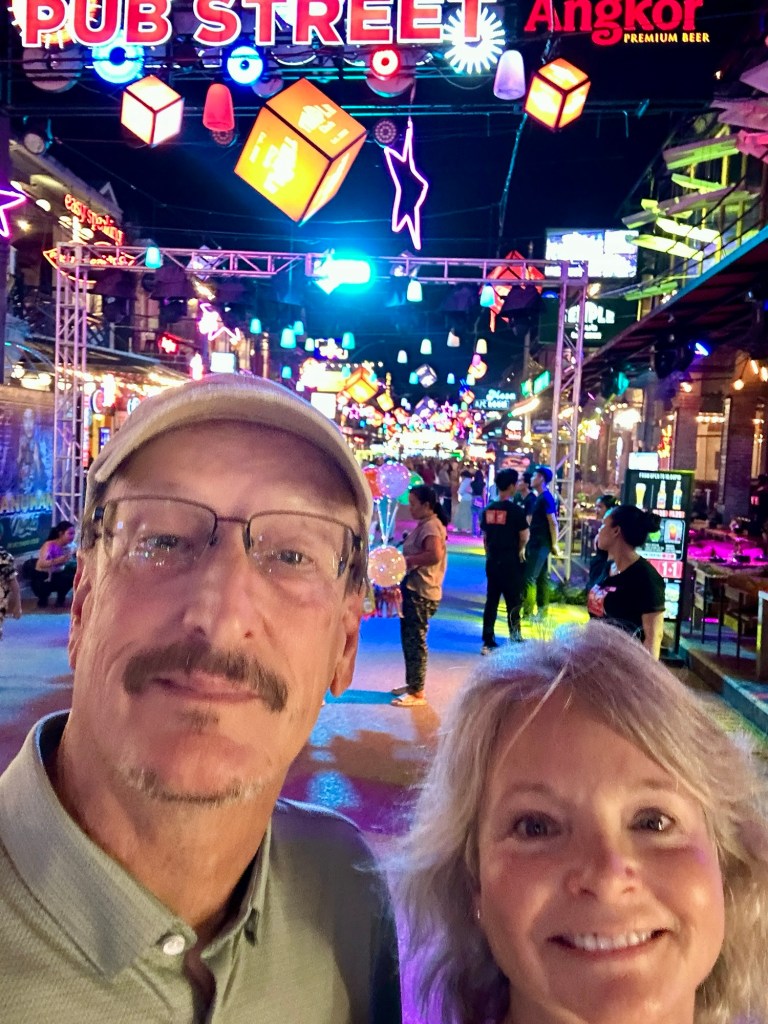
That evening, we wandered a few blocks to Pub Street, passing through the Old Market along the way. We had dinner at El Toro Grill, surrounded by the lively energy of the area. Pub Street was buzzing, with restaurants offering their own takes on Western and Asian fusion cuisine. After dinner, we strolled along the river, enjoying the warm evening air and reflecting on our final night in Cambodia.
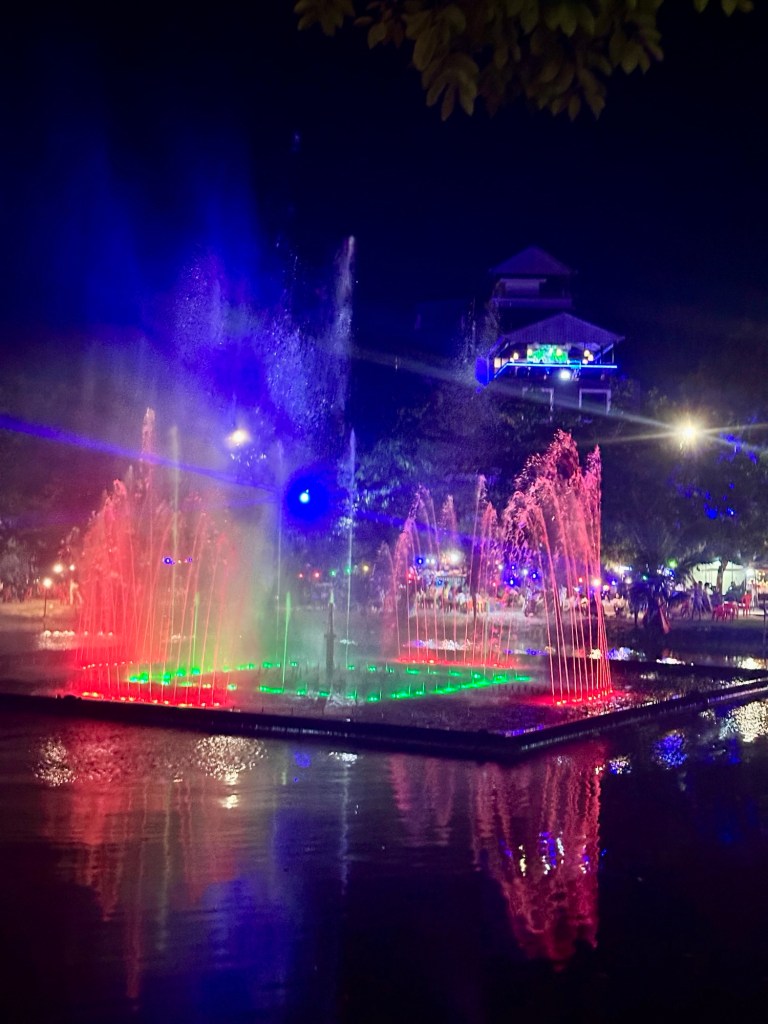
It was a simple ending to an unforgettable journey—unhurried, unscripted, and full of moments we never could have planned.
Written by Marci Fouts, owner of SBTS Travel. As a travel specialist and avid explorer, Marci believes the best trips are the ones that connect people to place, culture, and story—one meaningful journey at a time.
 Explore with Me
Leave a comment